
If you are planning a museum, gallery, or heritage exhibition, the single most important decision you will make is not which luminaire looks elegant on the ceiling — it is which lighting requirements the space must meet to keep the artwork safe while making it look breathtaking. Museum lighting requirements are governed by three numbers above all: lux (how much light the object receives), CRI (how faithfully that light reveals color), and UV/IR (how much invisible damage the light carries). Get these three right and your exhibits glow; get them wrong and you either blind the visitors or slowly destroy the collection. This guide is the complete specification sheet every curator, architect, and lighting designer needs, with the exact numbers, the trade-offs, and the fixtures that make them achievable.

Museum Lighting Standards: The Numbers Every Project Starts From
Light is cumulative energy. Every photon that touches a pigment breaks a tiny number of chemical bonds, and over decades that invisible decay becomes fading, yellowing, and cracking. That is why museum lighting standards exist: they are a conservation budget expressed in light units. The global reference is the Illuminating Engineering Society (IES) recommended practice for museum and gallery lighting, and the same framework is echoed by CIE and by national museum associations worldwide.
The consensus “safe zone” for most museum collections is straightforward:
- Lux: light-sensitive materials (paper, watercolor, silk, textiles, pigments) at 50 lux; moderately sensitive (oil paintings, wood, lacquer) at 150–200 lux; and non-light-sensitive objects (metal, stone, ceramics, glass) up to 300 lux.
- CRI (Ra): a minimum of 90, with 95+ strongly recommended for color-critical displays of paintings and textiles.
- UV: below 10 µW/lumen on the object surface — and in practice, zero UV for the most fragile works.
- IR (heat): kept low enough that the object surface temperature does not rise measurably, ideally below 1°C above ambient.
Lux Levels: How Much Light Is “Right”?
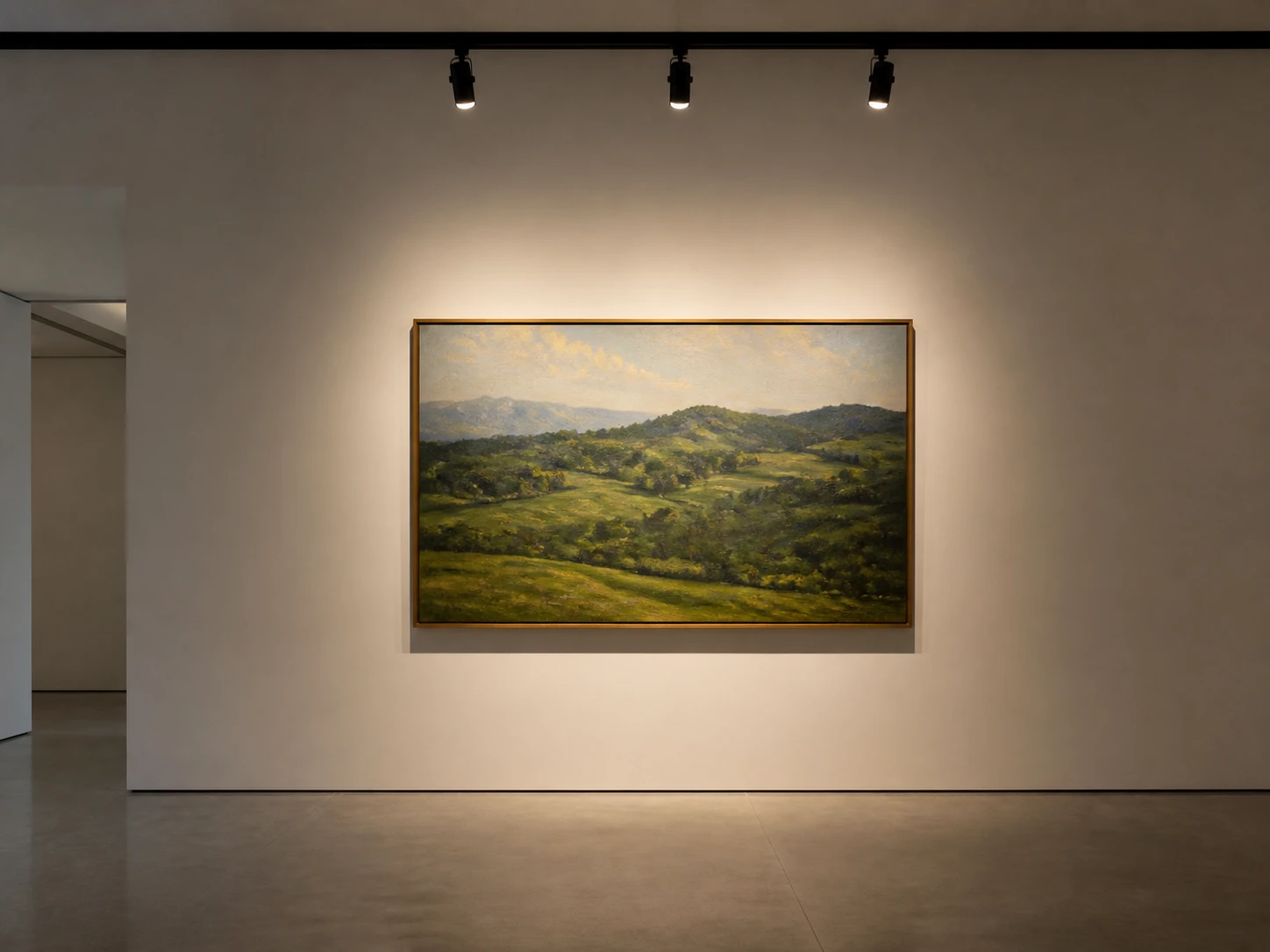
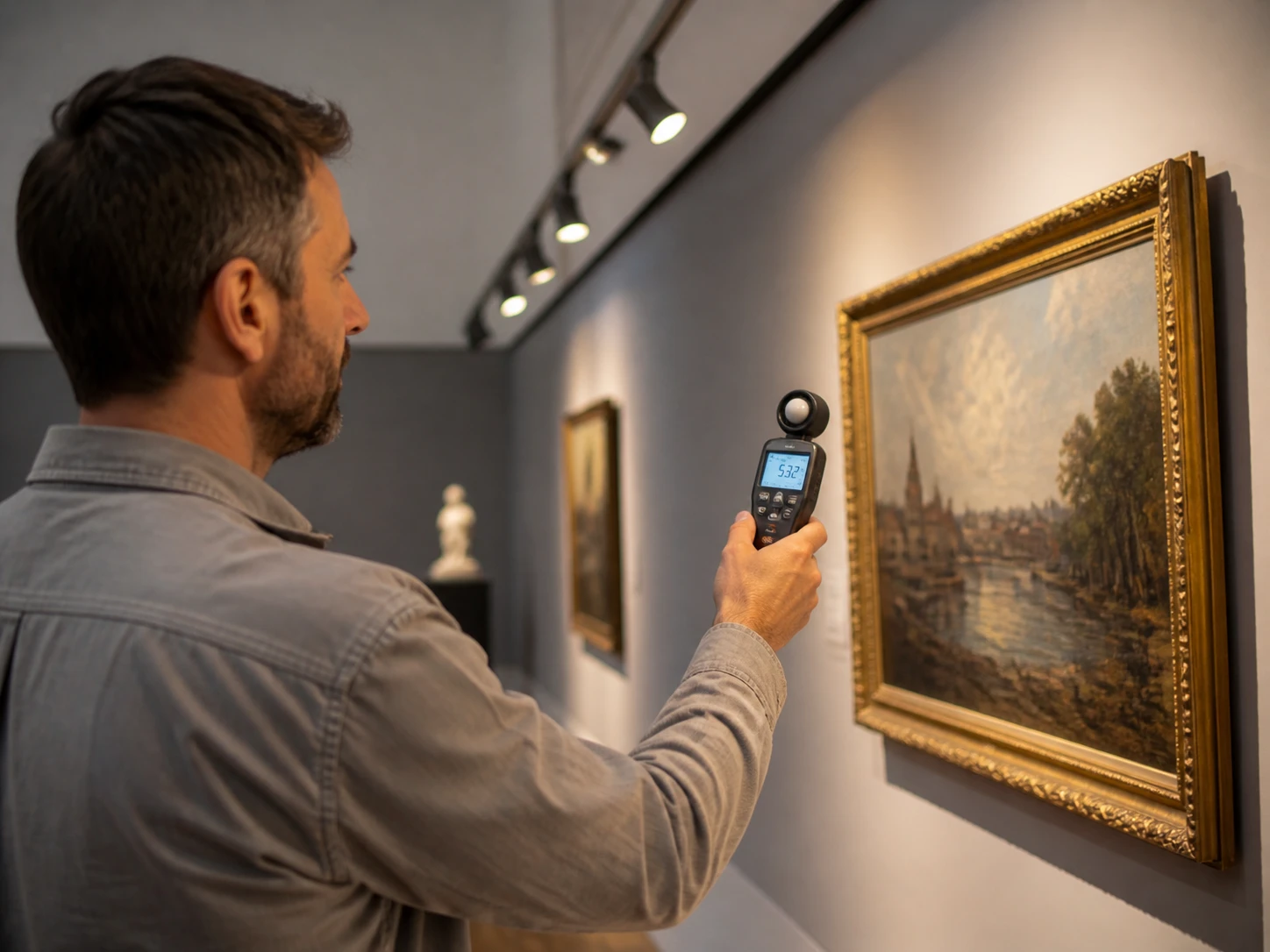
Lux is the unit of illuminance — the amount of light actually falling on the object, measured at the display surface. It is the number your light meter returns when you hold it against the frame. Because museum lighting is about limiting damage, the rule is always: use the lowest lux level that still allows the artwork to be seen comfortably and truthfully.
Recommended Lux by Material Sensitivity
The following table summarizes the standard museum lux levels used by conservation professionals:
| Material Category | Examples | Max Illuminance (lux) | Annual Light Exposure |
|---|---|---|---|
| Highly light-sensitive | Watercolor, paper, silk, textiles, dyed leather, photographs | 50 lux | ~50,000 lux·hours / year |
| Moderately sensitive | Oil paintings, tempera, wood, lacquer, bone, ivory | 150–200 lux | ~150,000–600,000 lux·hours / year |
| Low sensitivity | Metal, stone, ceramics, glass, enamel | 300 lux | Not time-limited |
Two practical notes. First, an annual exposure budget matters as much as the instantaneous lux: a 50 lux object can tolerate roughly 1,000 hours of lighting per year, which is why conservation departments track “lux·hours.” Second, the lux you measure at the object is different from the lux the lamp produces — a tight 15° beam from a track head can deliver 200 lux to a small canvas while a 40° beam from the same lamp spreads it to near nothing. Beam control is therefore a museum lighting requirement in itself.
CRI Requirements: Seeing the Artist’s True Colors
CRI (Color Rendering Index) measures how faithfully a light source reproduces colors compared to a reference illuminant, on a scale of 0 to 100. A museum CRI requirement exists because galleries are the one place where color accuracy is the entire point — a muted, muddy painting fails the visitor, no matter how well it is preserved.
What CRI Value Should You Specify?
- CRI 90 (Ra90): the accepted minimum for most museum and gallery displays.
- CRI 95+: recommended for fine art, textiles, and any object where subtle tonal separation matters.
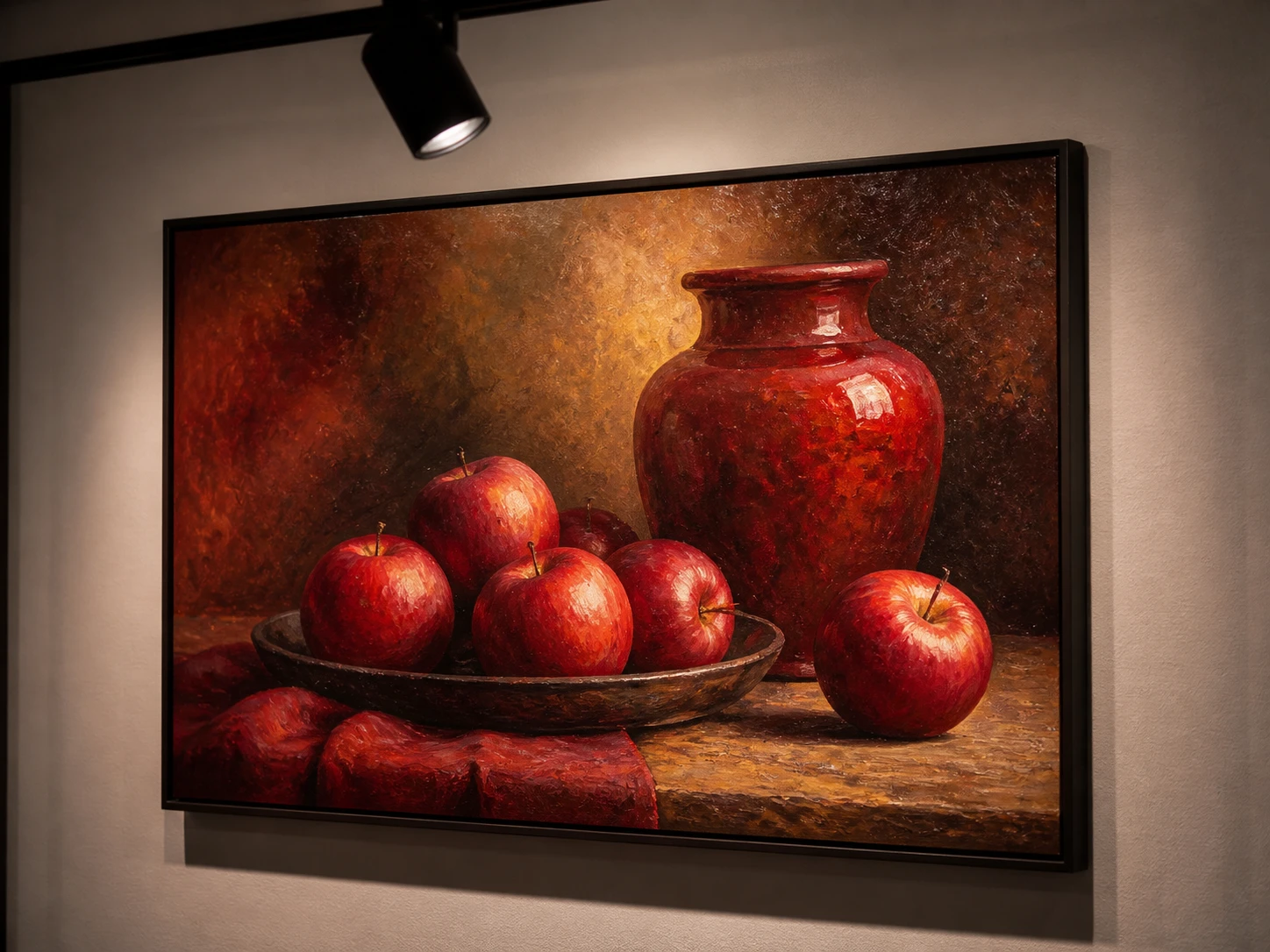
- R9 > 90: the deep-red rendering index — the detail that ordinary “high-CRI” lamps often quietly drop. For paintings heavy in reds and skin tones, R9 is as important as the overall Ra.
When you compare museum lighting CRI on a data sheet, look past the headline Ra number. A fixture that advertises Ra95 may still render deep reds poorly if R9 is weak. Modern high-quality LED museum fixtures achieve Ra95–98 with R9 above 90, and they do it while emitting essentially zero UV and IR — something older halogen spotlights, which passed far more damaging energy through filters, could never match.
UV and IR Protection: The Invisible Damage
Ultraviolet (UV) and infrared (IR) are the silent enemies of a collection. UV accelerates fading and yellowing of pigments, dyes, and paper; IR heats the object surface, drying and embrittling organic materials and promoting micro-cracks. Traditional halogen and older fluorescent sources were the worst offenders, which is why so many historic galleries installed UV-filter sleeves and heat-absorbing glass.
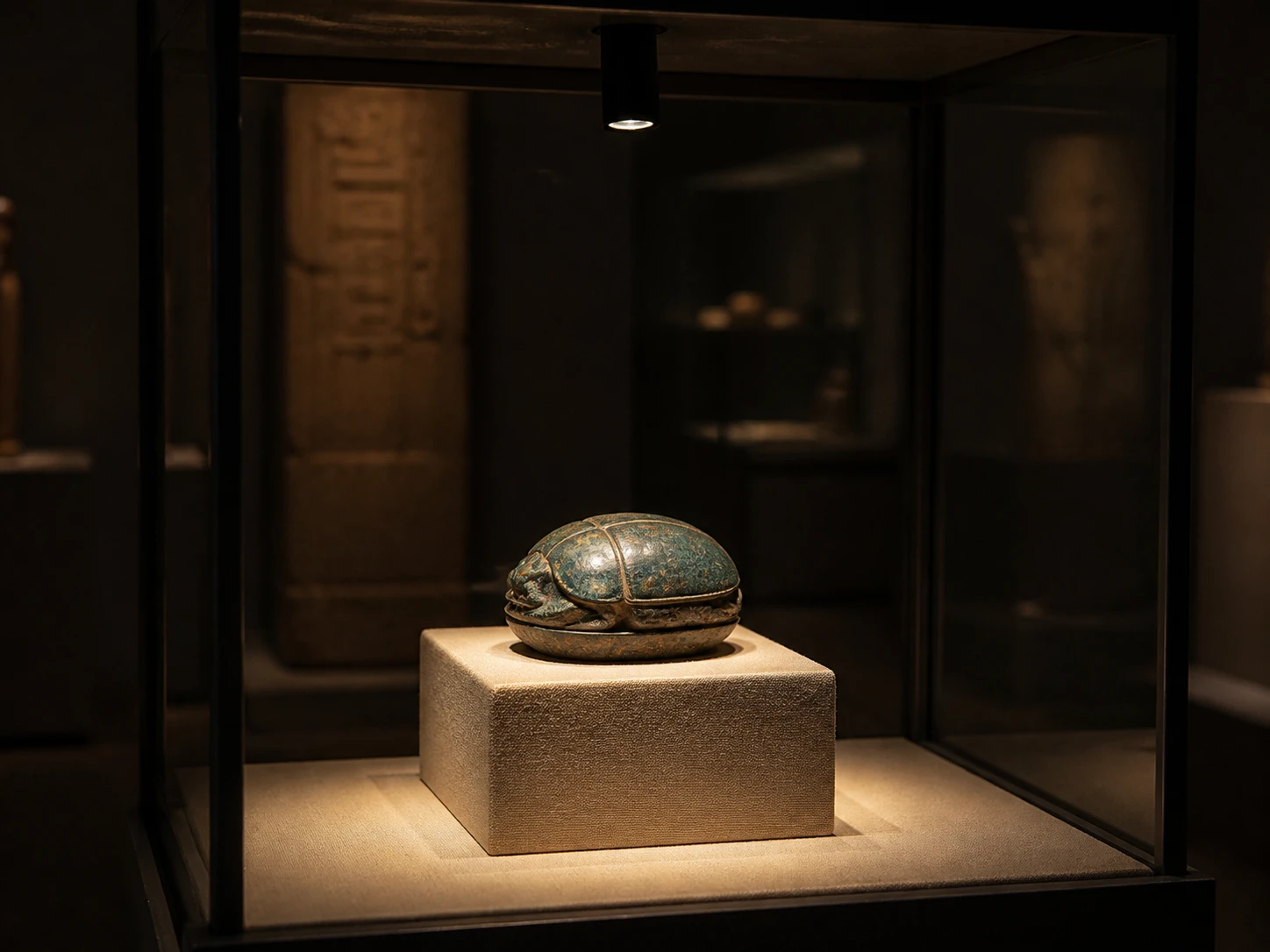
Here is the good news for modern projects: LED track lighting is inherently low in both UV and IR. A well-specified LED emits negligible UV and produces very little radiant heat, which means the museum UV/IR requirement — “as close to zero as possible” — is largely met by choosing the right source rather than by bolting on filters. The specification work shifts to what we discussed above: controlling lux with beam optics, holding CRI/R9 high, and selecting a color temperature that flatters the artwork without strain.
Choosing Fixtures: Track Lighting for the Museum
No other system meets the four demands of museum display as completely as track lighting: individual aiming (each head targets its own piece, with no spill onto the frame or wall), reconfigurability (re-aim or slide heads along the rail when the collection changes, no re-wiring), glare control (optics that keep direct light out of the visitor’s eyes), and precise beam shaping (narrow spots for small objects, wall-wash optics for broad surfaces). This is exactly why you see track rails in nearly every serious gallery.
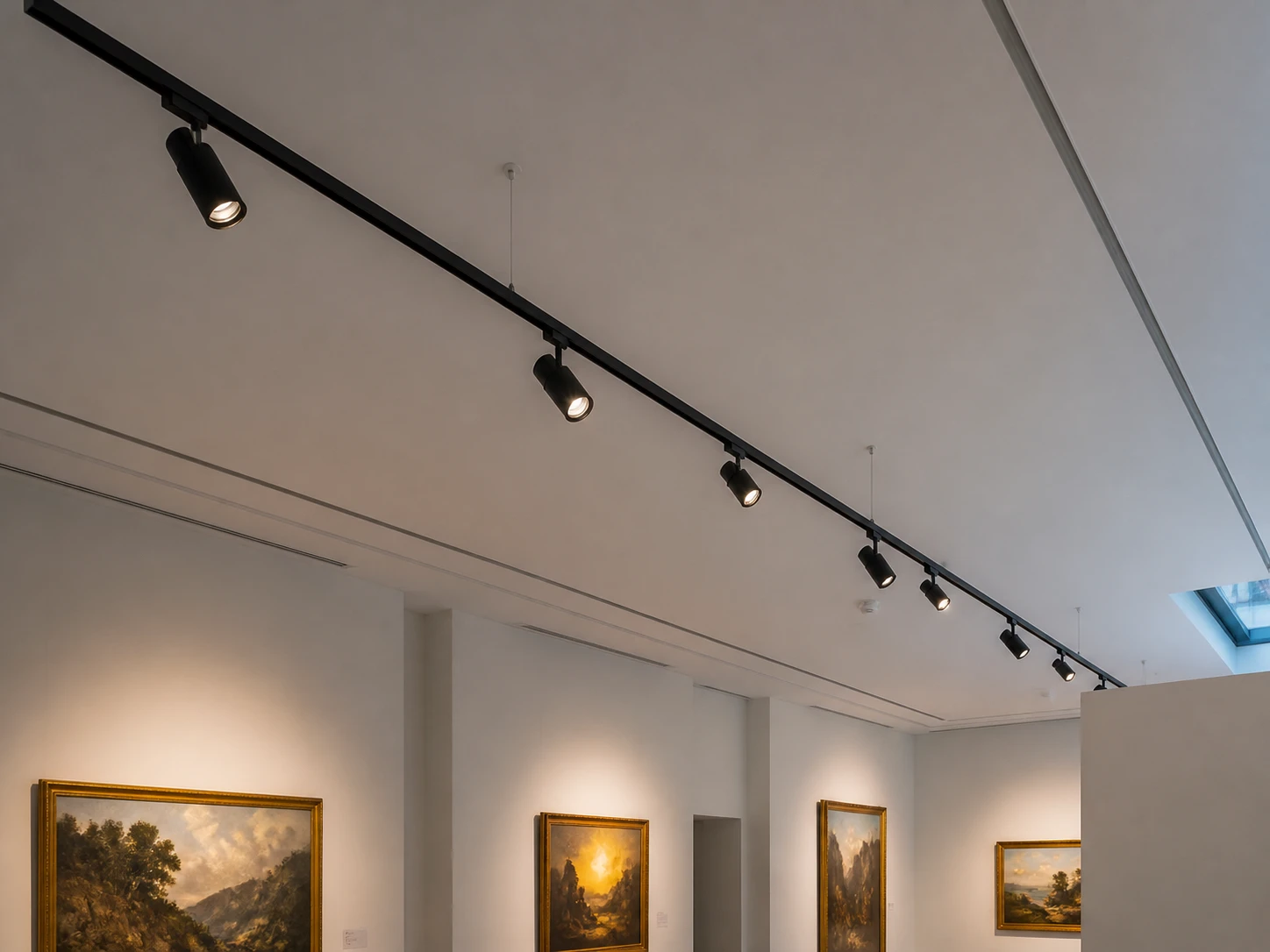
For a museum or gallery project, look for a fixture family that offers interchangeable optics and multiple beam angles — a 15° spot for a small bronze, a 30° flood for a mid-size canvas, and a wall-wash optic for large gallery walls. The WASH-01 magnetic track light from Encore is a strong example: its wall-wash optic spreads an even, glare-free pool of light across a display wall, while the rest of the magnetic track family swaps in narrow-beam projector heads for individual object accenting. Because they run on the same low-voltage rail, you can re-configure an entire gallery in minutes when an exhibition changes.
If your project leans toward museum display cases, a compact high-CRI spotlight with tight beam control is ideal; for sculpture and large installations, a wider selection of projector and track fixtures gives you the flexibility to cover everything from a palm-sized relic to a ceiling-height installation from a single rail.
Museum Lighting Best-Practice Checklist
- Specify 50–300 lux by material category and set an annual lux·hour budget.
- Demand CRI 95+ with R9 > 90 for color-critical displays.
- Choose LED sources to keep UV and IR effectively at zero.
- Prefer aimable track heads with multiple beam angles for flexibility and glare control.
- Aim every head at 30–45° to the artwork to reduce specular glare on glass and varnish.
- Add local dimming and scheduling so exhibits can be rested within their annual budget.
Frequently Asked Questions
What is the ideal lux level for a museum?
It depends on the material: 50 lux for the most light-sensitive works (paper, silk, watercolor), 150–200 lux for oil paintings and wood, and up to 300 lux for metal, stone, and ceramics. Always use the lowest level that allows comfortable viewing, and track annual lux·hour exposure.
What CRI do museums require?
The professional standard is a minimum CRI 90, with CRI 95+ and R9 > 90 strongly recommended for fine art and textiles so that reds, skin tones, and subtle gradations render faithfully.
Why is UV protection important in museum lighting?
UV radiation breaks down pigments, dyes, and paper fibers, causing irreversible fading and yellowing. Museum guidelines call for UV below about 10 µW/lumen, and modern LEDs emit so little UV and IR that they largely solve this problem at the source, with no filter sleeves needed.
Can I use regular track lighting for a museum?
You can, if the fixtures meet the conservation specs — high CRI, low UV/IR, controlled lux, and glare-free aiming. In practice this means choosing a fixture family with museum-grade optics and interchangeable beam angles rather than a generic residential spot.
Why is track lighting preferred in galleries?
Track lighting allows each head to be aimed independently at a single artwork, re-configured instantly when the collection changes, and fitted with different optics — narrow spots for small objects, floods for canvases, and wall-washers for large surfaces. No fixed downlight can match that flexibility.
Conclusion: Light That Preserves and Reveals
Museum lighting requirements come down to a balance of three numbers — lux to control damage, CRI to reveal truth, and UV/IR to stay invisible to harm. Master those, choose aimable high-CRI LED track fixtures with the right optics, and your exhibition will do exactly what great museums do: protect the object for the next generation while letting today’s visitor see it at its radiant best.
Ready to spec the lighting for a gallery, museum, or heritage project? Explore the Encore fixture range for high-CRI, low-UV track and display lighting, or contact our team for a tailored specification. For more on aiming and layout, read our companion guide on art gallery lighting and a real-world case study on museum track lighting in the Mei Lanfang exhibition.