
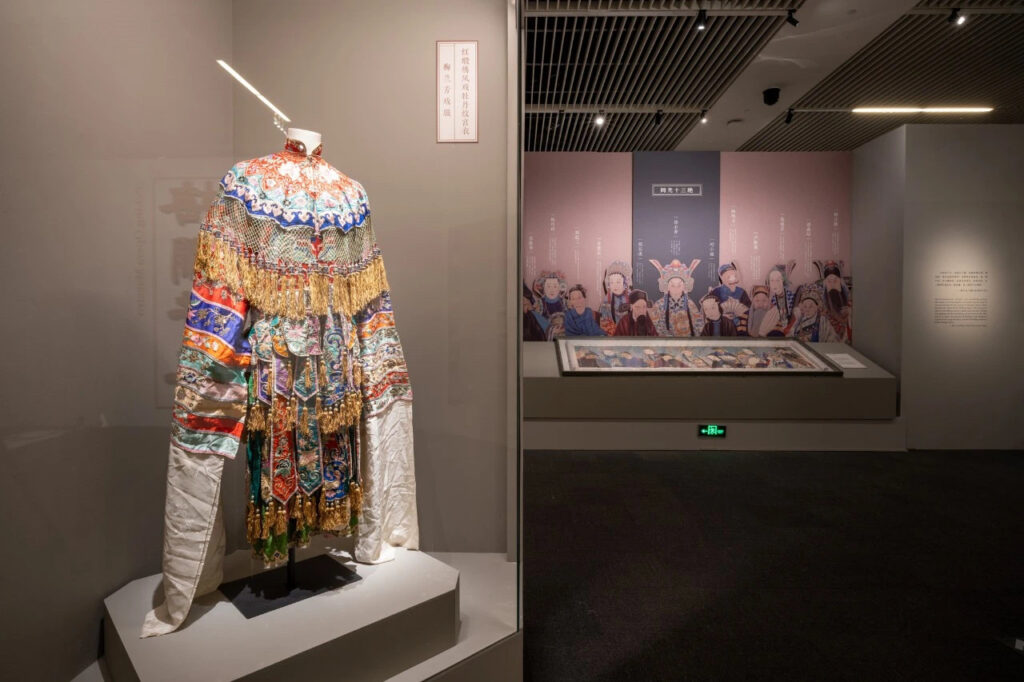
In 1915, a Beijing Opera performer named Mei Lanfang staged a new play called Chang’e Flies to the Moon at the Zhengyangmen Theater in Beijing. For the first time in the history of traditional Chinese opera, a spotlight singled out the leading actress, carving her figure out of the surrounding darkness and forcing every eye in the house to follow her alone.
This was not a technical accident. Mei Lanfang had studied Western theater and understood that light was not merely illumination — it was a storytelling tool. His deliberate use of a spotlight in 1915 was one of the earliest acts of conscious lighting design in the entire history of Chinese performing arts.
More than a century later, when the National Museum of China opened the landmark exhibition “Mei Lanfang: A Life in Art” (梅澜芳华——梅兰芳艺术人生展) in January 2022, museum curators faced a question that echoes Mei Lanfang’s own: how do you use light to honor art that has its own deep relationship with light?

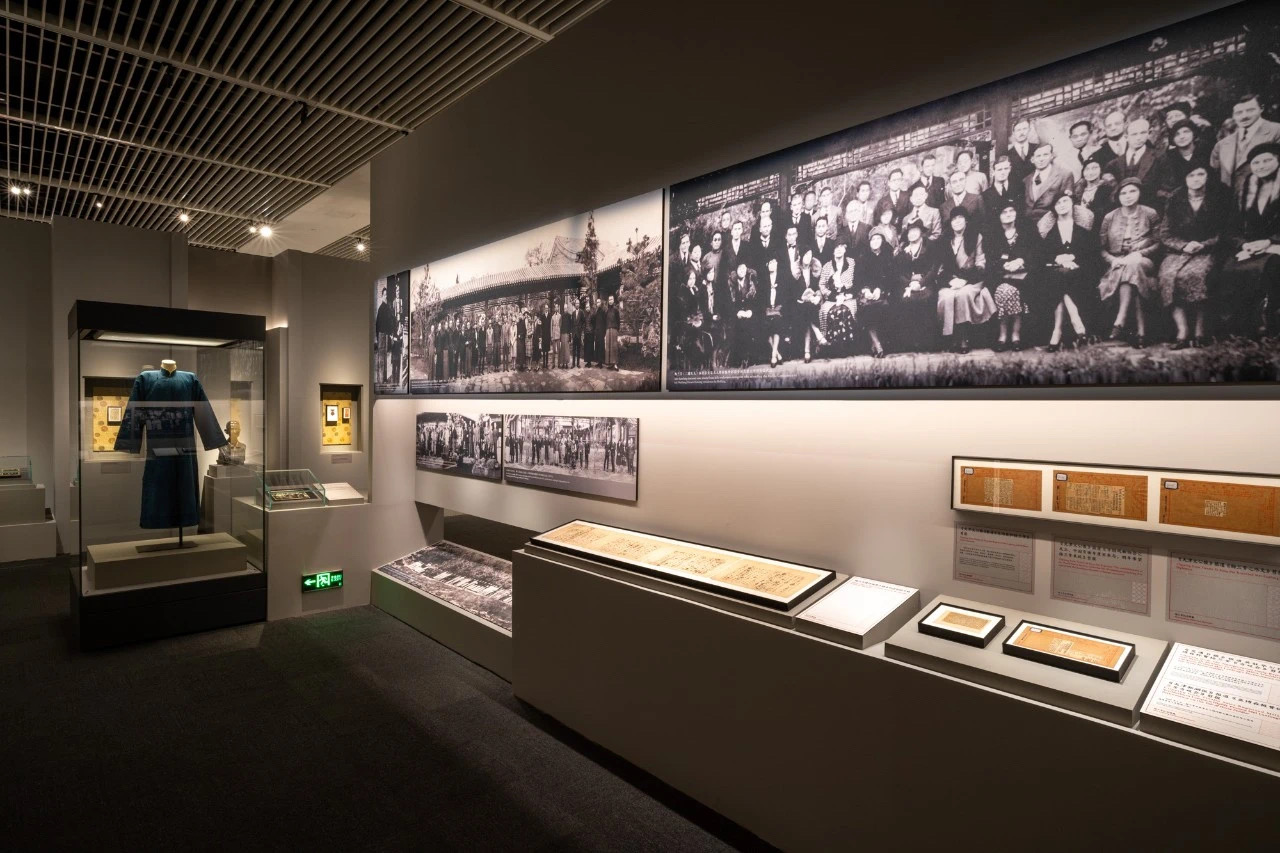
The Exhibition: A Life in Art at China’s National Museum
The National Museum of China’s exhibition, jointly organized with the Mei Lanfang Memorial Hall and the government of Taizhou, opened on January 20, 2022, occupying the North 3 and North 4 exhibition halls. It presented nearly 400 sets of artifacts and approximately 600 photographs across eight thematic sections:
- 群英谱京韵 (Peking Opera Stars and Their Legacy)
- 梅秀出世家 (Mei’s Illustrious Family Heritage)
- 梅占百花魁 (Mei’s Rise to Prominence)
- 梅馨缀玉轩 (Mei’s Signature Style)
- 梅香传万里 (Mei’s Global Influence)
- 梅骨傲风雪 (Mei’s Resilience Through Adversity)
- 梅报万物春 (Mei’s Celebration of Life)
- 梅韵展新声 (Mei’s Enduring Legacy)
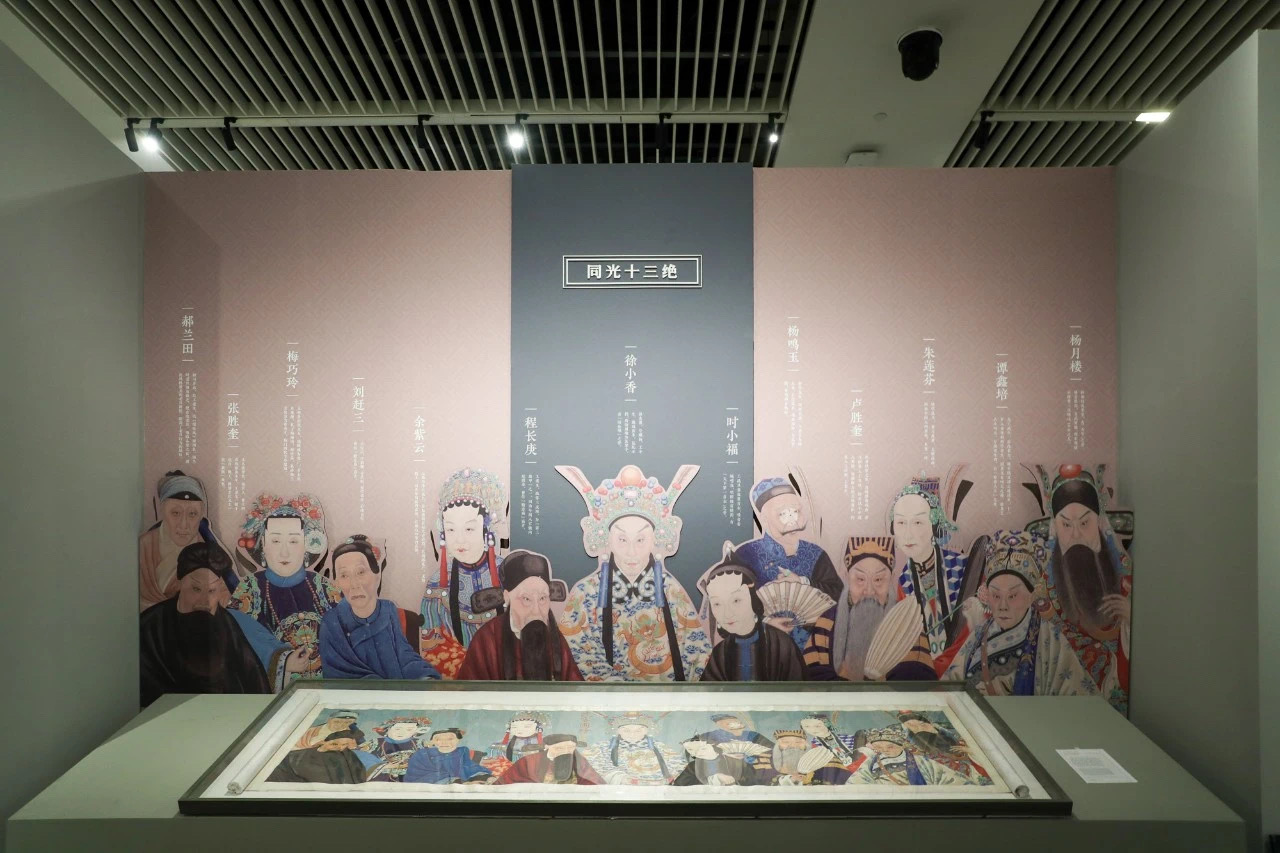
The exhibition traced Mei Lanfang’s artistic journey from a performer born into a Beijing Opera lineage in 1894, through his revolutionary innovations in stagecraft and costume, to his celebrated tours of Japan, the United States, and the Soviet Union — tours that introduced Peking Opera to global audiences and fundamentally changed how the world understood Chinese performing arts.
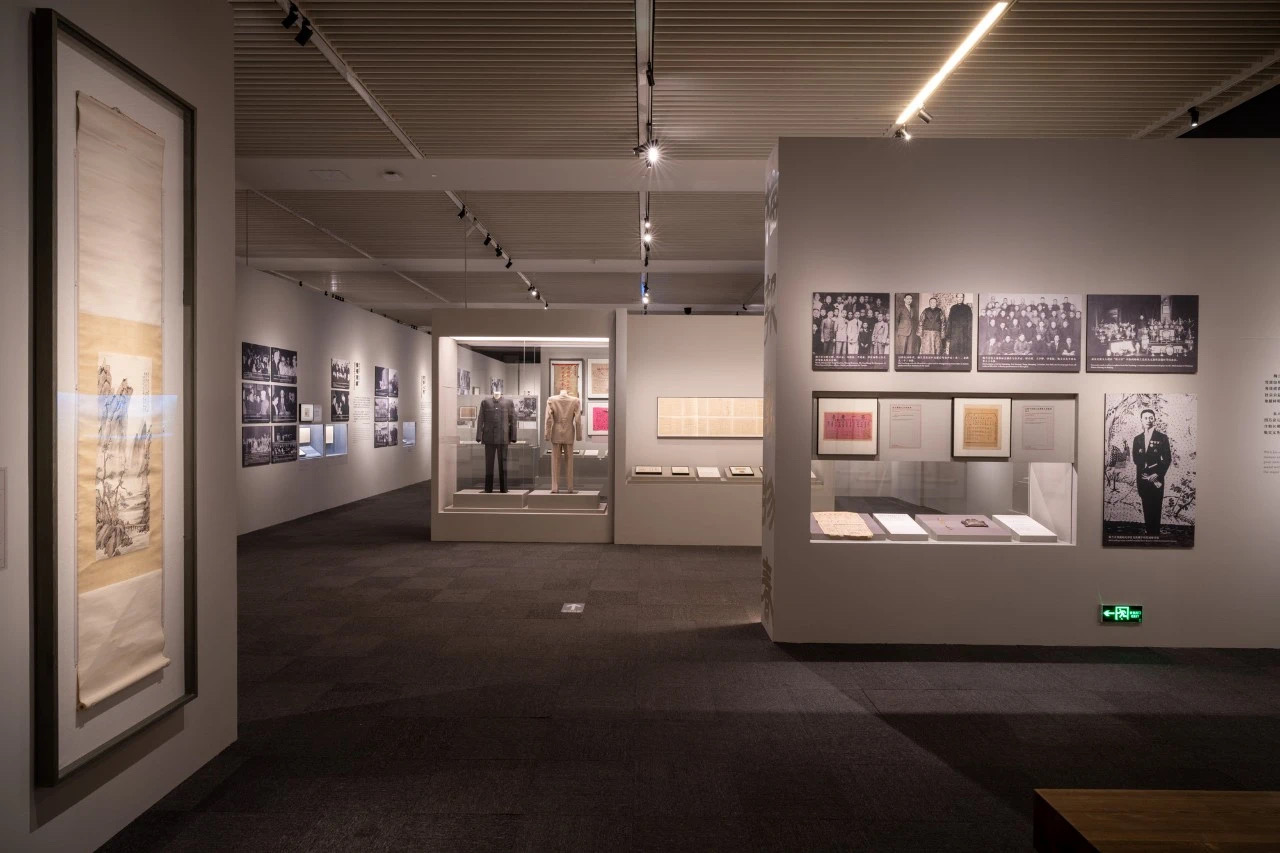
For museum lighting designers, this exhibition presented a dual challenge: the artifacts on display included silk costumes, painted scrolls, period photographs, and handwritten scripts — materials highly sensitive to light exposure — alongside immersive theatrical displays that demanded dramatic, directional illumination to recreate the emotional atmosphere of Mei Lanfang’s stage.
Why Museum Track Lighting Is Different from Commercial Track Lighting
Before exploring how modern museum track lighting addresses the Mei Lanfang exhibition’s needs, it is worth clarifying why museum-grade track lighting is a fundamentally different product from the track lighting used in retail stores or commercial interiors.
1. Precise Light Control for Art Conservation
Artifacts such as silk costumes, paper documents, and painted textiles are susceptible to photochemical degradation. Every unit of lux-hours of exposure accumulates — meaning that even low-level light, over time, causes irreversible fading and brittleness. Museum track lights used for such objects typically feature:
- Narrow to ultra-narrow beam angles (6°–25°) to concentrate light precisely on individual display objects, minimizing spill light that illuminates surrounding empty surfaces
- Optional UV/IR filtering to remove the most damaging wavelengths
- Tunable color temperature (typically 2700K–4000K) to match the aesthetic tone of the exhibition while maintaining high color rendering
2. High Color Rendering Index (CRI ≥ 95)
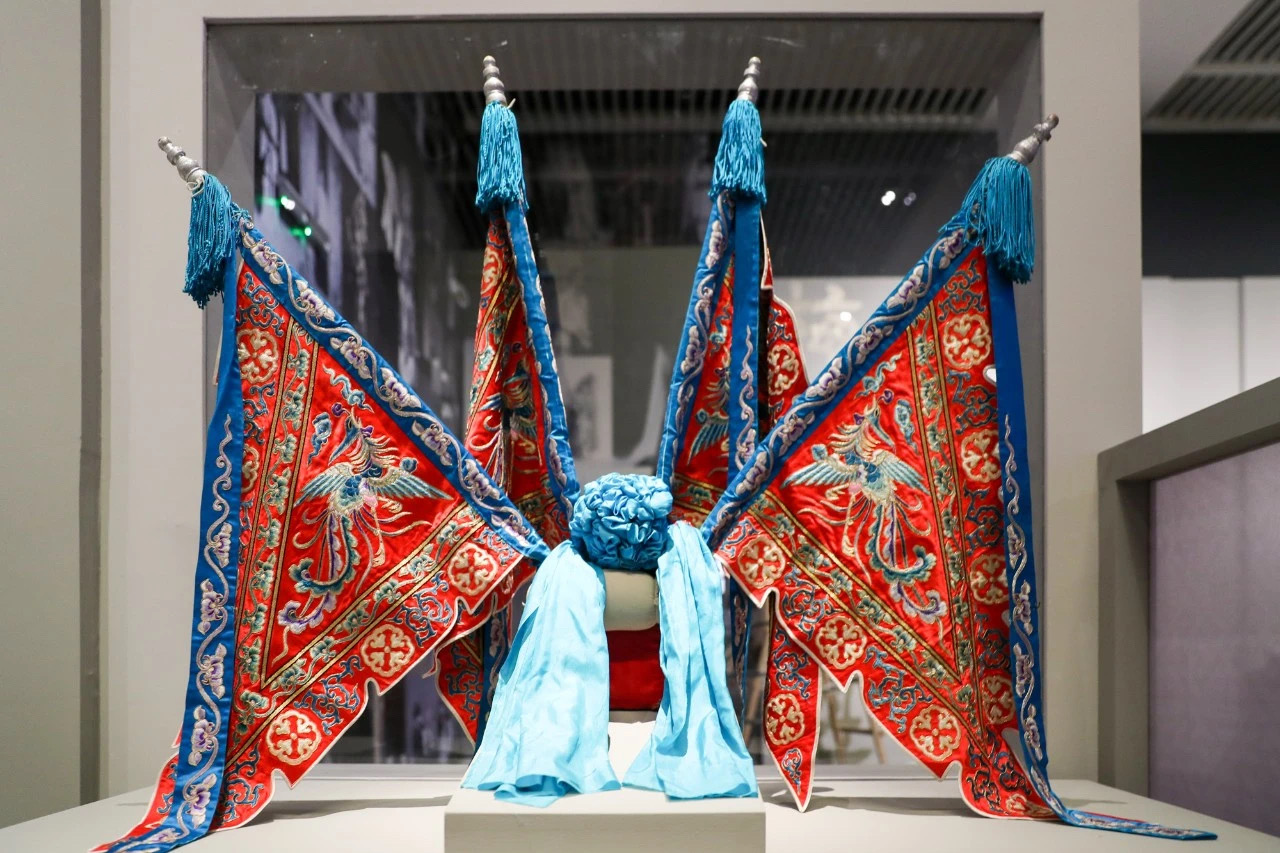
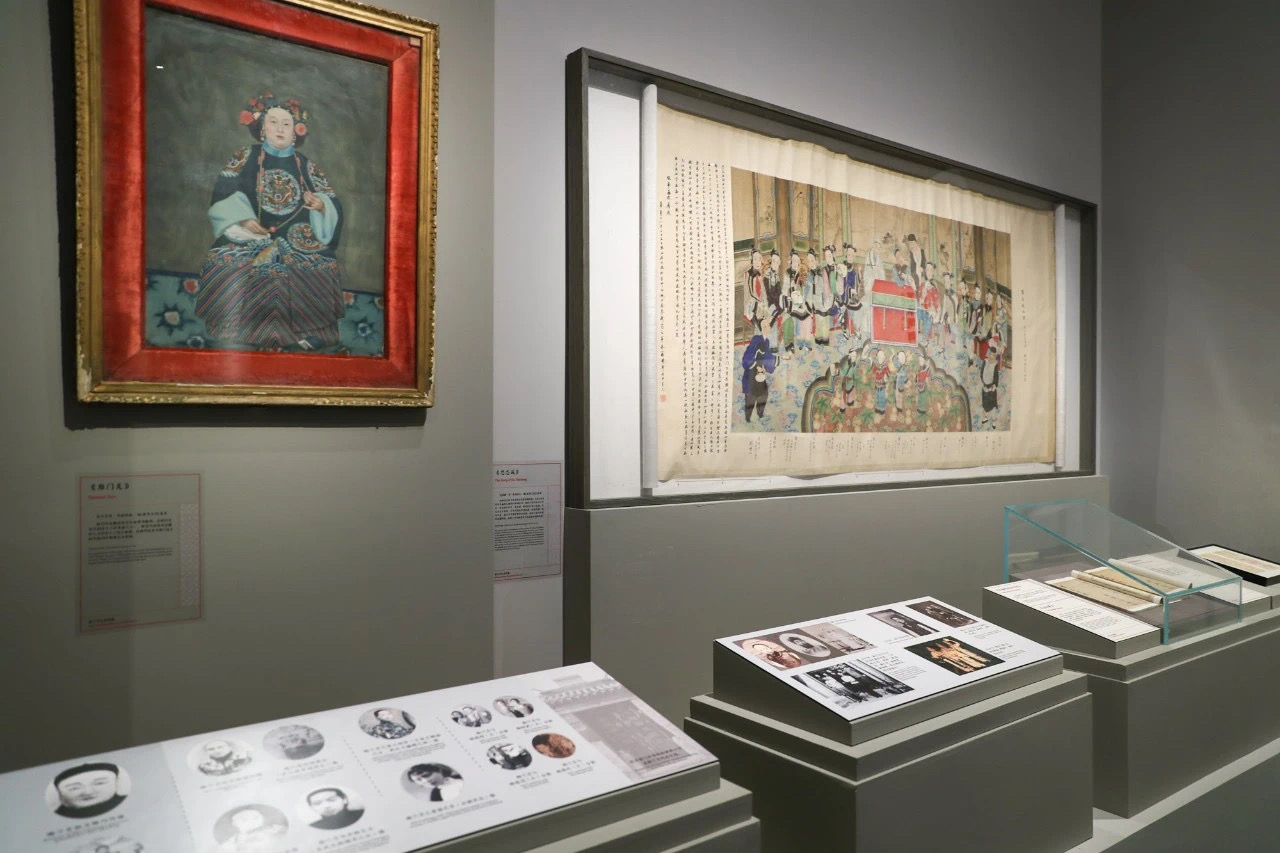
Mei Lanfang’s costumes were celebrated for their chromatic richness — vermillion, imperial yellow, jade green, and deep indigo. Under a low-CRI light source, these colors appear muted and washed out, fundamentally altering the viewer’s experience of the object’s beauty. Museum track lights used in serious art institutions deliver CRI of 95 or above, ensuring that colors are rendered with near-perfect fidelity.
This matters especially for Peking Opera costumes, where the symbolic meaning of color is inseparable from its visual impact: the yellow of an imperial costume, the white face of a loyal official, the crimson of a warrior’s robe — each carries cultural information that becomes illegible under poor lighting.
3. Flexibility Without Compromise
The defining advantage of track lighting in museum settings is precisely the same advantage that made it revolutionary when Anthony Donato patented it in 1961: the ability to reconfigure lighting without rewiring. In a temporary exhibition like the Mei Lanfang show, which may travel through multiple institutions and require different spatial configurations at each venue, the ability to slide, pivot, and reposition individual fixtures along the track is essential.
A permanent installation cannot serve every possible exhibition. A flexible track system can.
The Thematic Connection: Light as Character in Chinese Art
What makes the Mei Lanfang exhibition particularly compelling from a lighting design perspective is that the exhibition’s subject matter has its own deep, historically documented relationship with light.
Mei Lanfang was not merely an audience for lighting technology — he was an innovator who deliberately brought Western theatrical lighting concepts into traditional Chinese opera. His 1915 production of Chang’e Flies to the Moon is widely cited in Chinese theater history as the first use of the spotlight in a Beijing Opera context.
This was a conscious aesthetic decision. Traditional Beijing Opera had developed its own sophisticated visual vocabulary under relatively uniform, multi-directional stage lighting — an approach that emphasized the flat, graphic quality of costume and movement. Mei Lanfang’s introduction of the spotlight added a new dimension: the ability to isolate, to focus, to create emotional hierarchy on stage.
Modern museum track lighting does not merely illuminate the Mei Lanfang exhibition. It continues that same conversation about how light shapes the viewer’s experience of Chinese performing arts.
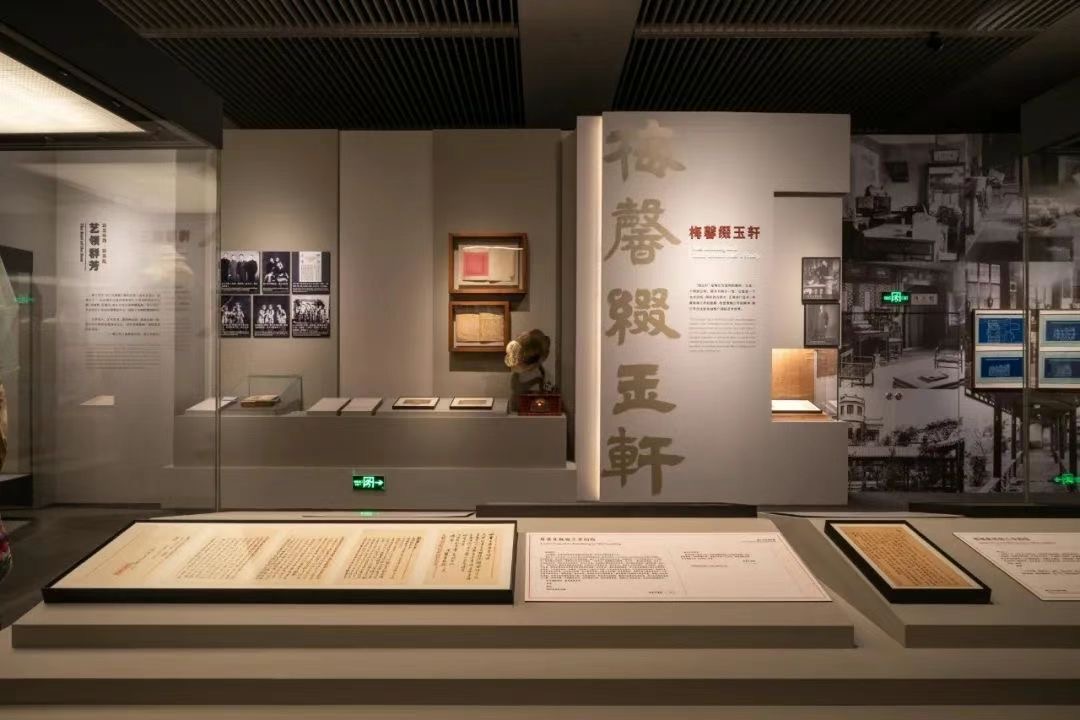
Consider how a museum track light falling on a display of Mei Lanfang’s original costume sketch — its fine brushstrokes visible, the color notation legible — replicates the same act of directed attention that Mei Lanfang created with his stage spotlights a century ago. The technology has changed; the underlying principle has not.
Practical Lighting Considerations for Traditional Chinese Art Exhibitions
Museum curators and lighting designers working with Peking Opera artifacts, calligraphy, traditional paintings, and other culturally significant Chinese objects typically apply the following principles using adjustable museum track lighting:
Object-by-Object Light Levels
Different artifacts have different conservation requirements. Silk costumes may tolerate 50–100 lux, while oil paintings can often accept 150–200 lux. Museum track lighting’s modular fixture system allows each display case or pedestal to receive a different fixture calibrated to the specific object’s needs — all powered by the same track infrastructure.
Vertical Lighting for Hangings and Costumes
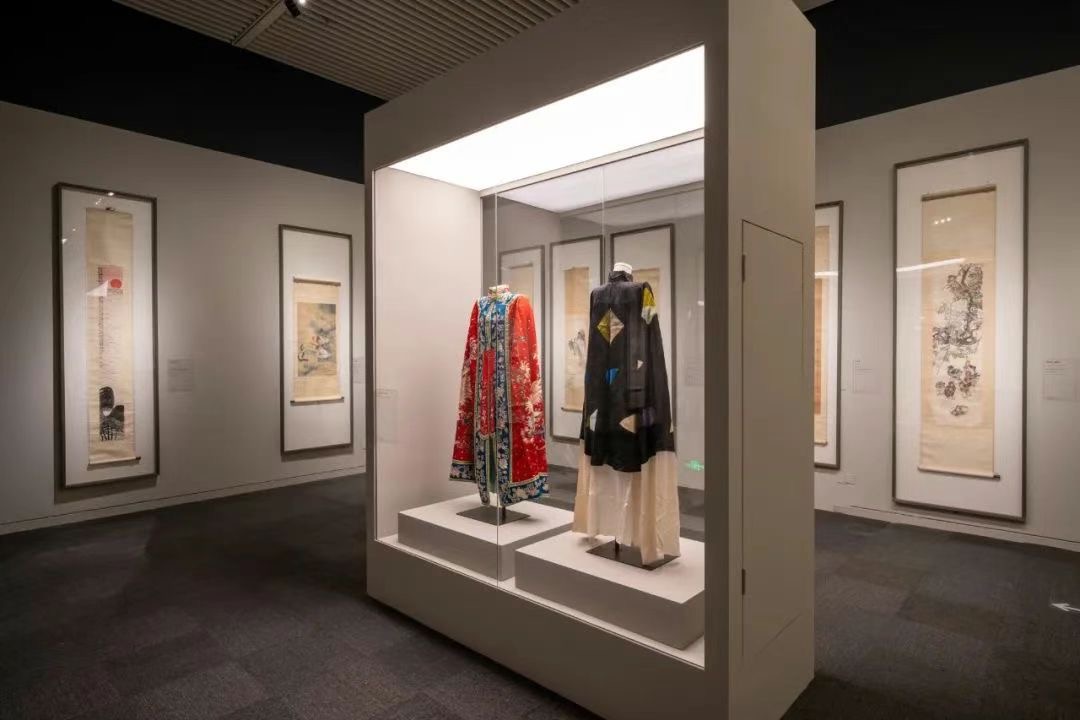
Traditional Chinese paintings and long costumes require even vertical illumination without hotspots or shadows that distort the object’s form. This is achieved through track-mounted fixtures with specialized asymmetric optics or wall-wash distributions, mounted at precise angles calculated during the exhibition design phase.
Dramatic Accent Lighting for Theatrical Displays
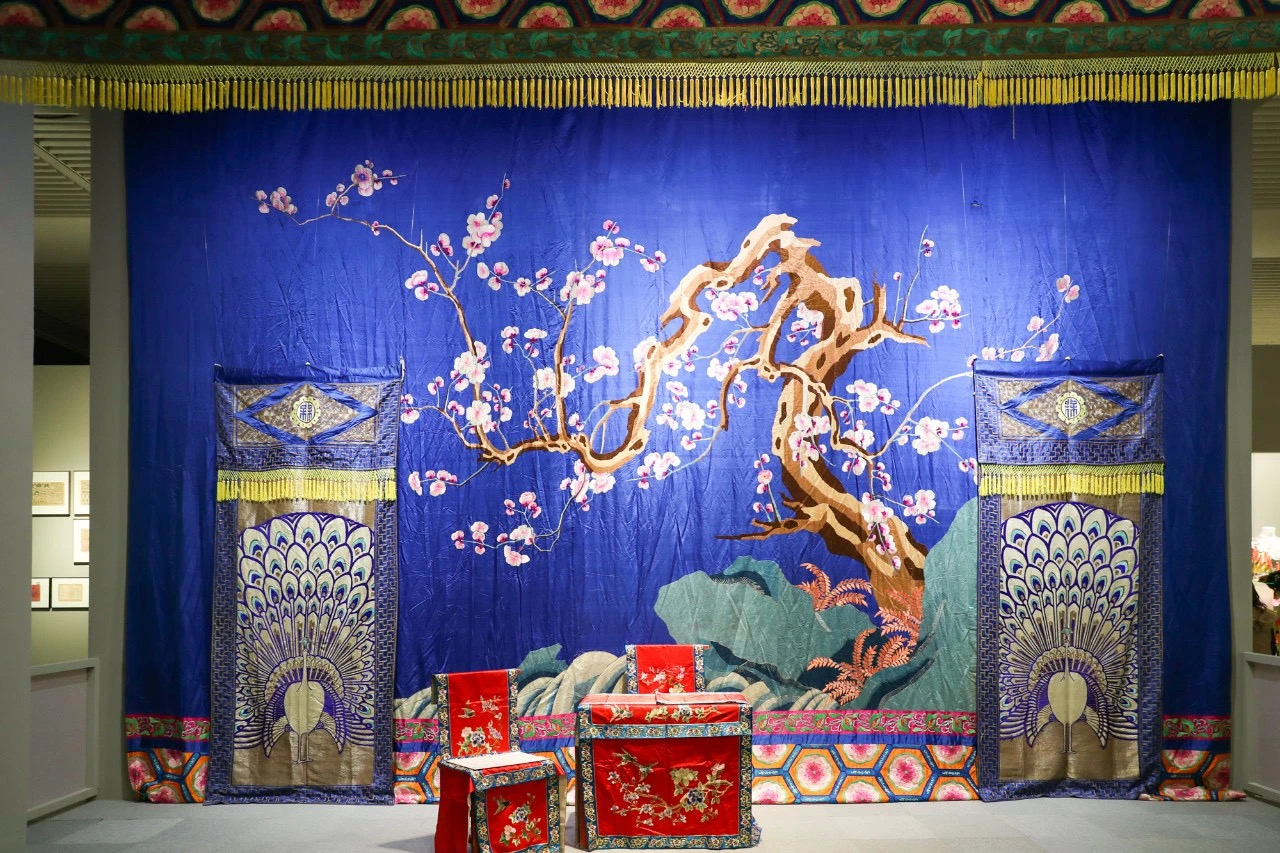
For the immersive theatrical reconstructions common in performing arts exhibitions — a re-creation of a Mei Lanfang stage set, for instance — higher intensity accent track lighting (15W–30W fixtures with 15°–24° beam angles) creates the dramatic chiaroscuro familiar from the Peking Opera stage, drawing visitors into the emotional world of the performance.
Color Temperature Harmonization
A common mistake in multi-room exhibitions is the use of mixed color temperature sources — warm and cool lights side by side — which creates visual dissonance and makes it difficult for visitors to calibrate their color perception. Consistent color temperature throughout a traditional art exhibition (typically 2700K–3500K for Chinese art, which complements the warm tones of silk, wood, and lacquer) is achieved by specifying consistent fixtures across the entire track system.
Conclusion: Continuing Mei Lanfang’s Lighting Conversation
When Mei Lanfang first pointed a spotlight at a performer on a Beijing stage in 1915, he was not simply adopting a Western technology. He was making a statement about what Chinese theater could become — an art form that used every tool of visual expression, including light, to deepen its emotional impact.
Modern museum track lighting, with its precision, flexibility, and color fidelity, is the direct descendant of that same impulse. When a museum uses high-CRI, narrow-beam track lights to illuminate a Mei Lanfang costume behind glass, or to spot a period photograph on a dark gallery wall, it is continuing a conversation about the power of directed light that began in a Beijing theater more than a century ago.
For museum professionals, lighting designers, and exhibition curators working with traditional Chinese art, the Mei Lanfang exhibition at the National Museum of China offers a compelling case study: lighting is not decoration. It is interpretation.
Sources
- National Museum of China — Official exhibition information
- Mei Lanfang Memorial Hall — Mei Lanfang biographical and archival resources
- China Daily — “Mei Lanfang Exhibition Opens at National Museum” (January 2022)
- Ministry of Culture and Tourism, China — Mei Lanfang Memorial Hall institutional overview
- China.com Culture — Cultural heritage coverage
- Sina News — Mei Lanfang’s global cultural influence and 1930 US tour preparation
- Radiant History — Anthony Donato and the invention of modern track lighting (1961)