
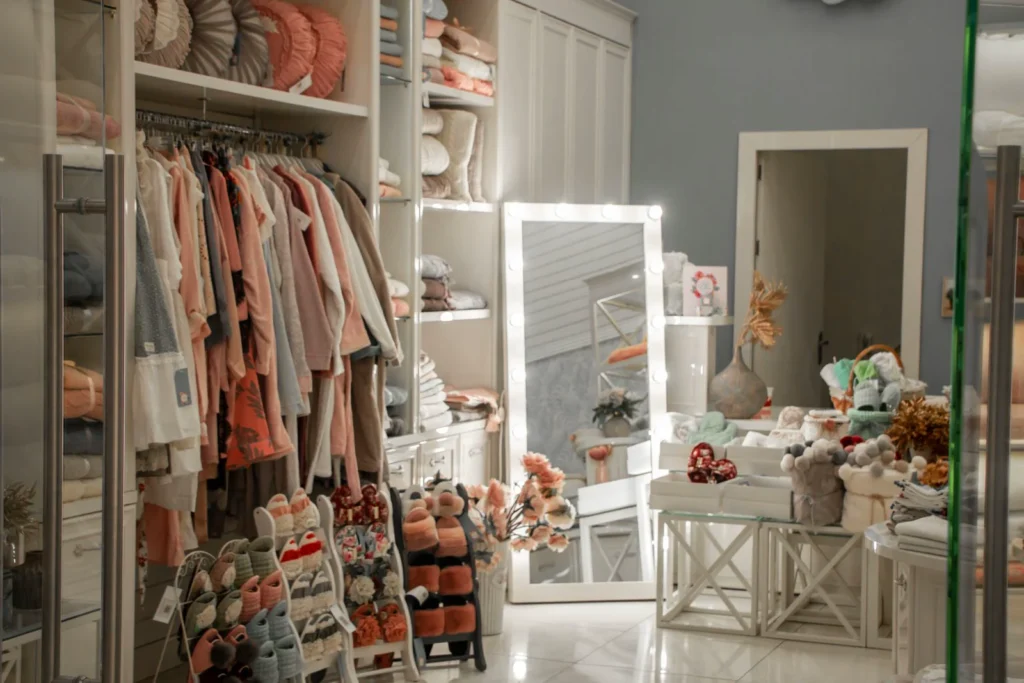
If you are fitting out a retail store, restaurant, or office, the difference between a space that feels professional and one that looks flat often comes down to one number: lux. Commercial lighting lux requirements define how much light needs to reach the working surface—whether that is a product display, a restaurant table, or a warehouse floor—and they are set by industry standards like the IES Lighting Handbook and EN 12464. This guide breaks down the recommended lux levels for every type of commercial space, why they matter, and how to translate them into a practical lighting plan.
Whether you are a facility manager upgrading a chain location, an architect specifying lighting for a new build, or a business owner wondering why your store feels too dim, the lux table and spec guidance below will give you everything you need to make the right call.
What Is Lux and Why Do Commercial Spaces Need Specific Requirements?
Lux (lx) is the international unit of illuminance—the amount of light that actually lands on a surface, measured in lumens per square meter. Commercial lighting lux requirements exist because different activities demand different amounts of light for safety, productivity, and visual comfort. Standards bodies including the Illuminating Engineering Society (IES) and the European Committee for Standardization (CEN) publish recommended lux ranges based on decades of research into human visual performance.
Understanding these requirements is not just about code compliance. The right lux level directly affects business outcomes: retailers sell more when merchandise is well-lit, restaurants attract more customers when the atmosphere feels right, and workers are more productive and less fatigued under properly lit conditions. Conversely, over-lighting wastes energy and creates glare, while under-lighting forces customers and staff to strain their eyes and makes spaces feel unwelcoming.
For a deeper explanation of how lux relates to lumens and how to calculate your light budget, see our companion guide on lux vs lumens: understanding lighting metrics.
Commercial Lighting Lux Requirements at a Glance
Here is a practical reference table of recommended lux levels for common commercial space types, based on IES and EN 12464 guidance. Use it as a starting point—then fine-tune for your specific application, ceiling height, and decorative scheme.
| Commercial Space | Recommended Lux Range | Application Notes |
|---|---|---|
| Retail / boutique (general) | 300–500 lux | Even, glare-free ambient light across the sales floor |
| Retail display & hero products | 500–1,000 lux | Focused accent on featured merchandise; 3:1 to 5:1 accent-to-ambient ratio |
| Office — task work | 300–500 lux | Reading, writing, computer work at the work plane |
| Office — open plan / circulation | 200–300 lux | General ambient for corridors and collaborative zones |
| Restaurant / cafe (dining area) | 100–200 lux | Warm ambient for intimacy; tables benefit from task accent |
| Hotel lobby / reception | 150–300 lux | Welcoming atmosphere with layered accent lighting |
| Supermarket / grocery | 400–700 lux | Bright, even illumination for product browsing and recognition |
| Art gallery / museum | 150–300 lux (fragile art as low as 50) | High-CRI, UV-safe lighting with precise lux control on artwork |
| Warehouse / distribution | 150–300 lux | Aisles and picking areas; higher (300+) at loading docks |
| Conference / meeting room | 300–500 lux | Task lighting for note-taking with dimming for presentations |
| Showroom / exhibition | 500–750 lux | Balanced display lighting to show product detail and finish |
| Corridor / circulation (general) | 100–150 lux | Safe wayfinding with even, non-glaring illumination |
These figures align with the general guidance found in the ENERGY STAR lighting program and IES recommended practices. Actual values can vary by country, code, and the age profile of occupants—always check your local building code for mandatory minimums.
Detailed Lux Requirements by Commercial Space Type
Let’s dive into each major commercial space category, the specific lux targets that apply, and the lighting strategies that hit them.
Retail Stores & Boutiques
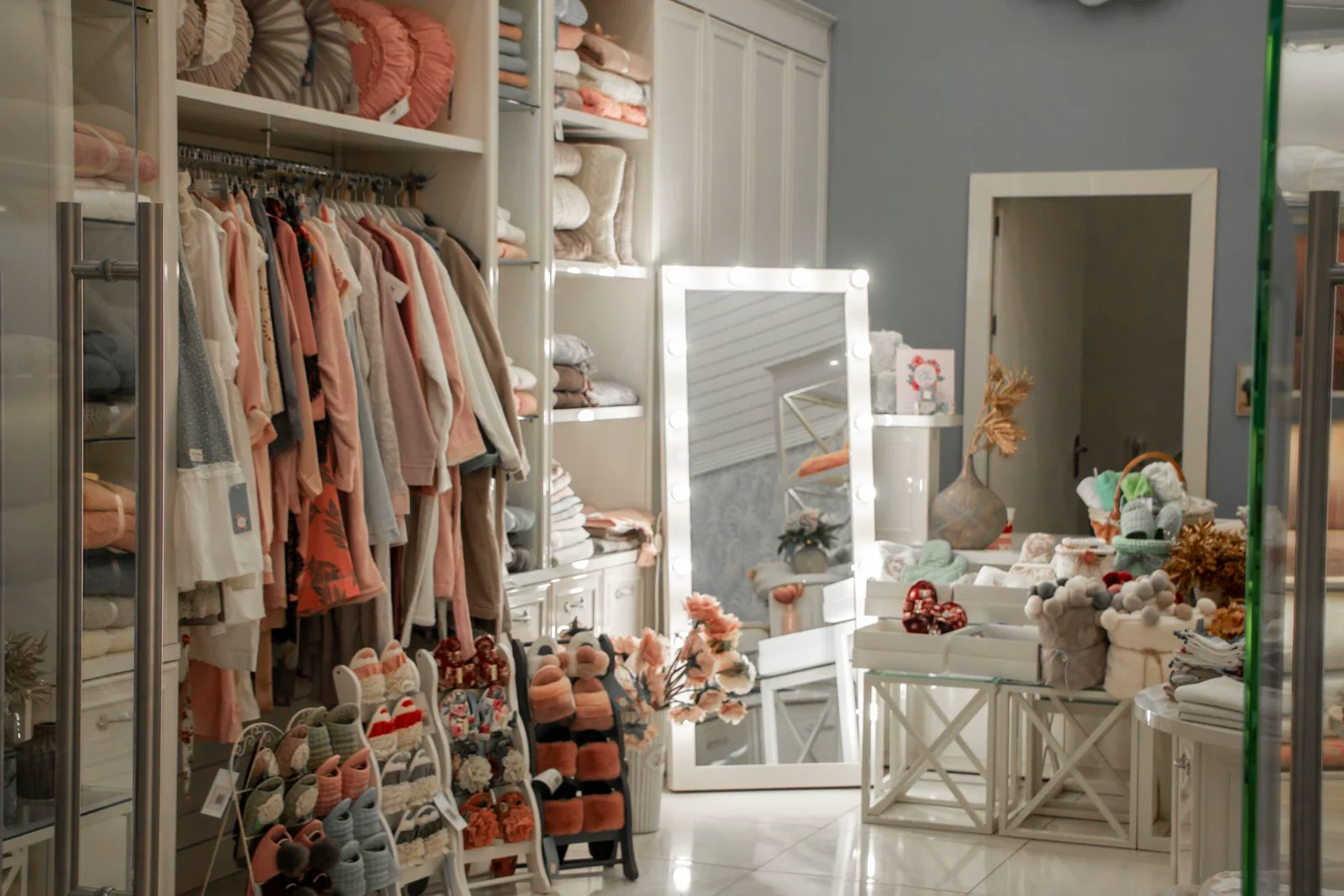
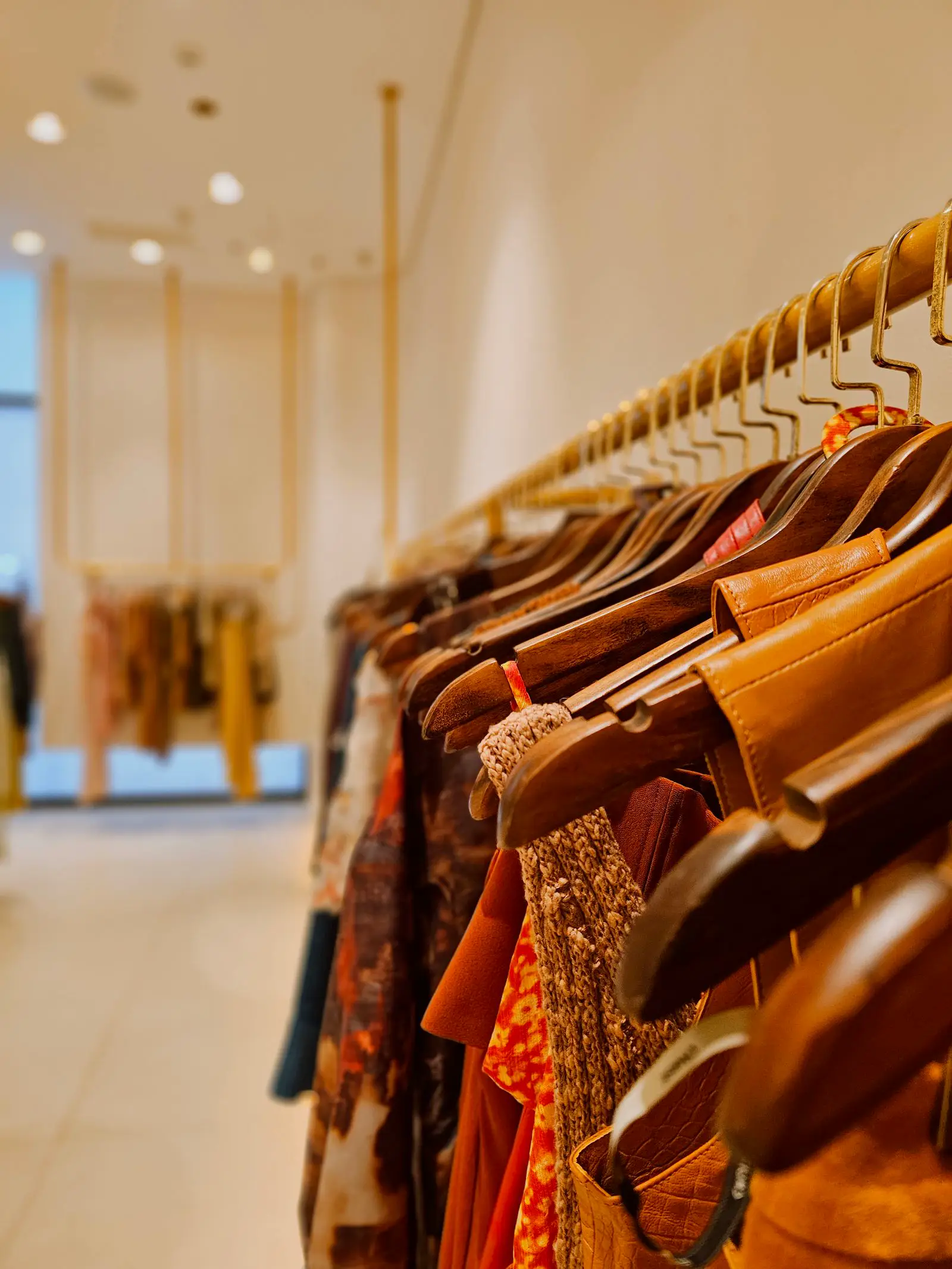
Retail lighting needs to do double duty: attract shoppers into the space and make products look irresistible once they arrive. The general sales floor should sit at 300–500 lux for comfortable browsing, but display areas and hero products need 500–1,000 lux to stand out against the ambient level. This contrast ratio—typically 3:1 between accent and ambient—is what creates the visual hierarchy that guides customers toward featured merchandise.
Color rendering matters as much as brightness in retail. Specifying CRI 90+ fixtures ensures fabrics look their true colors and food appears appetizing. Track lighting systems are especially effective here because you can reposition and re-aim beams as merchandise changes. For detailed guidance on maximizing sales with retail lighting, see our article on track lighting for retail stores: boost sales with design.
In practice, a boutique owner might run 300 lux of ambient lighting through recessed downlights, then add adjustable zoomable track light heads at 800–1,000 lux over the newest collection. This creates a spotlight effect that immediately draws the eye to the merchandise.
Offices & Workplaces
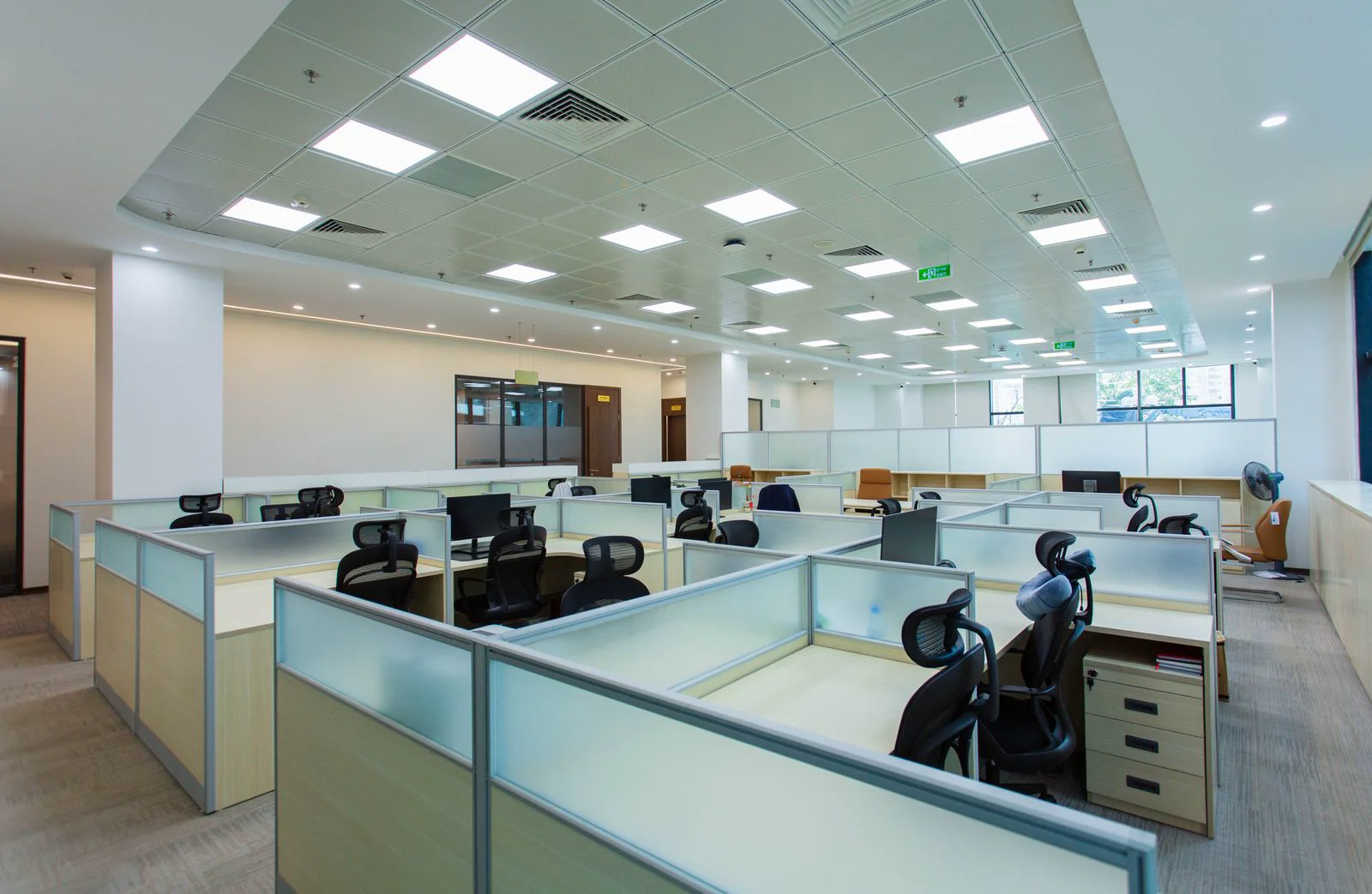
Office lighting requirements are among the most researched in the lighting industry because lighting directly affects worker performance, alertness, and eye comfort. The standard task level for reading, writing, and computer work is 300–500 lux at the work plane (typically desk height). Open-plan areas benefit from 200–300 lux of even, glare-controlled ambient light, supplemented by individual task lighting where needed.
Modern office lighting design increasingly emphasizes tunable white systems that shift color temperature through the day—brighter, cooler light in the morning to boost alertness, and warmer, dimmer light in the afternoon to reduce fatigue. Ceiling-mounted track lights with adjustable heads work particularly well in showrooms, design studios, and flexible workspaces where the layout changes frequently.
For offices with high ceilings (above 4 meters), spacing and beam angle become critical. A narrow-beam fixture at 5m ceiling height delivers significantly less lux than the same fixture at 2.7m. Choose higher-lumen heads and tighter beam angles for tall commercial interiors. Our guide on high-ceiling lighting for 12-foot rooms covers this in detail.
Restaurants, Cafes & Hospitality
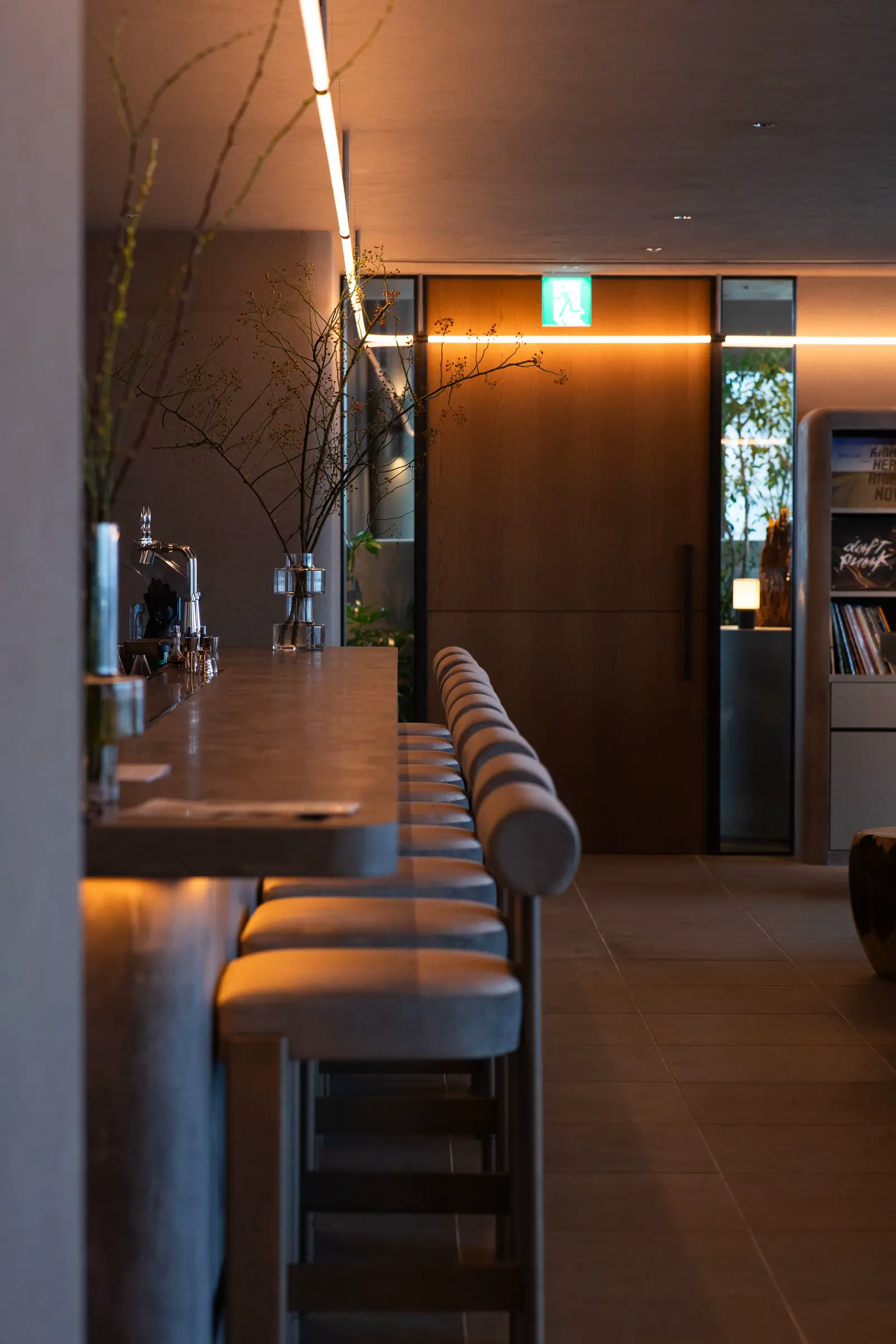
Hospitality lighting flips the usual brightness equation. Rather than maximizing lux, restaurants aim for a carefully calibrated 100–200 lux in dining areas to create intimacy and warmth. This deliberate dimness makes guests feel relaxed and encourages lingering—which often translates to higher average order value.
But dining areas still need enough light for guests to read menus, see their food clearly, and navigate safely. The trick is layered lighting: low ambient levels (100–150 lux) for atmosphere, with focused accent light (200–300 lux) over each table. Warm color temperatures (2700K–3000K) make food and skin tones look appealing.
For hospitality projects, track lighting offers the flexibility to fine-tune the balance between ambient and accent lighting—adjustable heads can be aimed at each table and dimmed to match different moods throughout the evening. Our detailed guide on restaurant track lighting design walks through the full approach.
Supermarkets & Grocery Stores
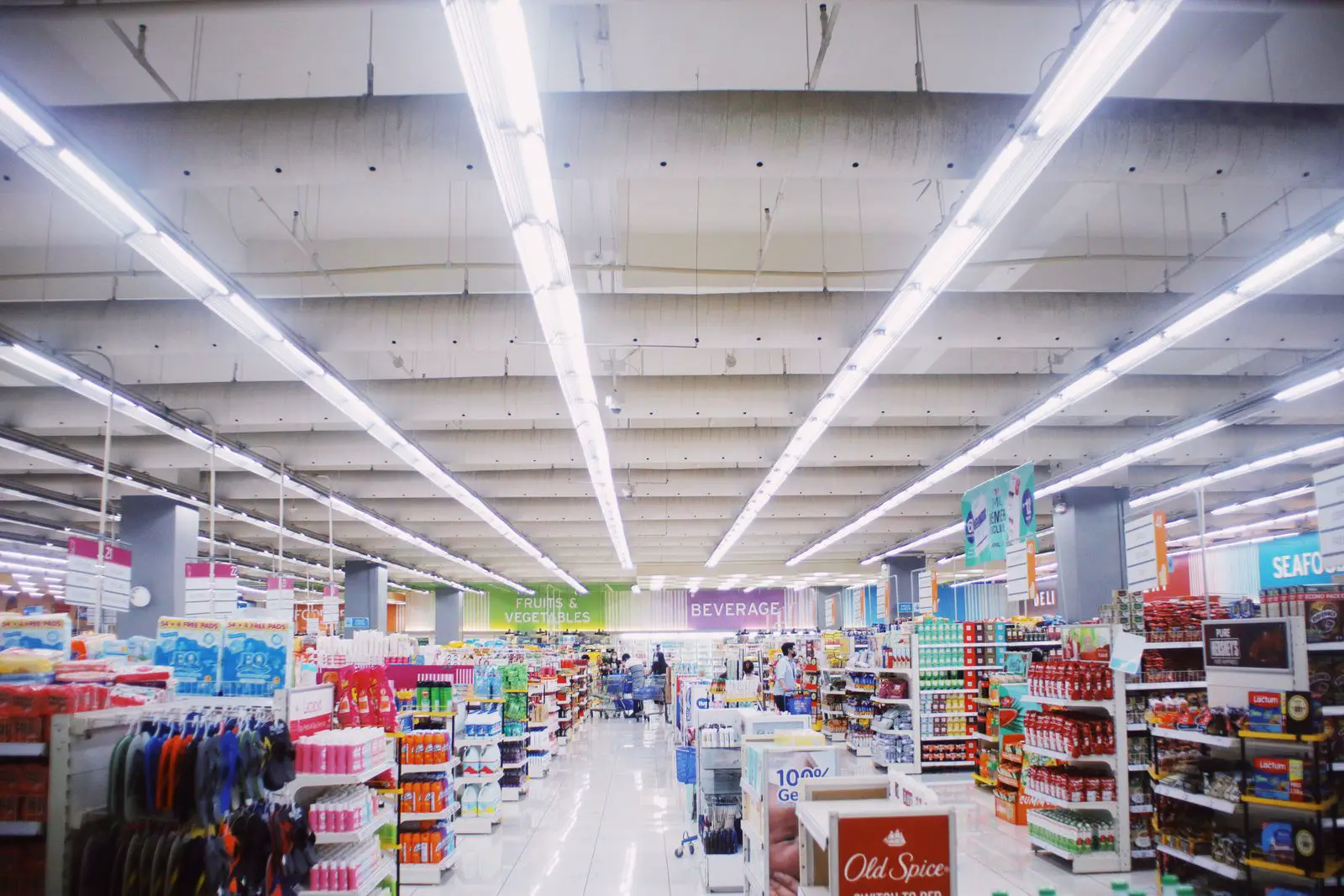
Supermarkets need bright, uniform illumination that lets shoppers quickly identify products and compare options. The recommended range is 400–700 lux across general sales areas, with higher levels in fresh produce and meat sections where visual appeal drives purchase decisions. High-CRI lighting (CRI 90+) is essential in these sections to make fruits, vegetables, and packaged foods look vibrant.
Modern supermarket lighting design typically uses a combination of linear LED fixtures for ambient coverage, supplemented by accent lighting on end caps and promotional displays. The goal is even illumination without hot spots or shadows that can obscure product labels.
Art Galleries & Museums
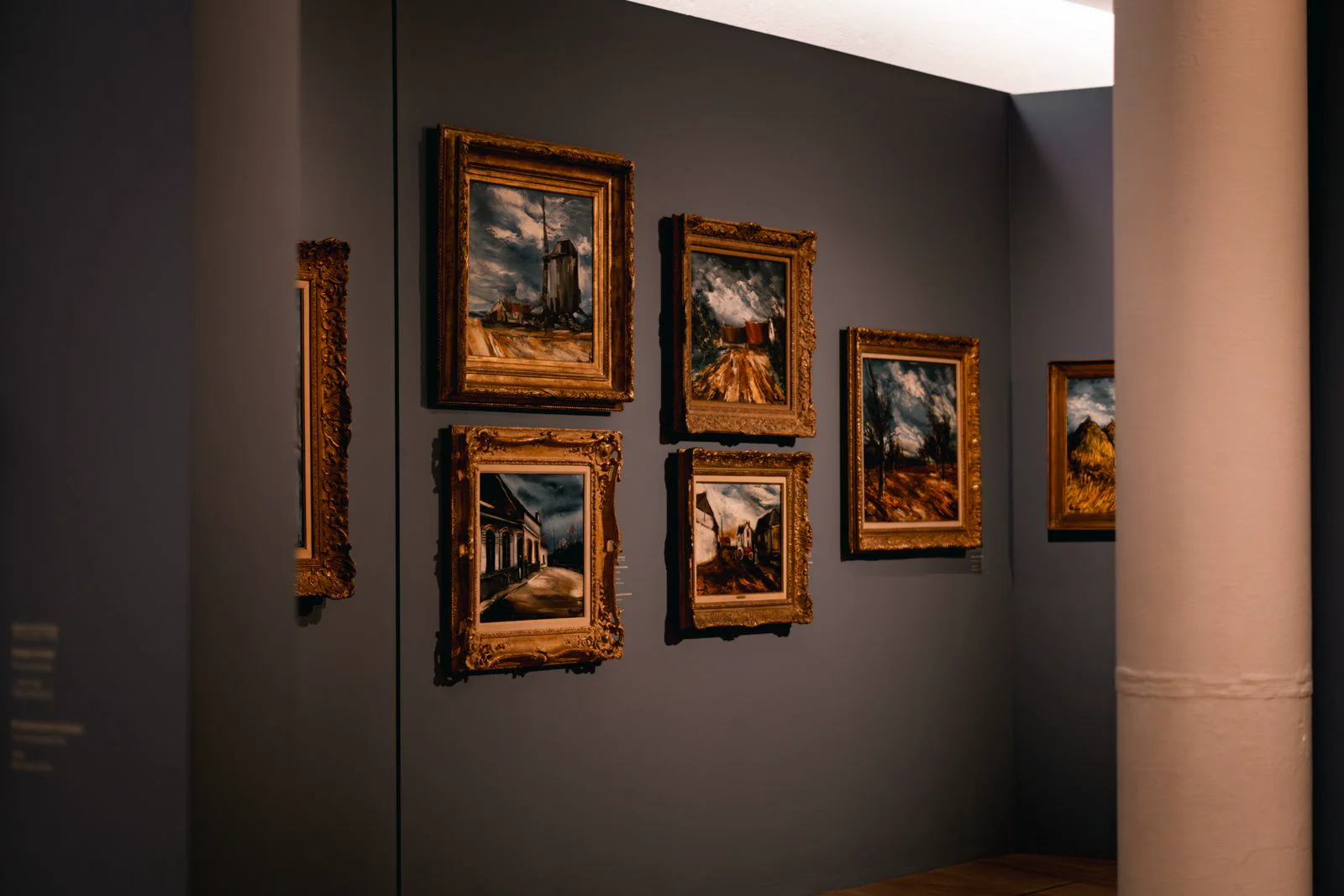
Museum and gallery spaces have some of the most precise lux requirements in commercial lighting. Standard display lighting for paintings and three-dimensional objects typically ranges from 150–300 lux, but fragile works like watercolors, textiles, and photography are limited to 50–150 lux to prevent light damage. Light is cumulative energy that degrades pigments over time, which is why museums operate under strict annual light exposure budgets.
For art spaces, two factors matter more than raw lux: CRI (color rendering index) and UV/IR filtration. High-CRI lighting (CRI 95+) ensures colors appear as the artist intended, while UV-filtered LED sources protect pigments from long-term damage. Our companion guide on museum lighting requirements: lux, CRI & UV covers the science and specifications in depth.
Warehouses & Distribution Centers
Warehouse lighting requirements balance worker safety with operational efficiency. General aisle lighting should deliver 150–300 lux at floor level, while loading docks and pick stations benefit from 300+ lux for accurate reading of labels and barcodes. High-bay lighting with wide, even beam patterns is typically used at ceiling heights above 6 meters.
Energy efficiency is a major consideration in warehouses that run lights for 16+ hours per day. Modern LED high-bay fixtures deliver 130+ lumens per watt, cutting energy consumption by 60-70% compared to legacy metal halide systems. Motion sensor controls can further reduce usage in low-traffic zones.
From Lux Targets to a Lighting Plan
Knowing the target lux is only half the job. Here is the practical process to translate commercial lighting lux requirements into a fixture specification:
- Map the zones. Break your space into functional areas (display, circulation, task, decorative) and assign each one a lux target from the table above.
- Calculate the lumen budget. For each zone, multiply the target lux by the floor area (in square meters) to get the minimum total lumens needed. Add a 20% safety factor for fixture aging and dirt accumulation.
- Choose the right optics. Higher ceilings and precise display lighting need narrower beam angles to concentrate light where it matters. A 15°–25° narrow beam produces much higher lux than a 60° flood with the same lumen output.
- Layer the light. Combine ambient, task, and accent layers. Aim for a 3:1 contrast ratio between accent and ambient levels so focal points stand out without glare.
- Select the right fixtures. Choose fixtures with appropriate lumen output, beam angle, and CRI for each zone. If you are using track lighting, look for models like the VEGA zoomable track head that allow on-site tuning of beam angle to hit exact lux levels.
Common Lux Specification Mistakes to Avoid
- Reading lux at the wrong height. Lux is always measured at a specific plane. Task areas are measured at desk height (0.75m), retail displays at product face height, and corridors at floor level. Mixing these planes leads to errors.
- Ignoring surface reflectance. Dark walls and floors absorb light, meaning you may need 20-30% more fixture output to achieve the same lux on a surface in a dark interior versus a light one.
- Using the wrong beam angle. A wide flood spread over too large an area can leave a display under-lit even when the fixture has ample lumens. Tightening the beam concentrates the same output to hit your lux target.
- Over-specifying uniform lux. Not every square meter needs the same lux. Design layers with deliberate contrasts rather than one bright blanket of light.
- Forgetting the driver. Even the best fixture performs poorly with a flickering or incompatible driver. Confirm 0–10V, DALI, or TRIAC dimming support for commercial installations.
Commercial Lighting Lux Requirements: FAQs
How many lux does a retail store need?
General retail sales areas should be lit to 300–500 lux. Display areas and featured products benefit from 500–1,000 lux to create visual emphasis. Higher illuminance makes products look more appealing and supports quick purchasing decisions.
What is the recommended lux for office work?
Standard office task lighting ranges from 300–500 lux at the work plane. General circulation and collaborative zones can run at 200–300 lux. Supplement with task lighting where fine detail work is performed.
Why do restaurants use lower lux than offices?
Restaurants deliberately aim for 100–200 lux in dining areas to create intimacy and relaxation. Lower ambient light makes guests feel comfortable staying longer, while focused table lighting keeps menus and food clearly visible.
What is the difference between lux and foot-candles?
One foot-candle equals approximately 10.76 lux. Both measure illuminance—lux uses metric units (lumens per square meter) while foot-candles use imperial units (lumens per square foot). Commercial lighting codes in North America often list requirements in both units.
How do I measure lux in my commercial space?
Use a digital lux meter and measure at the plane you care about—desk height for offices, product height for retail, floor level for corridors. Take multiple readings across the space, including corners and edges, to check uniformity.
Specifying Lighting That Meets Commercial Lux Standards
Meeting commercial lighting lux requirements is about more than hitting a number—it’s about creating spaces that perform. A well-lit retail store guides customers to the right products, a properly lit office keeps teams productive and comfortable, and a carefully tuned restaurant builds atmosphere that brings people back.
ENCORE manufactures architectural LED track lighting systems engineered for commercial applications. Our range includes high-CRI heads for retail and gallery projects, zoomable track spots for precise lux control, magnetic track systems for flexible re-lighting, and high-output fixtures for tall commercial ceilings.
Need help translating your space into a lighting specification? Our team provides free photometric layout support for retail, office, hospitality, and gallery projects.
Get a free lighting consultation and lux layout from our spec team →