
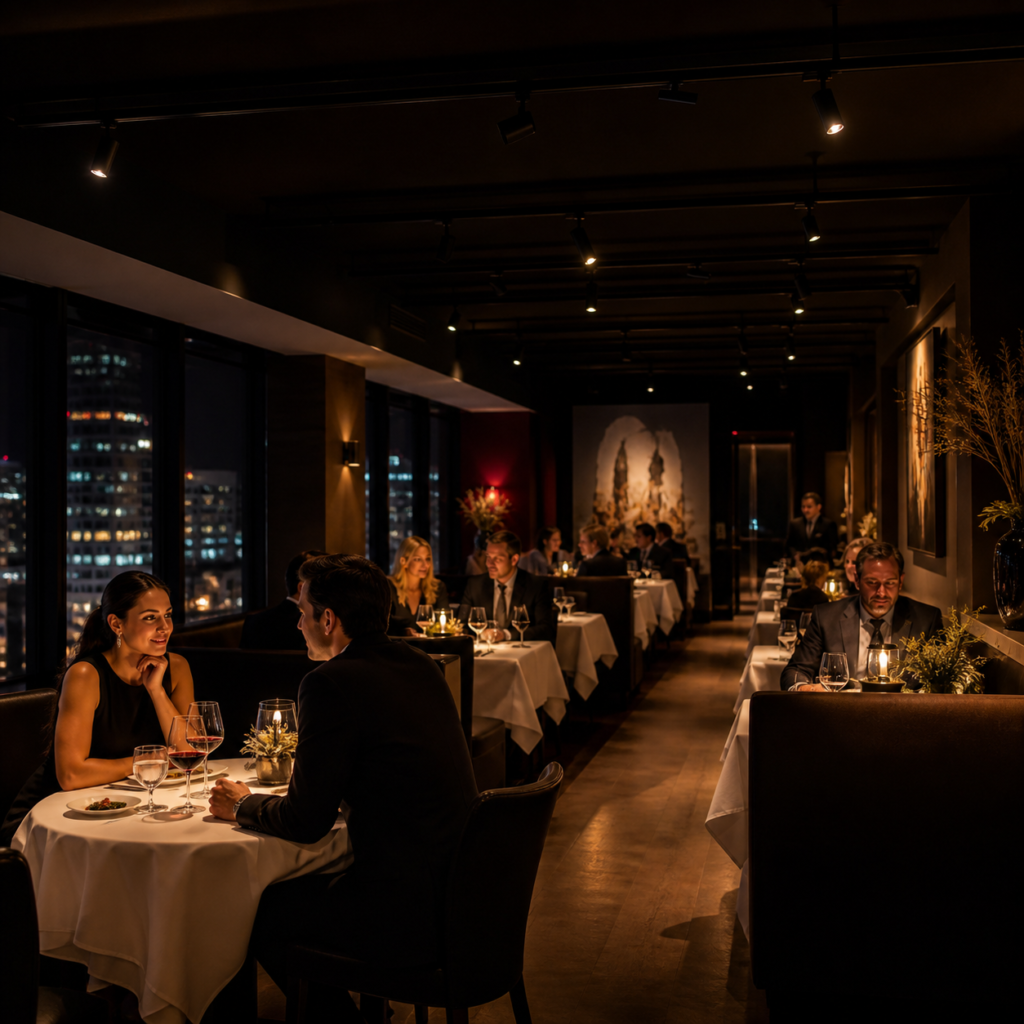
Walk into any restaurant that just feels right — where conversations feel intimate, the food looks stunning, and you instinctively want to linger over dessert — and you are standing in someone’s carefully designed lighting plan. Restaurant track lighting is one of the most powerful tools in that plan, because it is the only overhead system that lets you aim light exactly where it creates value: on the plate, on the guest, on the artwork.
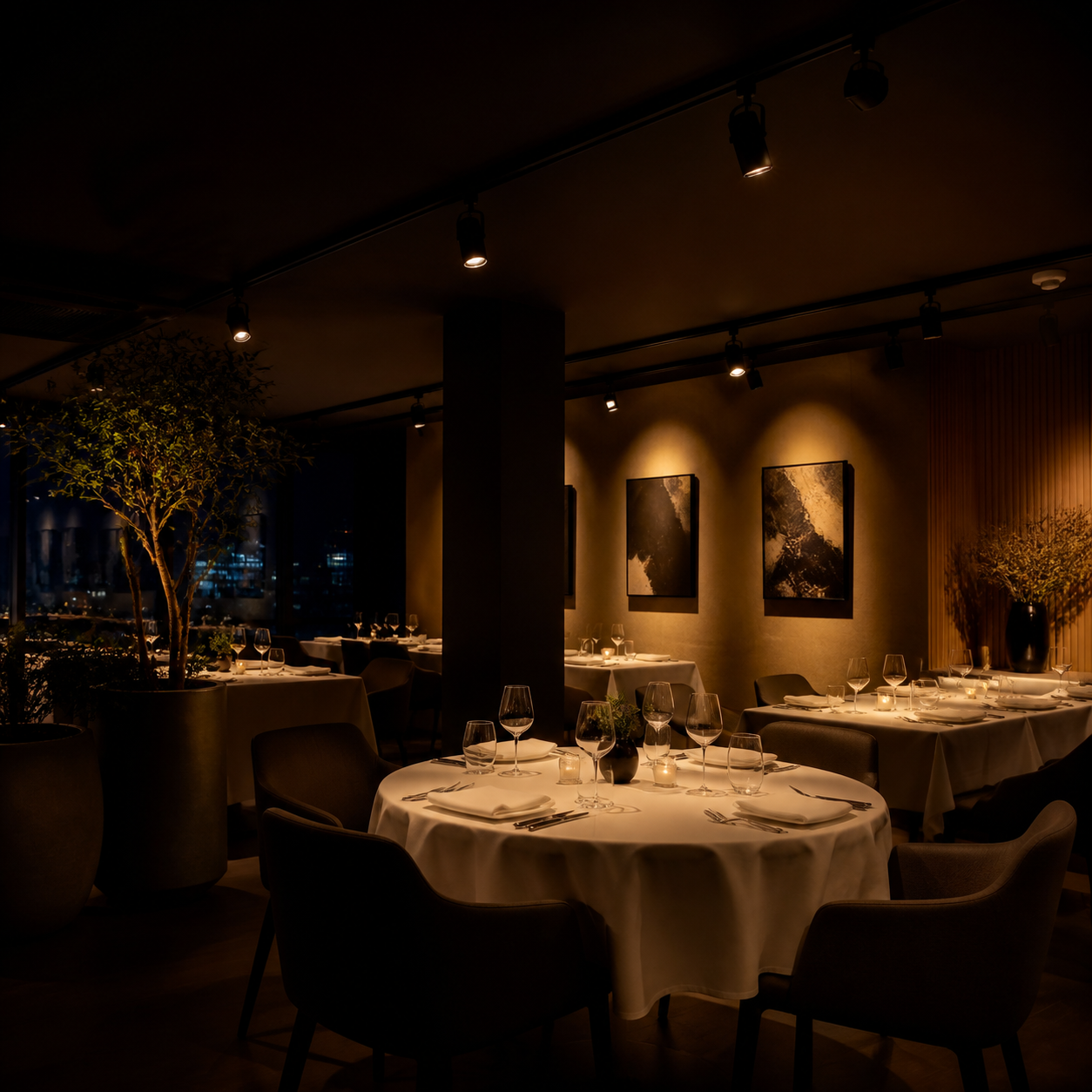
This guide covers every decision that separates a great restaurant lighting installation from an average one: color temperature, layering, beam angles, zoning, and how to choose the right commercial track lighting fixtures for each space.

Why Track Lighting Is the Right Choice for Restaurants
Restaurants present a unique lighting challenge: one space must serve multiple functions at different times of day. The same dining room needs to feel bright and energising at breakfast, warm and intimate at dinner, and dramatic during a bar service after 10 pm.
Traditional recessed downlights cannot adapt. Once installed, they illuminate a fixed area with a fixed intensity. Track lighting solves this because every fixture on the track is individually aimable, removable, and replaceable. You can:
- Reposition fixtures as your layout changes between service periods
- Swap a 24° accent spot for a 60° flood barrel in under a minute
- Add or remove fixtures as your menu and seating plan evolve
- Combine warm CCT and cool CCT fixtures on the same track for visual texture
Cooper Lighting Solutions, a leading commercial track lighting manufacturer, describes the hospitality application precisely: track lighting is ideal for boutique hospitality environments where flexibility and visual quality must coexist. ENCORE’s commercial track lighting range is engineered for exactly these scenarios.
The Three Layers of Restaurant Lighting Design
Professional restaurant lighting always applies three distinct layers. Skip one, and the space feels either flat and institutional or chaotic and inconsistent.
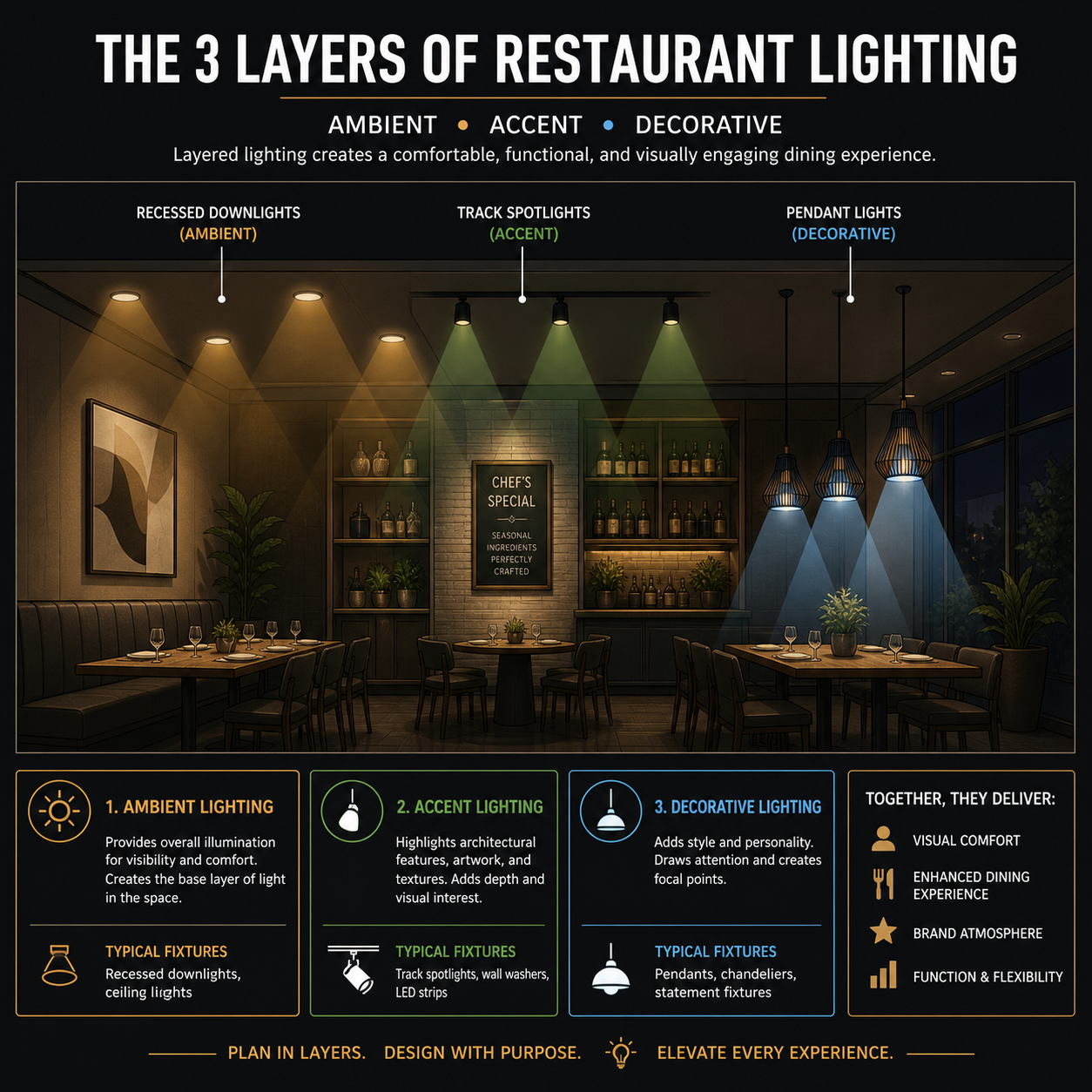
Layer 1: Ambient Lighting — The Foundation
Ambient lighting sets the overall brightness and color temperature of the room. In restaurants, ambient light typically comes from a combination of cove lighting, pendant fixtures, and low-level track floods. The goal is a brightness of 100–300 lux at table height — enough to read the menu without feeling like a conference room.
For ambient track lighting, use wide-beam fixtures (60° or above) at 2700K–3000K to create a warm, enveloping glow across the ceiling plane; see our magnetic vs traditional track lighting comparison if you are choosing between system types.
Layer 2: Accent Lighting — The Drama
Accent lighting draws the eye to what matters most: the food, the bar, the feature wall. In restaurant track lighting design, accent lighting uses narrow-beam spots (15°–36°) at higher intensity to create focal points within the ambient field.— a technique we detail in our exposed track lighting wall-wash guide.
The ratio between accent and ambient illumination is called the accent-to-ambient ratio. The ideal ratio for fine dining is 5:1 to 10:1 — meaning the food on the plate is 5 to 10 times brighter than the surrounding table surface. This is what makes dishes look photogenic and makes guests feel special.
Layer 3: Decorative Lighting — The Personality
Decorative elements — pendant shades over bar counters, statement chandeliers in the lobby, marquee lighting in the entrance corridor — add the brand identity layer that guests remember. These typically fall outside the track system but can be coordinated with it through matching color temperatures and finishes.
Color Temperature: The Single Most Impactful Decision
Color temperature (CCT, measured in Kelvin) is the primary tool for controlling the emotional tone of a restaurant space. Get it wrong, and no amount of fixture repositioning will save the atmosphere.
| Zone | Recommended CCT | Effect |
|---|---|---|
| Fine dining, formal dinner | 2700K–3000K | Deep amber warmth, intimate, slow-paced service |
| Casual dining, bistro, café | 3000K–3500K | Welcoming, balanced, supports faster turnover |
| Brasserie, wine bar | 2700K with warm filament LED | Industrial warmth, authenticity |
| Kitchen pass, prep areas | 4000K–5000K | Clinical clarity for food prep and speed |
| Restrooms, service corridors | 3500K–4000K | Neutral, practical, no surprises |
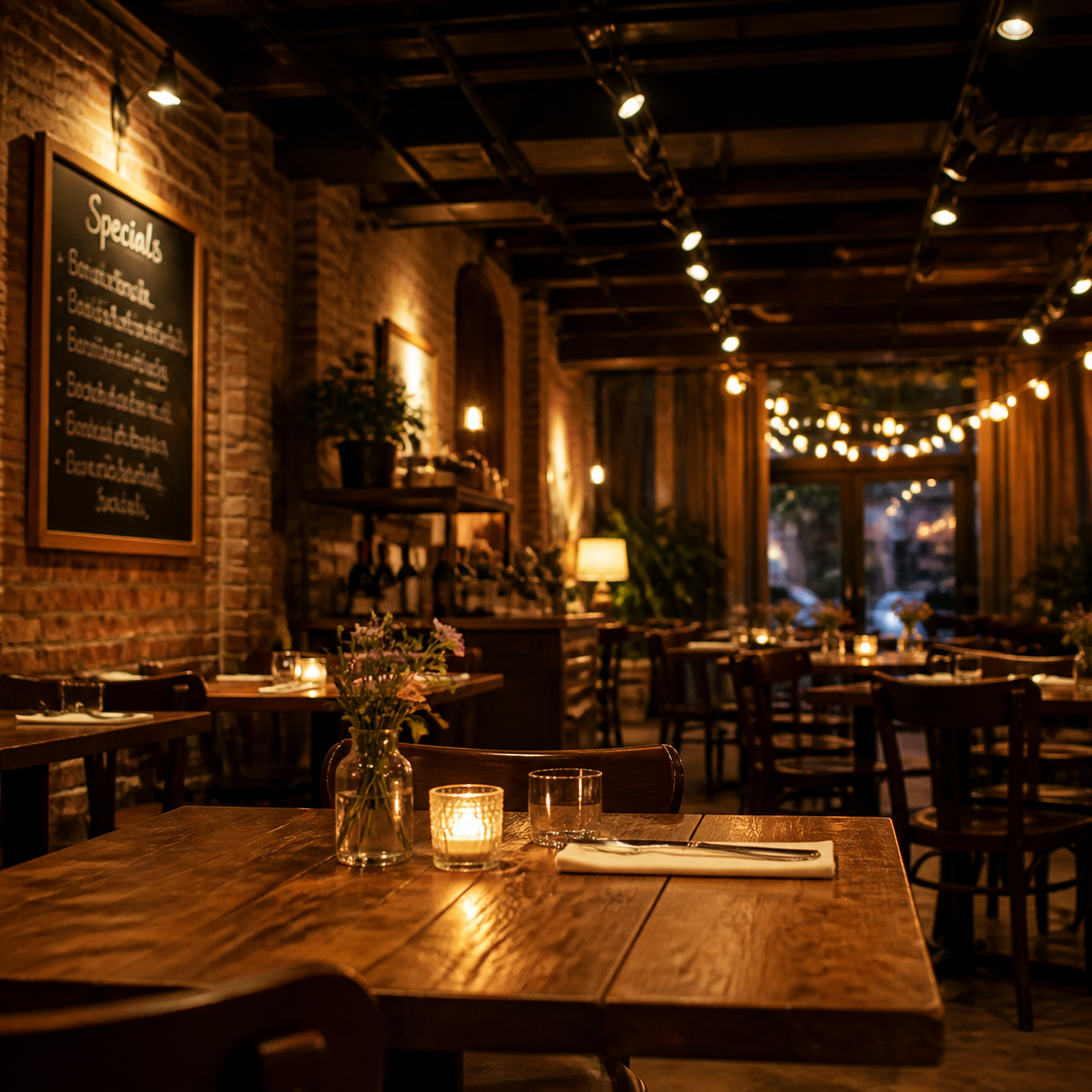
The golden rule: Never mix CCTs within the same sightline. A 2700K table illuminated next to a 4000K corridor will make the corridor look greenish and uninviting by contrast.
For a complete breakdown of how 2700K, 3000K, and 4000K interact in track lighting applications, see our Track Lighting Color Temperature Guide.
Zoning: How to Light Different Restaurant Areas
Every restaurant has distinct zones that require different track lighting treatment. Zoning allows you to apply different intensity, beam angle, and CCT settings to different functional areas — all on the same electrical circuit.
Main Dining Room
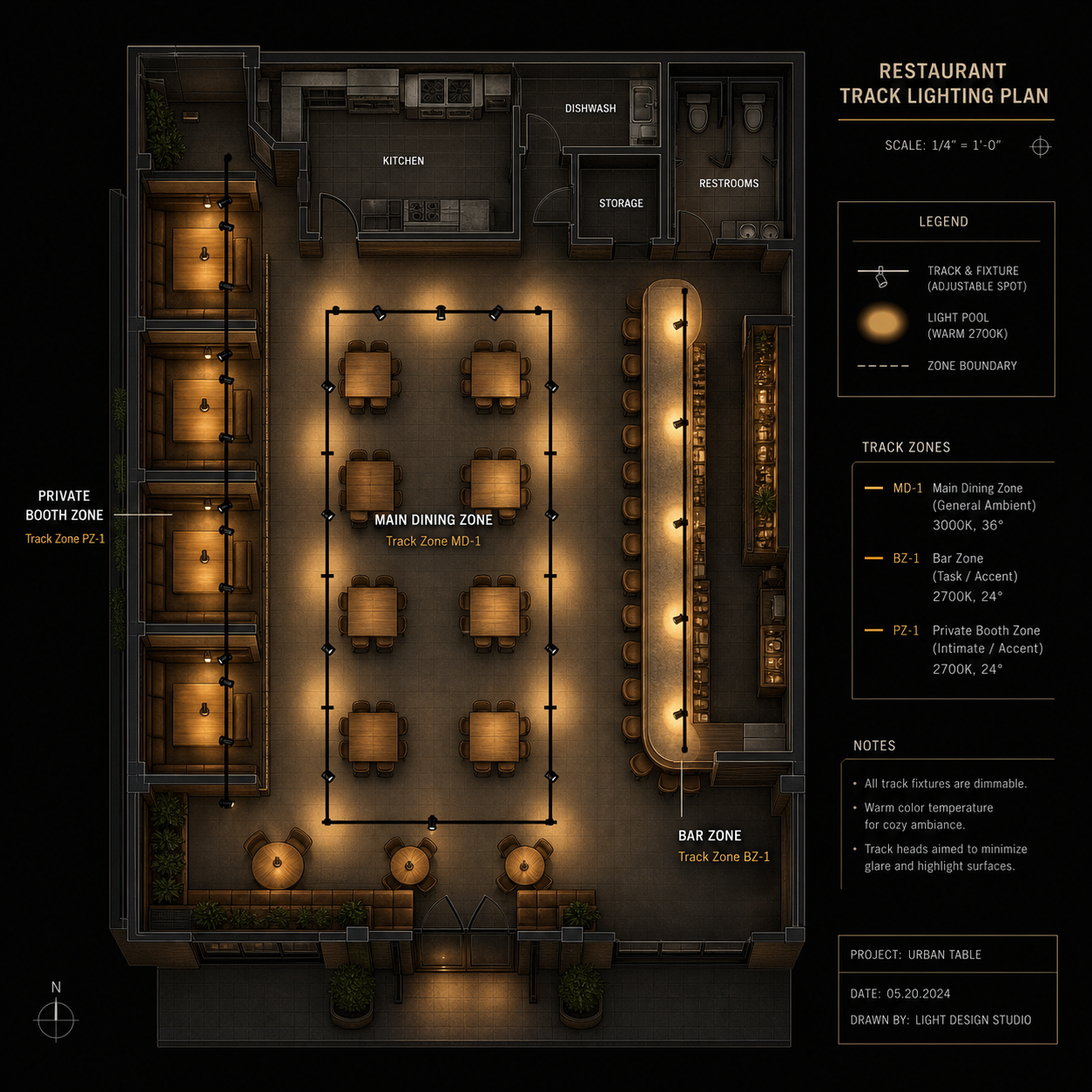
The core dining space benefits from a combination of wide-flood ambient track fixtures (60°, 2700K–3000K) and narrow-spot accent fixtures (24°–36°, aimed at tabletops or feature walls). Mount the track parallel to window walls to avoid casting diner shadows toward the windows.
The Bar and Counter
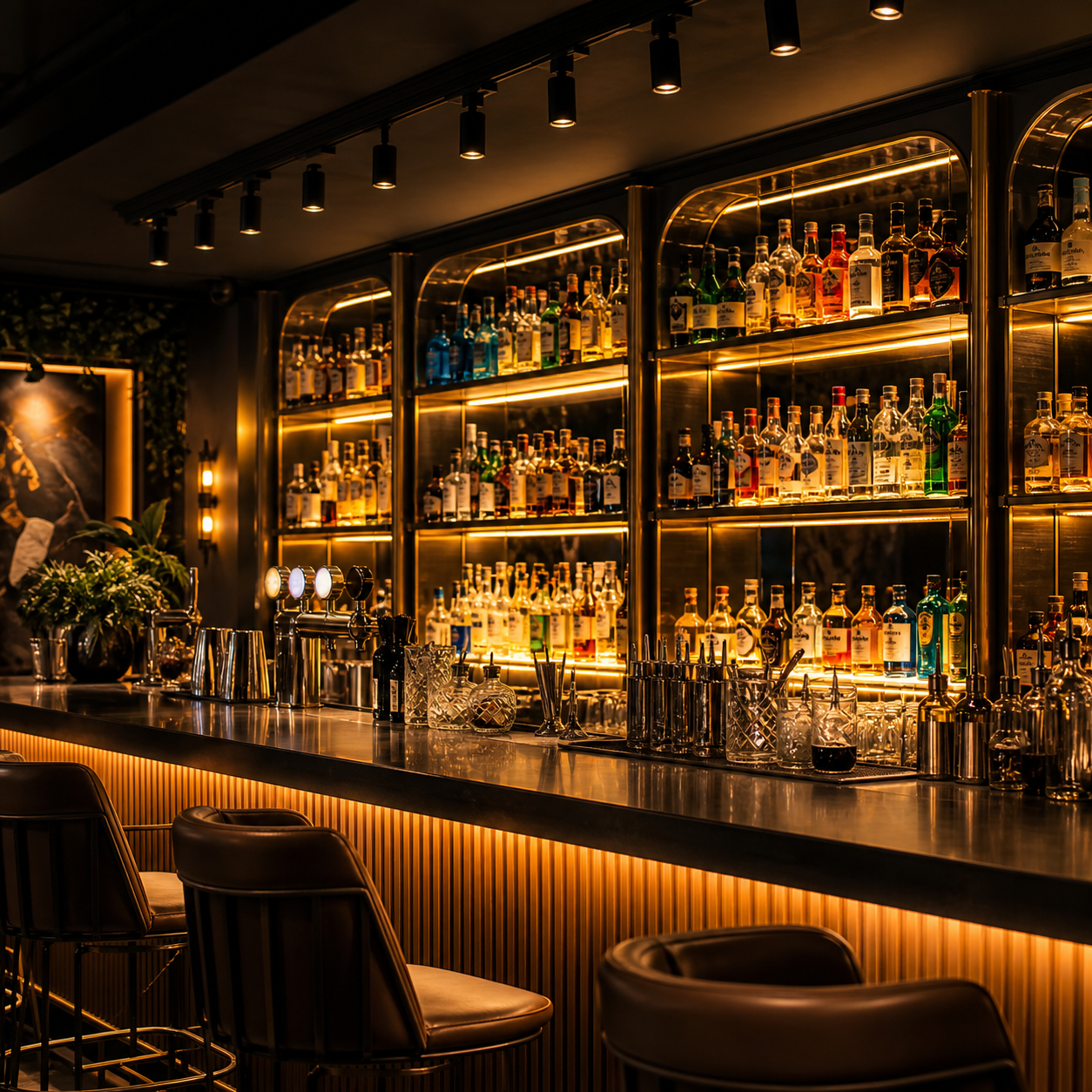
Bars require more light, not less. Guests at the bar are actively engaged and need sufficient illumination to read the cocktail menu and appreciate the glassware. Use CRI 90+ fixtures at 3000K–3500K with medium-beam spots (36°) to highlight the back bar and liquor display while maintaining intimacy at the bar top.
Private Dining and Booths
Semi-enclosed booths and private dining rooms benefit from lower ambient levels with focused accent spots directly over each seating group. A single 15° spot at 2700K per booth table creates the feeling of a separately lit world — ideal for business dinners and special occasions.
Entrance and Waiting Area
First impressions are formed in the first 8 seconds. The entrance should be 20–30% brighter than the dining room to signal warmth and invitation, but not so bright that it feels like a retail store. Use wide-flood track fixtures at 3000K, potentially combined with decorative pendants to signal the restaurant’s style identity.
Beam Angles: Matching Spread to Function
Beam angle determines the size of the light pool on the target surface. In restaurant track lighting, the right beam angle depends on what you are illuminating:
| Application | Beam Angle | Why |
|---|---|---|
| Individual table (fine dining) | 15°–24° | Concentrated pool, high contrast, intimate |
| Shared table / booth | 36° | Even coverage across 2–4 place settings |
| Feature wall / artwork | 24°–36° | Focused accent, reveals texture and colour |
| Kitchen pass / open kitchen | 60°–90° | Broad, even work light across cooking line |
| Bar top illumination | 36°–60° | Balance between visibility and atmosphere |
| Ceiling wash / ambient fill | 60°+ flood | Soft upward light, reduces shadow contrast |
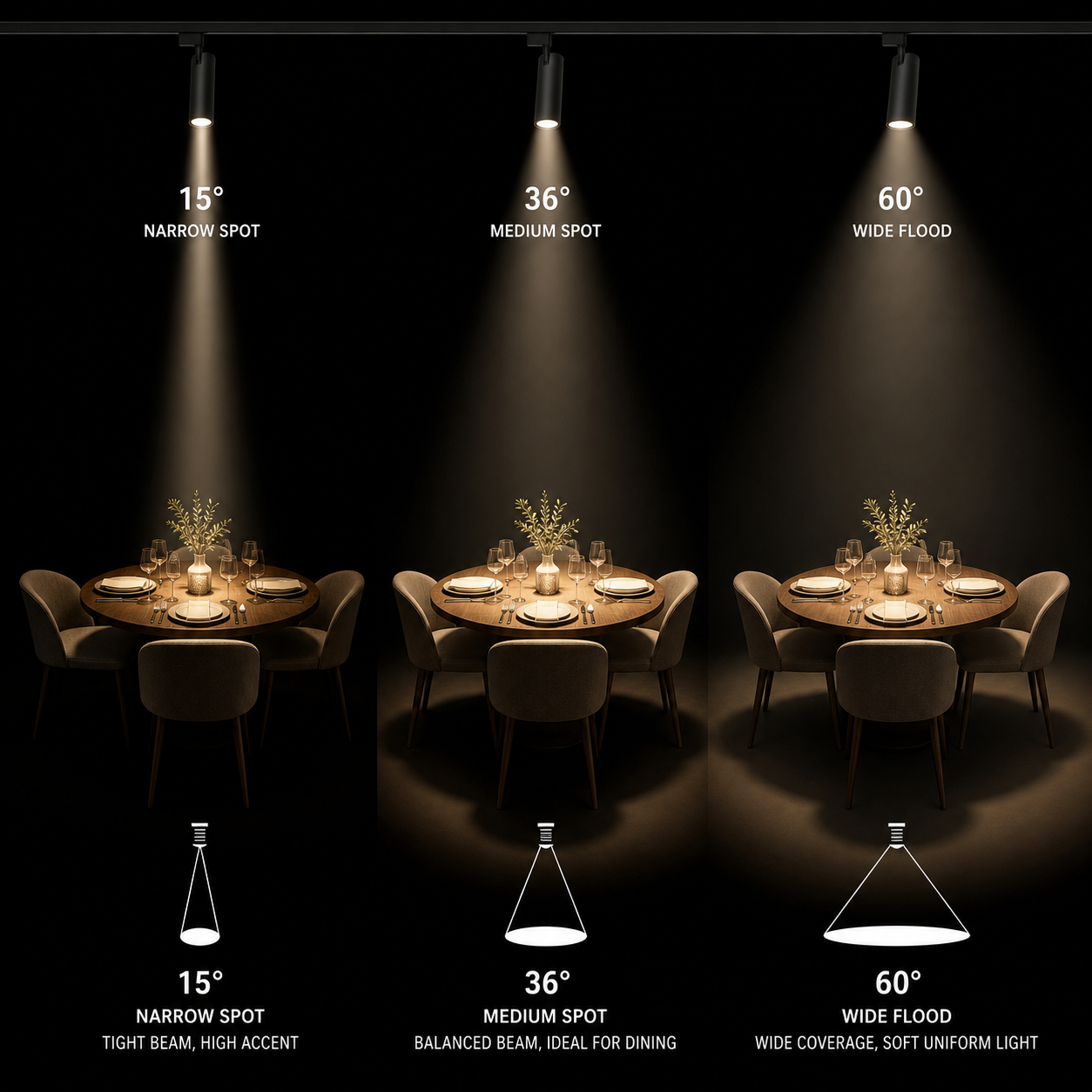
For the complete technical reference on beam angle selection across all commercial applications, see our Track Lighting Beam Angles Explained guide.
CRI and Color Rendering in Food Presentation
Restaurants live and die by the appearance of food. A steak under a CRI 80 LED looks brown and unappetising. The same steak under CRI 95 at 2700K looks succulent, glossy, and worth every penny of the bill.
Food retail research consistently shows that higher CRI lighting increases perceived freshness, quality, and value. For restaurants, this translates directly to higher average ticket sizes and positive online reviews featuring food photography.
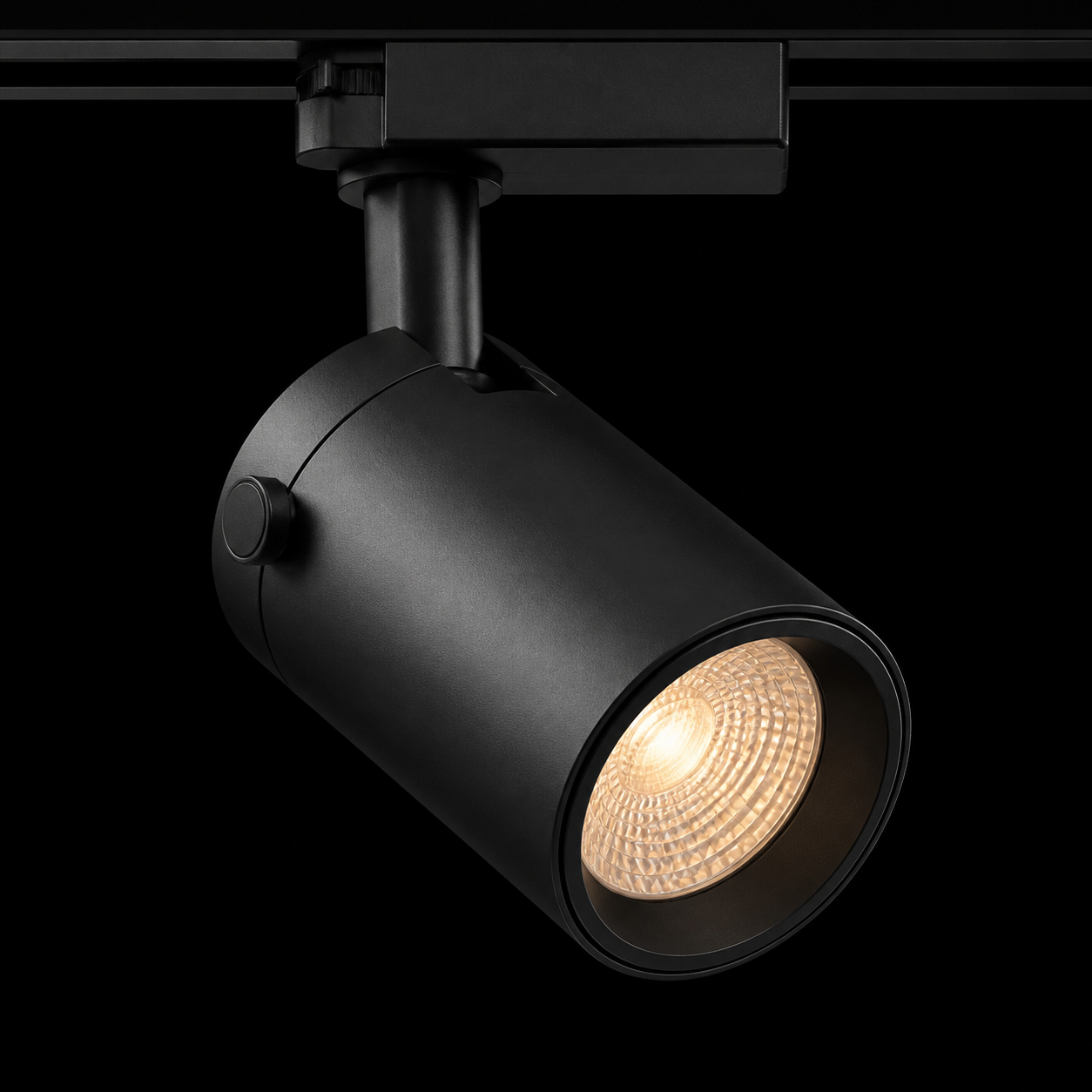
ENCORE’s VEGA and IMAX track lighting series offer CRI 95+ with R9 values above 90, meaning the critical warm red spectrum — present in rare steaks, grilled vegetables, and tomato-based dishes — renders accurately and enticingly. Combined with 2700K color temperature, this creates the ideal light for fine dining food presentation.
For a full explanation of CRI ratings and their impact on commercial lighting quality, see our CRI 80 vs 90 vs 95 Guide.
Common Restaurant Lighting Mistakes to Avoid
Mistake 1: Overhead Uniformity
Installing the same fixture type and beam angle across the entire ceiling creates a flat, cafeteria atmosphere. The human eye craves contrast. A 5:1 accent-to-ambient ratio is the minimum for creating visual interest and a sense of occasion.
Mistake 2: Ignoring Glare
Unshielded track spots pointing downward at eye level cause glare discomfort for both guests and staff. Specify fixtures with recessed lenses or honeycomb louvers in areas where people are seated at eye level with the fixtures.
Mistake 3: CCT Mismatch Across Sightlines
As noted above, adjacent zones with different color temperatures create uncomfortable visual dissonance. Plan your CCT strategy before specifying fixtures.
Mistake 4: Insufficient Dimming Range
A single dimming level cannot serve breakfast and dinner service. Specify a 0–100% dimming range with smooth, flicker-free performance at all levels. DALI or DMX control systems allow different preset scenes for each service period.
Frequently Asked Questions
What is the best color temperature for restaurant track lighting?
The best CCT depends on your concept. Fine dining and romantic restaurants: 2700K–3000K (warm amber). Casual dining and all-day venues: 3000K–3500K (neutral warm). Avoid mixing CCTs within the same sightline to prevent uncomfortable colour contrast.
Can track lighting be dimmed in a restaurant?
Yes. Most commercial LED track lighting fixtures are dimmable via trailing edge dimmers, 0-10V systems, DALI, or DMX protocols. Ensure your dimming system is specified to operate flicker-free at low dimming levels — this is critical for fine dining evening service.
How do I light a restaurant bar differently from the dining room?
The bar requires more light: use 3000K–3500K at CRI 90+ with medium-beam spots (36°–60°) to illuminate the back bar, glassware, and bar top simultaneously. This creates visibility and energy without losing the intimate bar atmosphere. Dimmable fixtures allow the bar brightness to be reduced during late-night service.
What beam angle do I need for restaurant table lighting?
For individual tables in fine dining: 15°–24° narrow spots for high-contrast, intimate pools of light. For shared tables and casual dining: 36° medium spots for even coverage across multiple place settings. Use multiple fixtures rather than one oversized fixture to create depth and dimension.
Is CRI important for restaurant lighting?
Yes, critically. Food presentation under high-CRI lighting (CRI 90+) appears fresher, more vibrant, and more appetising. For fine dining, specify CRI 95 with R9 above 90 to accurately render the warm red spectrum of grilled and roasted dishes. This directly affects perceived food quality and positive guest reviews.
How many track lighting fixtures does a restaurant need?
A rule of thumb: 1 accent fixture per 4–6 square metres of dining space, supplemented by ambient flood fixtures on the same or a secondary track circuit. The exact count depends on ceiling height, desired lux levels, and whether you are using LED (which delivers more lumens per watt than older HID technology). A lighting designer can model this with a lux-level plan before installation.
Final Recommendation
Restaurant track lighting is not a commodity purchase — it is a long-term investment in your guest experience, your brand identity, and your operational flexibility. The right system adapts to every service, every season, and every redesign without requiring a full re-wire.
Start with a clear zoning plan: define your CCT, beam angle, and intensity targets for each area before selecting fixtures. Specify CRI 90+ as a minimum, preferably CRI 95 for fine dining. And plan for dimming from day one.
ENCORE offers a dedicated range of commercial track lighting fixtures designed for hospitality environments: the VEGA series (CRI 95, H-type and J-type compatible), the FLEX magnetic track system for zero-recess installations, and the IMAX series for high-output accent applications.
Need a lighting specification for your restaurant project? Contact our commercial lighting team for fixture recommendations, track system options, and project-specific consultation.