
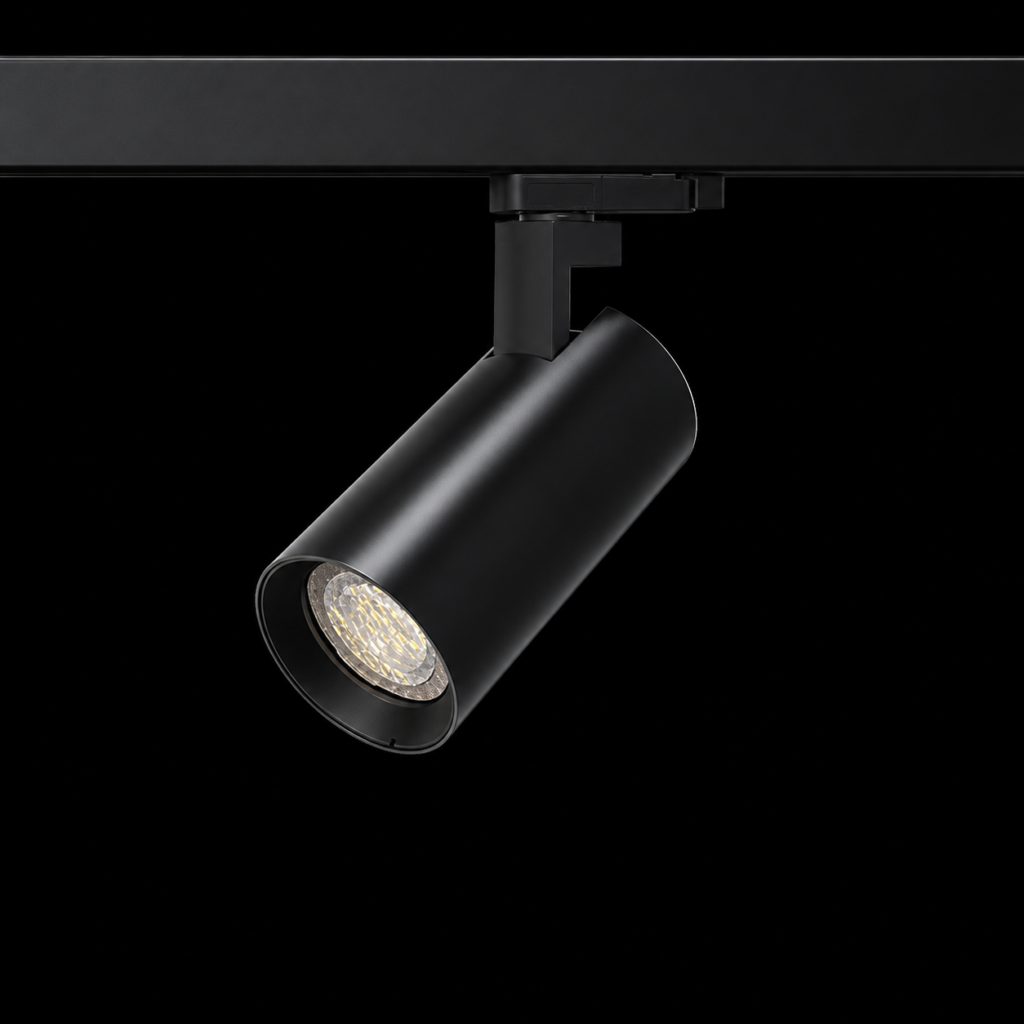
Black track lighting is no longer a niche choice — it has become the defining look of modern interiors, appearing in everything from minimalist apartments to flagship retail stores. Designers love it for one simple reason: a matte black rail reads as a deliberate architectural line rather than a utilitarian afterthought, and against a white ceiling it creates the kind of graphic contrast that photos and showrooms crave.
But “black” is not one finish, and a trending look does not automatically mean a good installation. This guide covers everything you need to know before buying black track lighting: why the finish works aesthetically, what separates a quality matte black fixture from a cheap one, how to apply it room by room in homes and commercial spaces, and exactly which specs — color temperature, CRI, beam angle, dimming — to pair with it for a professional result.

Why Black Track Lighting Became the Look of the Moment
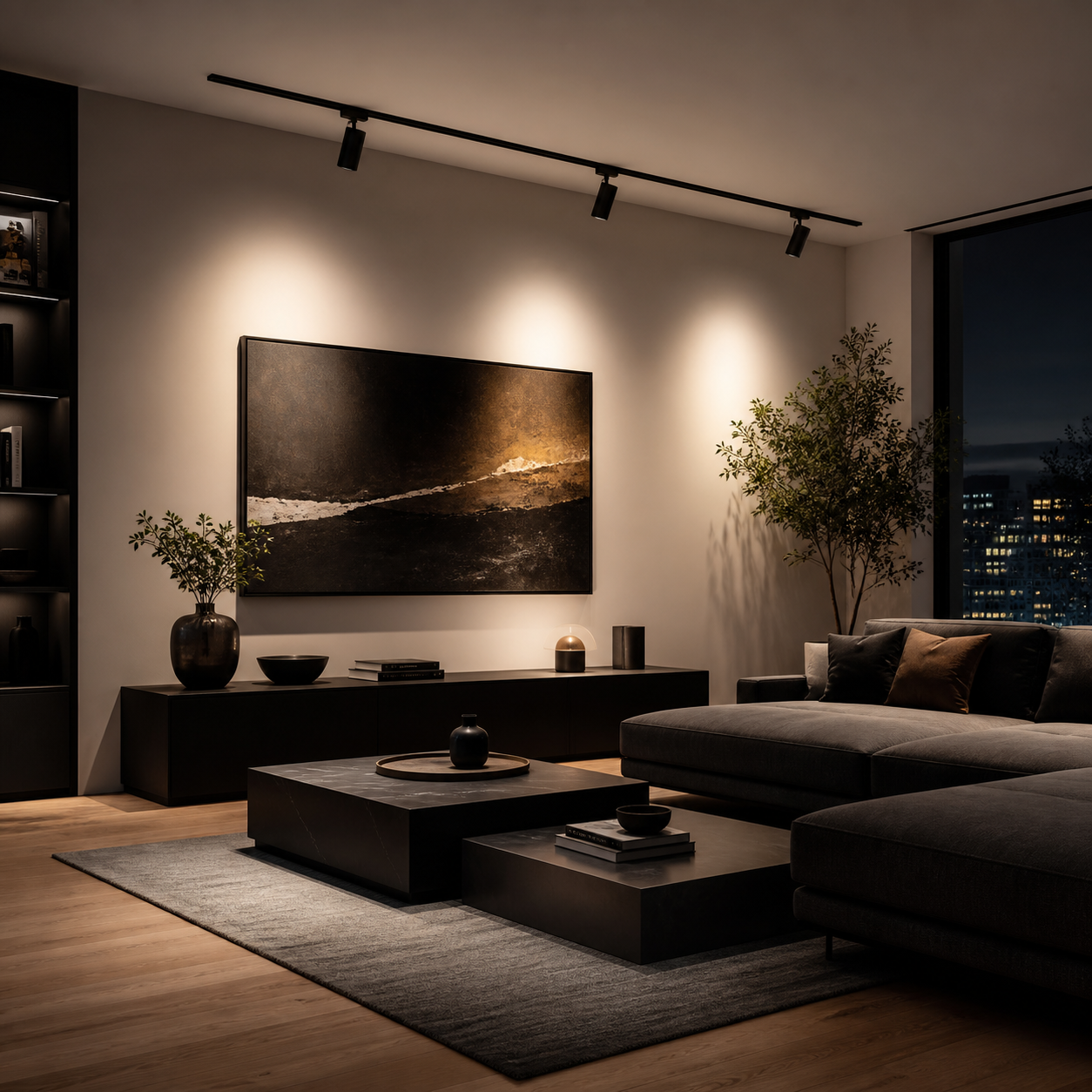
The rise of black track lighting is not a coincidence of taste — it is grounded in how the eye reads a room. Ceilings naturally fall into shadow, and a dark fixture inside that shadow zone does something a white one cannot: it visually disappears. The light source becomes nearly invisible while the light itself — the pools of warm light on a wall, counter or product — becomes the star.
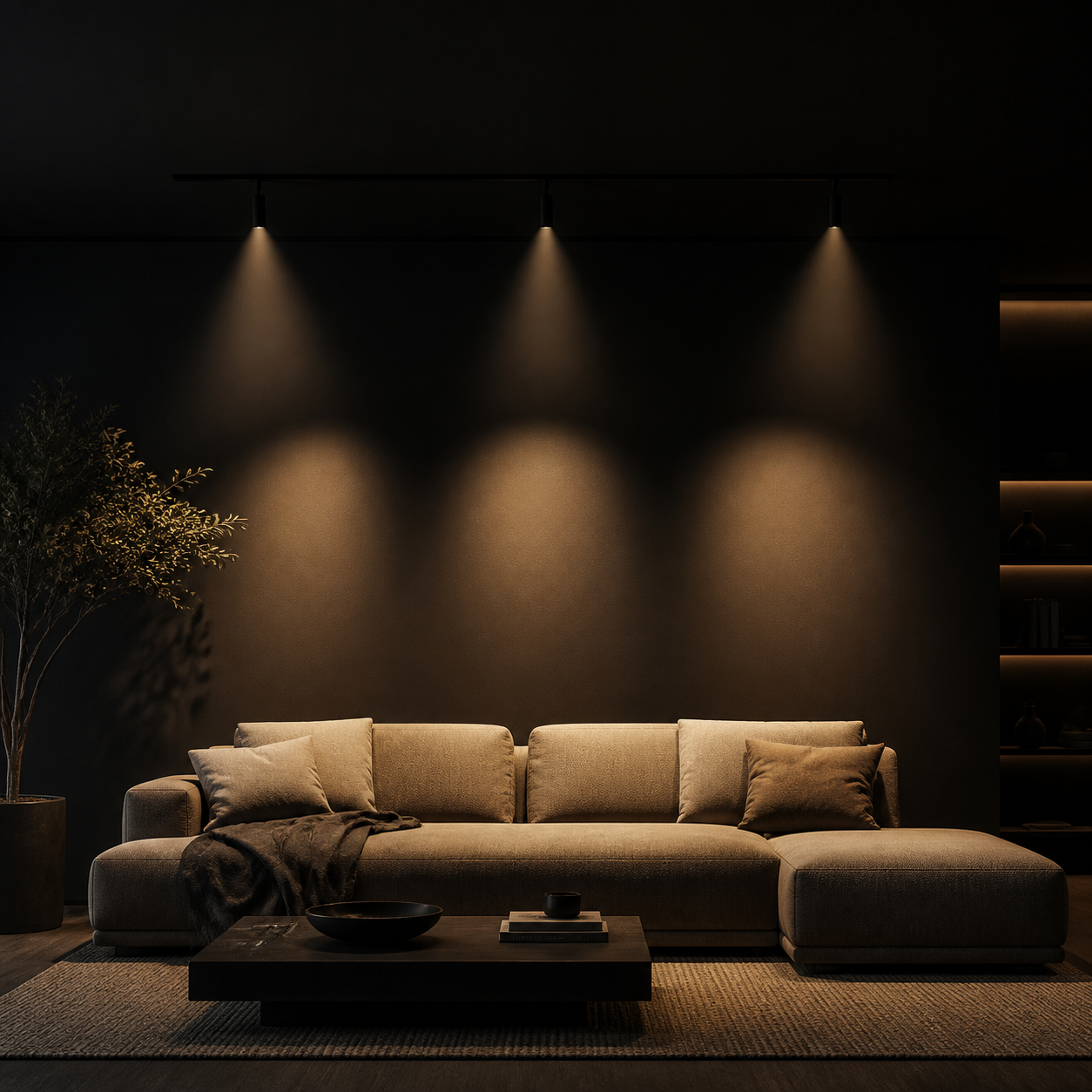
Against a white or light ceiling, the same black rail flips into the opposite effect: a bold, graphic line that anchors the room. This dual personality is why the finish works in so many settings — it can be invisible in a dark, moody space or become a deliberate design element in a bright one. Add the industrial-modern aesthetic that has dominated interior design for the past several years, and black track lighting checks every box: minimal, sculptural, and photographed endlessly on design platforms and in showrooms.
There is also a practical driver. High-quality black finishes have improved dramatically — modern powder coatings are durable, fingerprint-resistant, and consistent across track, heads and accessories — which removed the old objection that black fixtures show dust and smudges. The look finally became maintenance-friendly enough for daily use in homes and heavy-traffic commercial spaces.
What to Check Before You Buy: Finish, Optics and Build Quality
Not all black track lighting is created equal. The finish is the first thing you see, but the optics, driver and construction determine whether the fixture still looks and performs well in three years. Here is what separates a professional-grade black track light from a bargain kit.
The Finish: Matte Black vs Glossy Black
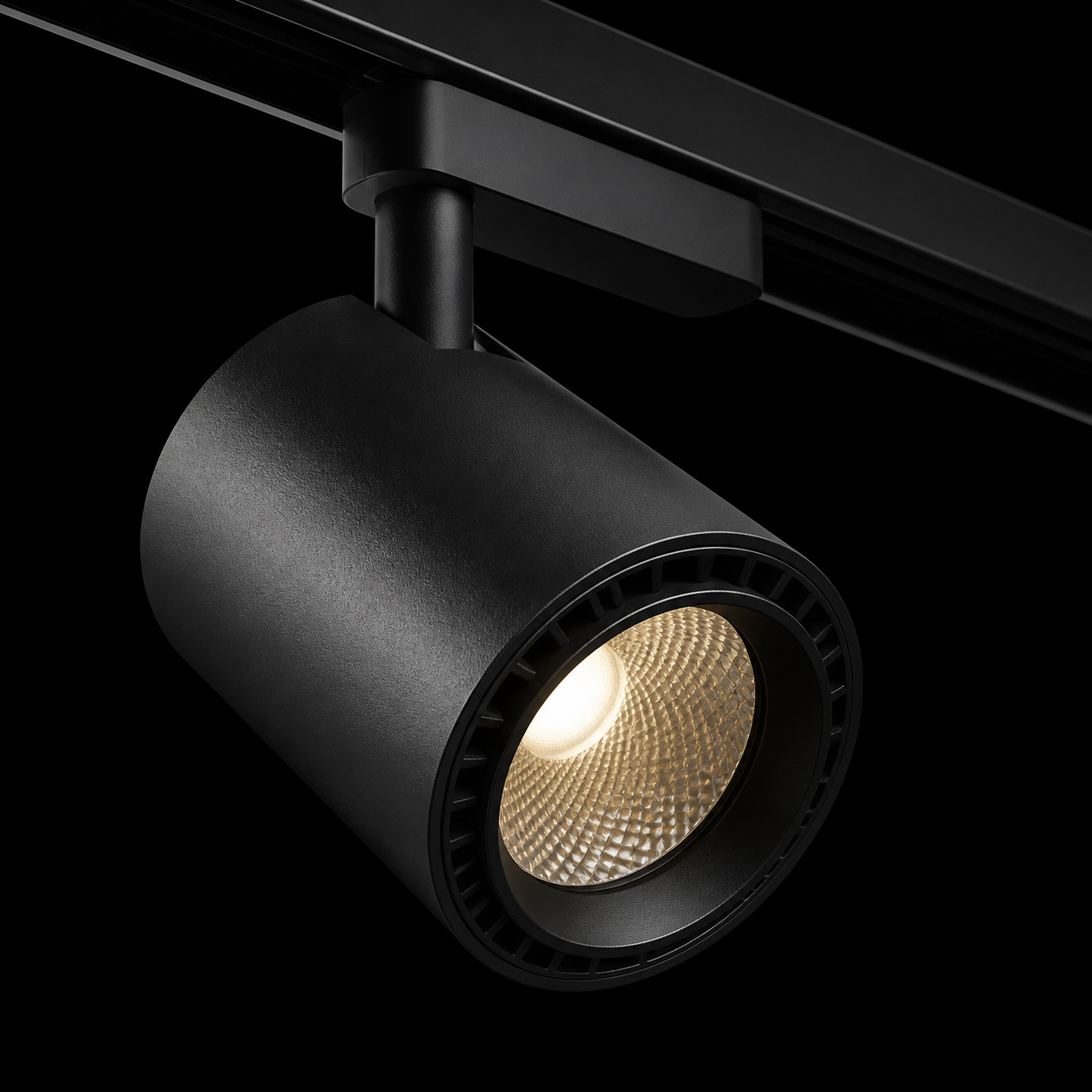
Matte (or “matte black”) is the dominant choice for a reason: it absorbs light instead of reflecting it, so the fixture disappears more completely into shadows and reads as understated luxury. Glossy black reflects ceiling light and shows fingerprints and dust far more easily, which is why it is rare in professional installations. When you buy, check that the finish is a true powder coat or anodized surface — these resist chipping, scratching and yellowing. Cheaper painted finishes can wear through at the edges over time, and a scratched black rail in a customer-facing space is hard to hide.
Optics and Drivers
Behind the black housing, the real quality lives in the optical system. Look for deep anti-glare baffles or lenses that cut stray light, interchangeable beam options (typically 15°–60°) so the same head can do accent, wash and spotlight duties, and a flicker-free driver with smooth dimming. A fixture that buzzes or strobes on camera will embarrass a commercial install — and increasingly, residential buyers notice it too. Quality LED drivers also last far longer and hold their light output, which matters when a rail is installed in a ceiling that nobody wants to open again.
Certifications and Lifespan
For any installed lighting, safety certifications are non-negotiable: UL listing (or the equivalent for your market) means the fixture has been tested for fire and electrical safety, and it is a requirement for most commercial projects and insurance. Check the rated lifespan (LED chips are typically rated 50,000 hours) and the warranty — a confident manufacturer stands behind its drivers and LEDs for at least three to five years. These details separate a fixture that is “black” from one that is professionally black.
Black Track Lighting Ideas for Modern Homes
In residential settings, black track lighting earns its place in three rooms more than any others — and each calls for a slightly different approach.
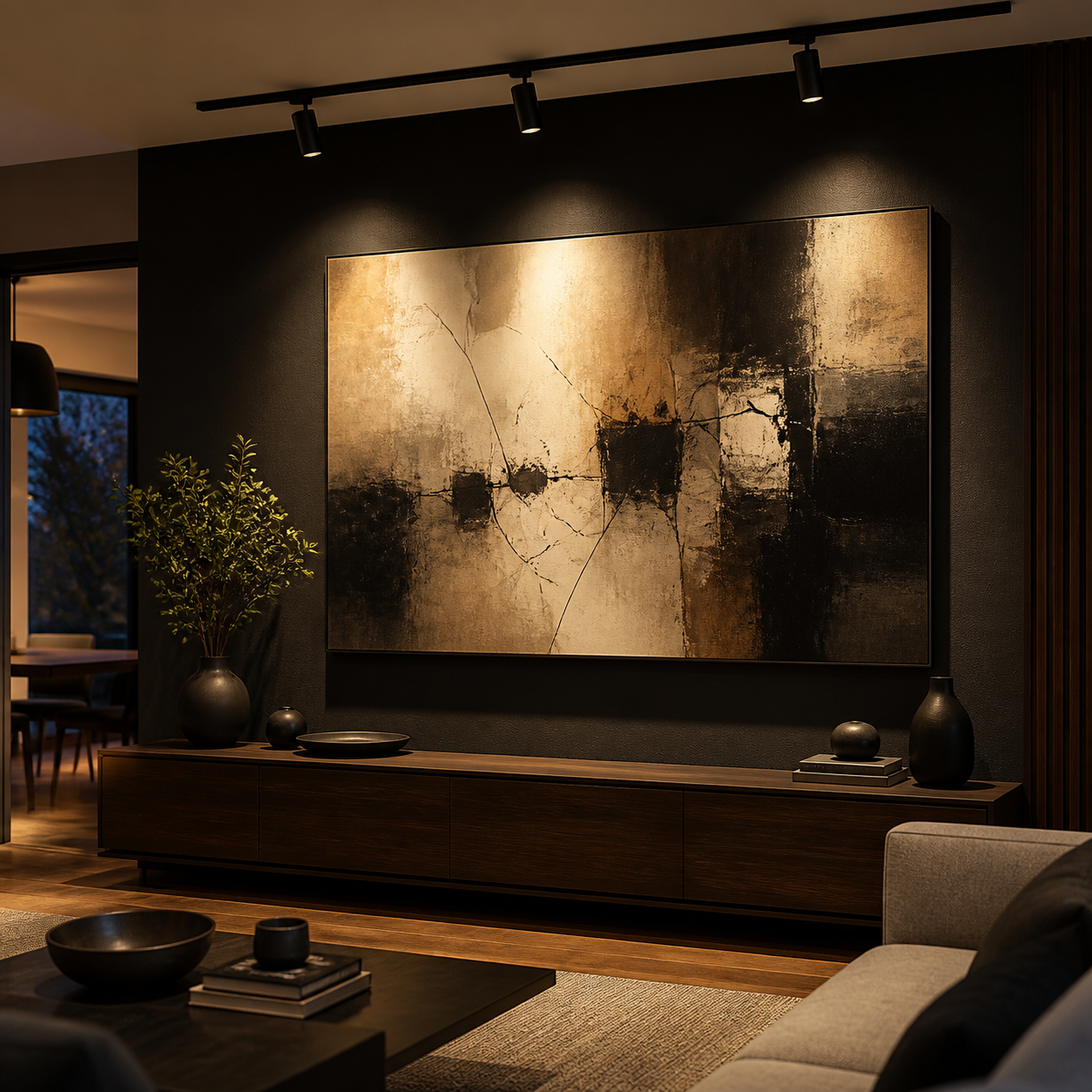
Living Rooms: Accent Walls and Artwork
The living room is where black track lighting shines brightest as a design statement. A rail above the seating area with two or three heads aimed at an accent wall, a piece of art or a media console replaces a lamp and a picture light in one clean line. Use 24–36° beams for art and 36–60° for wall washing, and keep color temperature warm — 2700K–3000K — so the space stays cozy rather than clinical. The black rail reads as intentional décor, especially when it runs parallel to a sofa or console.
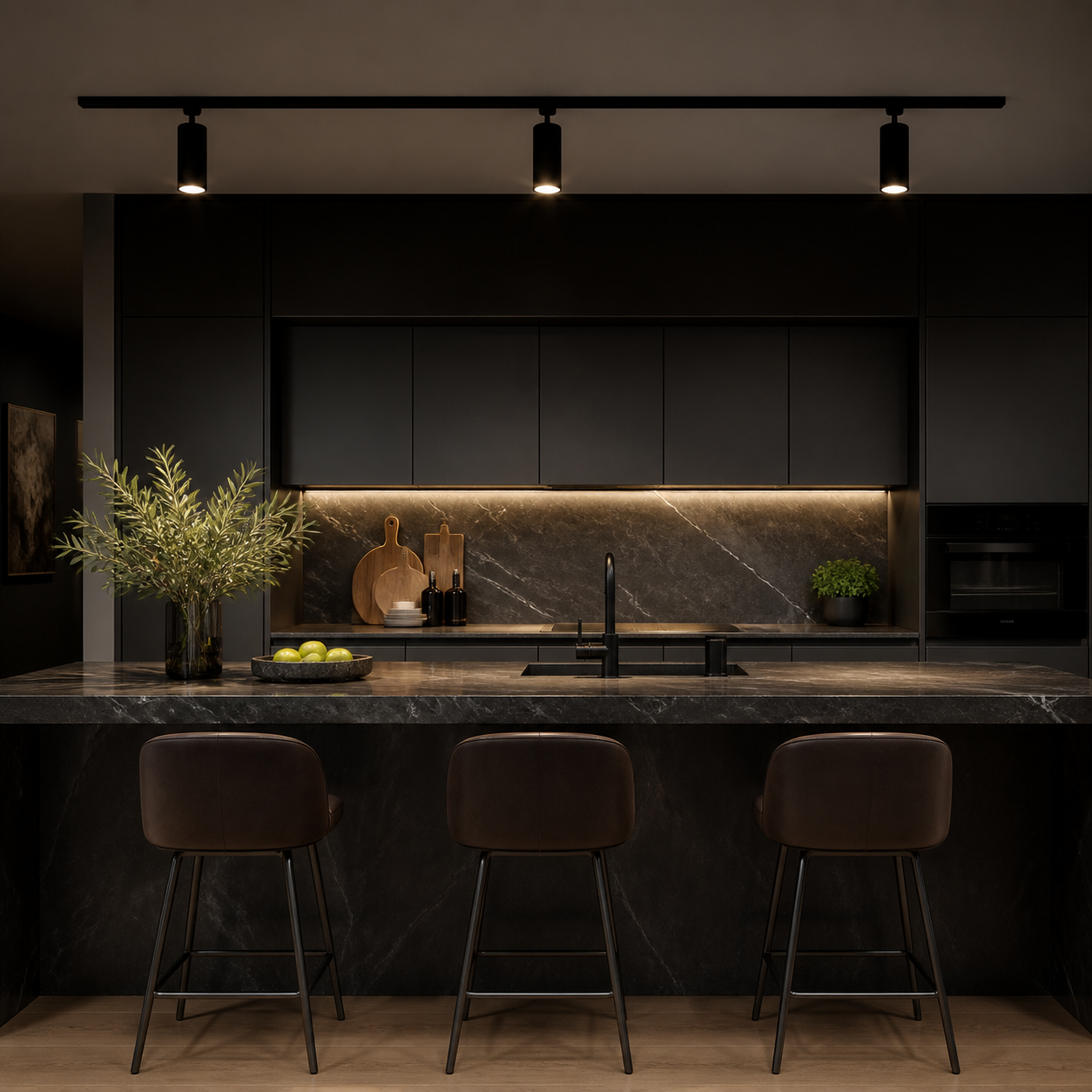
Kitchens: Task Lighting Above Islands
Above a kitchen island, black track lighting is both practical and on-trend. Heads aimed straight down at 3000K–4000K deliver focused task light for prep and cooking, while the matte black finish adds contrast against white cabinets and marble counters. Because track heads are individually aimable, one rail can cover the island, the sink and a breakfast bar. Pair it with under-cabinet lighting on a separate dimmer, and you get layered control that a single pendant cannot match. For a full layout system, our kitchen island track lighting guide covers spacing and head counts in detail.
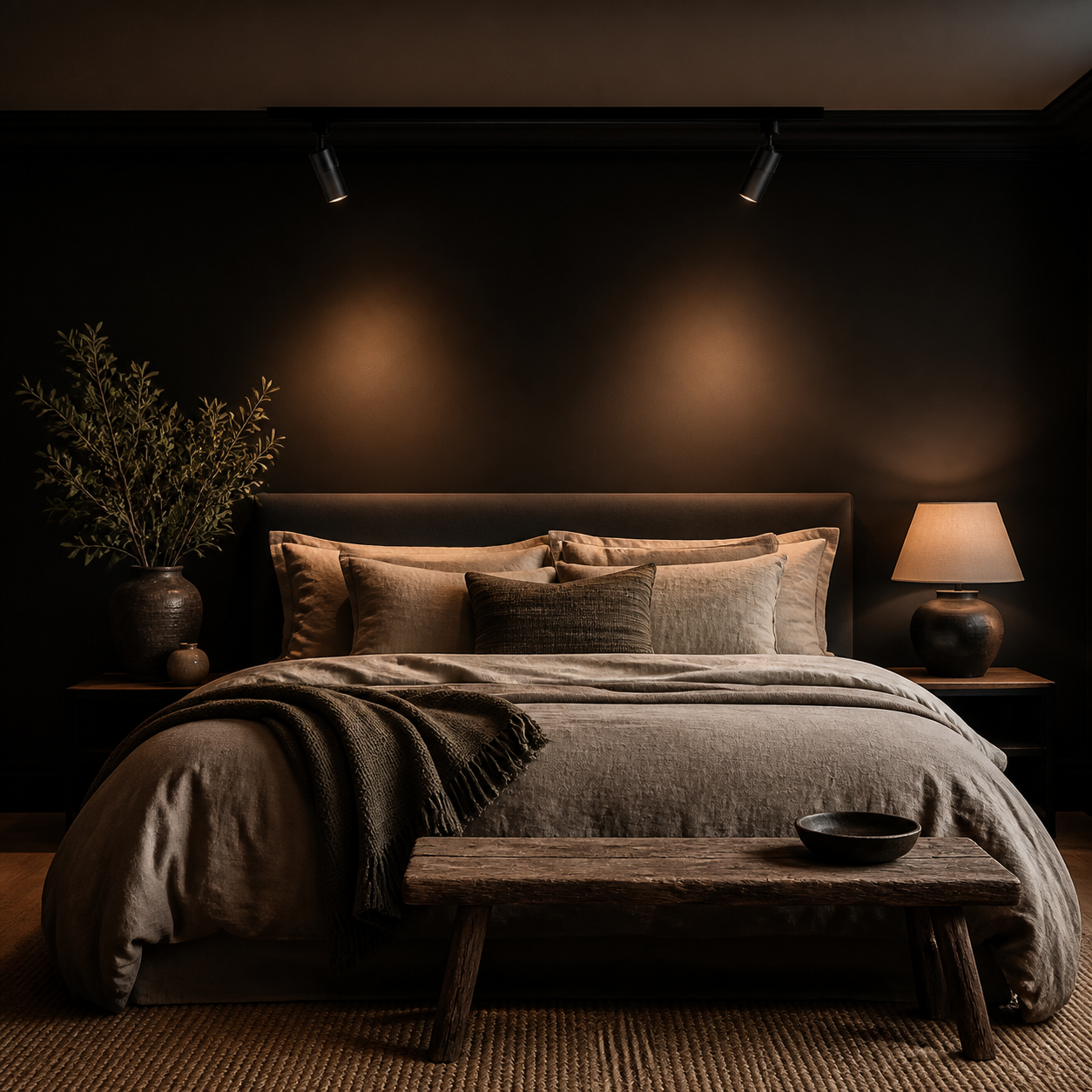
Bedrooms and Hallways: Subtle Ambient Layers
In bedrooms, the disappearing act of black track lighting is the whole point. A short rail with two dimmable heads aimed at the headboard wall gives you reading light and a soft ambient wash at 2700K without a bedside lamp hogging the nightstand. In hallways, a single black rail running the length of the corridor with evenly spaced heads is one of the cleanest solutions for a long, narrow space — the dark line reads as architecture, not hardware.
Black Track Lighting in Commercial Spaces
Commercial interiors adopted black track lighting early, and it has become the default specification in several sectors because it combines flexibility with a premium look.
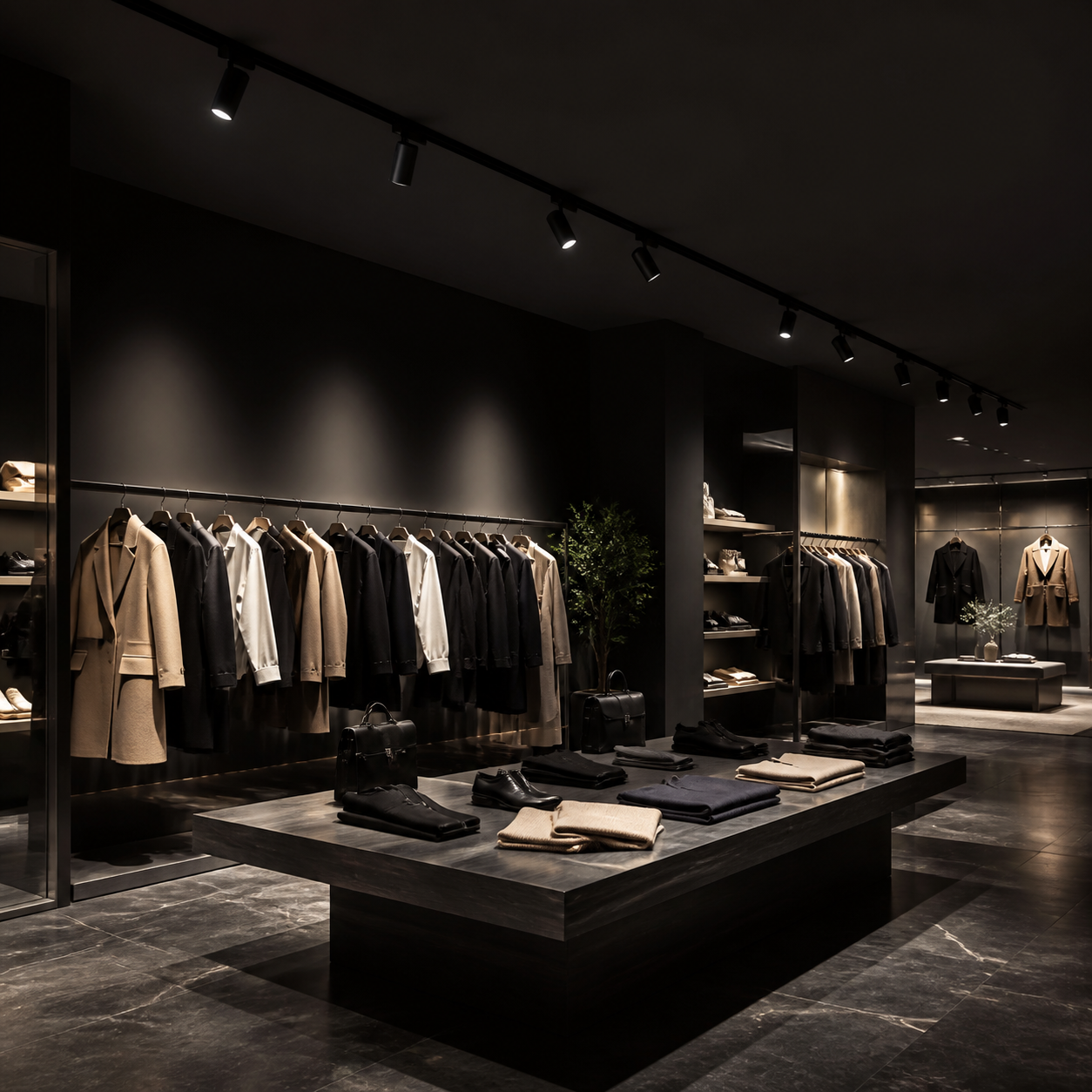
Retail and Boutiques
Retail is where the trend first became a commercial standard. Black rails let store designers re-aim displays weekly without touching the ceiling grid, and the dark hardware disappears against dark ceilings — common in premium boutiques — so the merchandise, not the fixture, commands attention. High-CRI heads (CRI 90+) make fabrics, leather and cosmetics render accurately, which directly affects purchase decisions. See how leading stores structure this in our retail track lighting guide.
Restaurants and Cafés
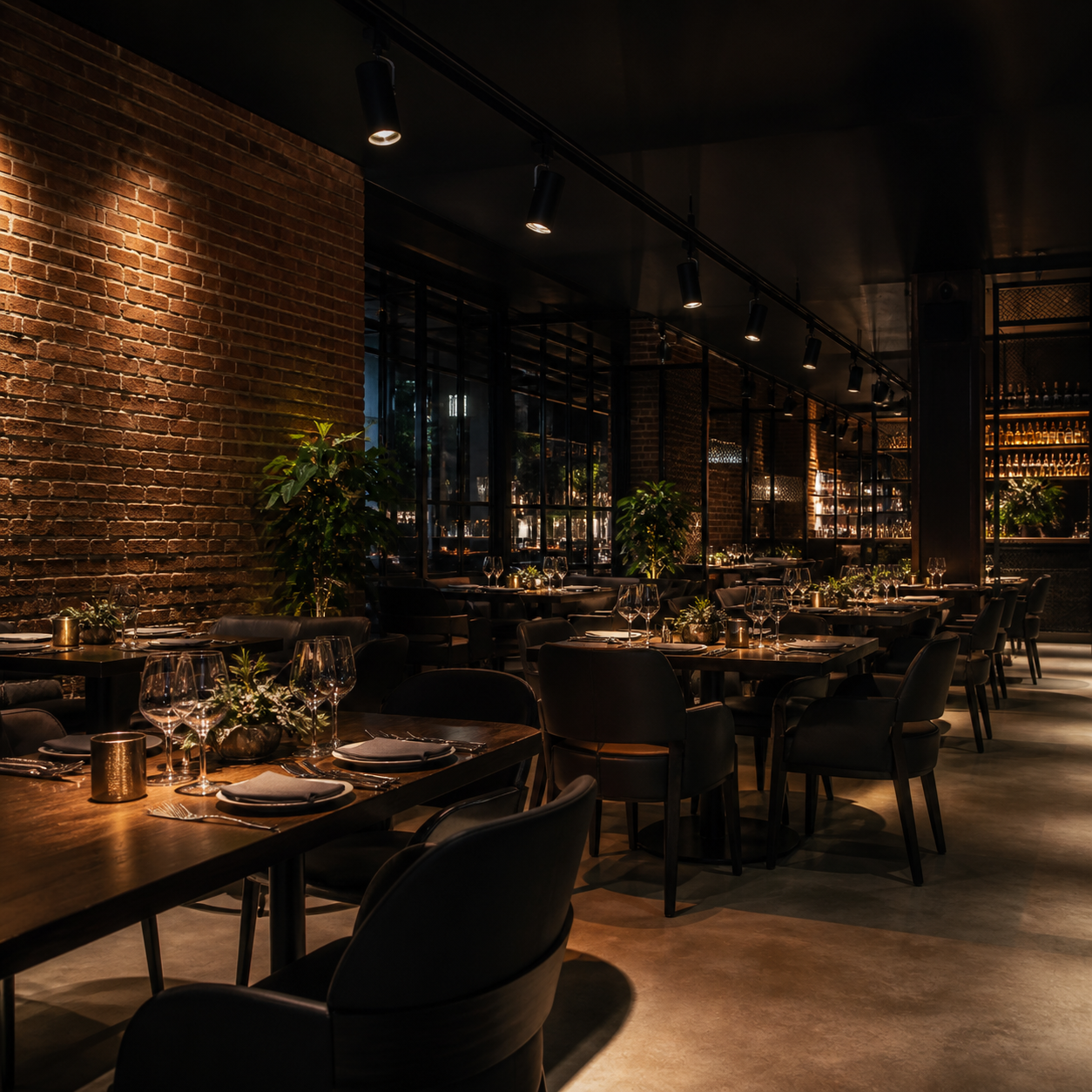
Restaurants use black track lighting to build intimacy: narrow beams create small, warm pools of light over each table while the rest of the room falls into shadow. The black finish suits industrial, rustic and modern concepts alike, and the re-aimable heads let operators adjust the mood from lunch to dinner service. For the full design method — layering, glare control and dimming scenes — read our restaurant lighting design guide.
Offices, Showrooms and Lobbies
Architectural offices, car showrooms and hotel lobbies specify black track lighting for the same reason: it photographs well, adapts to changing layouts, and projects a design-conscious brand. In showrooms, zoomable and interchangeable optics let one rail illuminate a car one week and a product wall the next. In lobbies, a floating black rail over a reception desk is a signature element that guests remember.
Black vs White Track Lighting: How to Decide
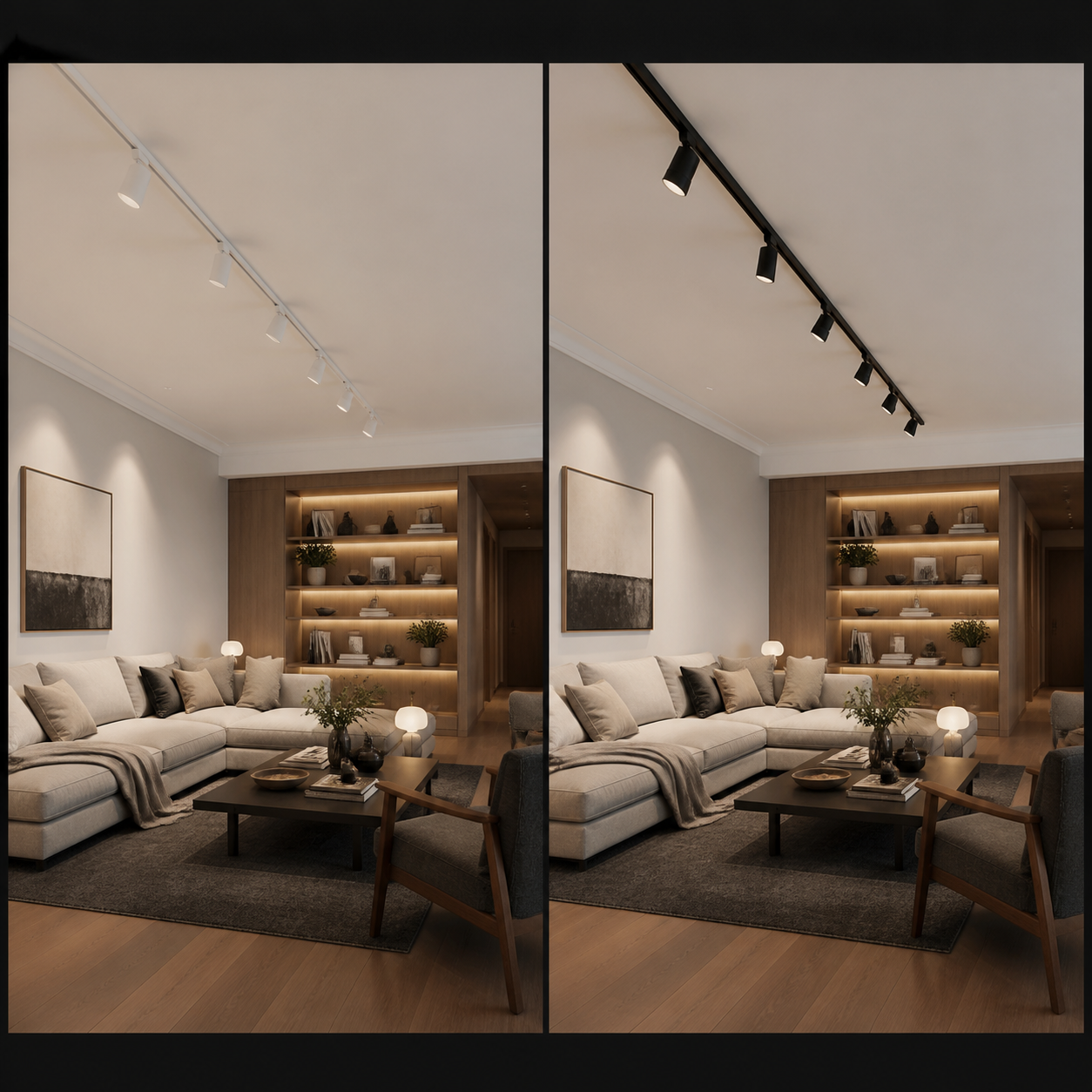
The most common question buyers ask is whether to choose black or white. There is no universal winner — the right answer depends on the ceiling, the design intent and how visible you want the hardware to be.
| Consideration | Black Track Lighting | White Track Lighting |
|---|---|---|
| Visual effect | Graphic contrast or disappears into dark ceilings | Blends into light ceilings, almost invisible |
| Best on | White/light ceilings, dark ceilings, accent designs | White ceilings where hardware should not be seen |
| Design feel | Modern, industrial, premium, intentional | Neutral, minimal, subtle |
| Maintenance | Quality matte powder coats hide dust; glossy shows marks | Shows dust and grime on light surfaces over time |
| Commercial use | Boutiques, restaurants, showrooms, lobbies | Offices, galleries, clean-lined retail |
| Photo/appeal | Strong contrast, trend-focused | Understated, timeless |
The practical rule: choose black when you want the rail to be seen as a design line or when the ceiling is dark, and choose white when the fixture should disappear into a light ceiling. If you are designing for social media, showroom displays or a bold interior, black is almost always the stronger choice today.
Pairing Black Fixtures with the Right Light: CCT, CRI and Beam Angles
A black housing is a neutral frame — the quality of the light inside it decides whether the room looks premium or flat. Three specifications matter most:
- Color temperature (CCT): 2700K for cozy residential evenings, 3000K as the default for most modern homes and hospitality, 4000K for task-heavy kitchens and retail. Pick one temperature per space and do not mix — mixed CCT on a black rail looks noticeably wrong.
- Color rendering (CRI): choose CRI 90+ for any space where people, food, clothing or products are seen — the Illuminating Engineering Society (IES) guidance underpins most professional specifications. In retail and restaurants, CRI 95 with strong R9 makes deep reds and skin tones look natural — the difference customers feel even when they cannot name it.
- Beam angle: 15–24° for spotlighting art and displays, 24–36° for general accent, 36–60° for wall washing. A fixture with interchangeable optics lets one black rail cover all three without compromise.
Dimming completes the system: black track lighting with 0-10V or DALI dimming lets a restaurant shift from bright lunch to intimate dinner, or a homeowner drop from task mode to movie mode. If you are choosing between traditional and magnetic track lighting systems, note that magnetic systems now offer the same black finishes with even slimmer profiles — a growing favorite for modern residential ceilings.
Frequently Asked Questions
Is black track lighting a passing trend?
Black track lighting has moved from trend to standard. It has been a core finish in commercial interiors for years and is now the default choice in modern residential design because it offers genuine optical advantages: it disappears into dark ceilings and creates deliberate graphic contrast on light ones.
Does black track lighting show dust and fingerprints?
Quality matte black powder-coated finishes resist fingerprints and hide dust far better than glossy black or white finishes. Avoid cheap glossy painted black fixtures, which show marks and wear quickly. For commercial spaces, specify matte powder coat or anodized black for durability.
What color temperature is best for black track lighting?
Use 2700K-3000K for living rooms, bedrooms and restaurants, and 3000K-4000K for kitchens, retail and task areas. Keep one consistent color temperature across the rail – mixing warm and cool heads on the same black track looks unprofessional.
Can black track lighting be used in kitchens and bathrooms?
Yes, with the right rating. For kitchens, standard damp-rated fixtures work above islands and counters, and CRI 90+ at 3000K-4000K is recommended for food prep. For bathrooms and outdoor-adjacent areas, look for wet or damp-rated fixtures. Always verify the IP and UL rating for the specific location.
Final Recommendation
Black track lighting earns its place in modern homes and commercial spaces because it solves the oldest problem in lighting design: the hardware should either disappear or look intentional — never accidental. Choose a matte black finish with quality powder coating, deep anti-glare optics, CRI 90+ color rendering, the right color temperature for the room, and dimming for flexibility. Get those five decisions right and the black rail will still look sharp a decade from now.
ENCORE’s track lighting range is built for exactly this brief: matte black powder-coated finishes, anti-glare precision optics, interchangeable 15°–60° beams, CRI 90+ (≥95 on the IMAX series with R9 > 90), 2700K–4000K CCT options, 0-10V/DALI dimming, and UL-listed drivers rated for 50,000 hours. It is the range we recommend for designers, contractors and homeowners who want the black track lighting look to perform as good as it photographs.
Ready to spec your project? Talk to our lighting team for a free layout and photometric calculation, or explore the black track lighting fixtures in our track light range. You can also learn how track lighting performs in other demanding environments in our exposed track lighting guide.