
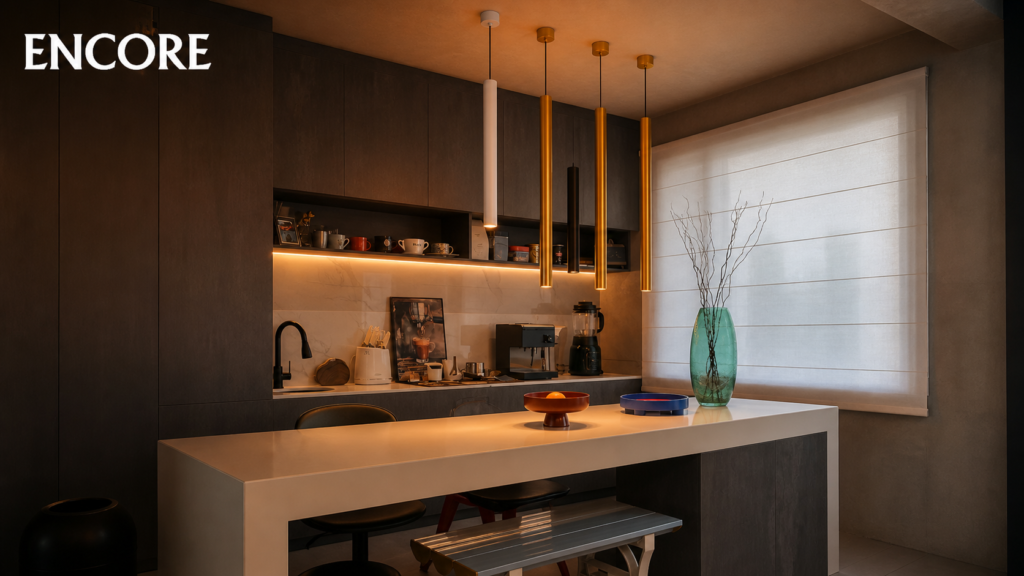
Why This Comparison Matters for Your Project
Choosing between magnetic track lighting and traditional (conventional) track lighting is one of the first technical decisions you’ll make on any track lighting specification. It’s not just a price comparison — it affects installation complexity, long-term flexibility, safety compliance, smart control capability, and the types of fixtures available to you.
This guide cuts through the marketing language and gives lighting designers, architects, electrical engineers, and procurement professionals a clear, side-by-side comparison — including the honest trade-offs that most supplier pages don’t mention.

What Is Traditional Track Lighting?
Traditional track lighting uses a permanently wired track rail mounted to the ceiling. Fixtures are attached via mechanical adapters that lock into the track’s conducting slots. Power runs through the track at AC mains voltage (typically 110V or 220V depending on region).
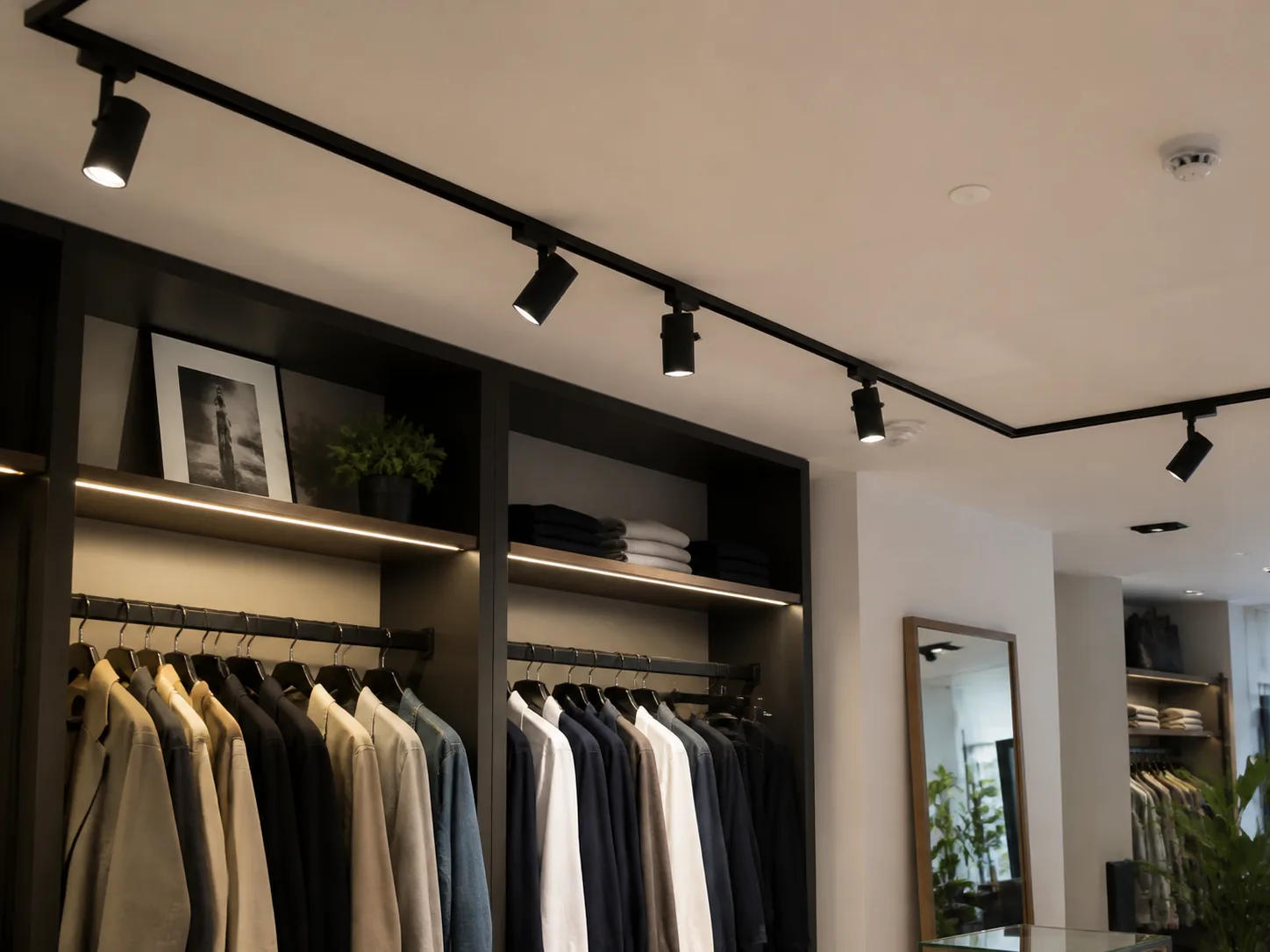
The most common traditional systems include:
- Single-circuit H-track (Halo-style) — all fixtures on one switch
- Dual-circuit J-track — two independent circuits in one track
- Commercial 3-circuit track — separate control of 3 fixture groups
What Is Magnetic Track Lighting?
Magnetic track lighting is a low-voltage modular system. The track rail carries DC power (typically DC48V), and individual fixtures attach to the rail purely via magnetic force — no mechanical locking pins or rotation. The low-voltage power is delivered through a driver/transformer that steps down the mains AC to the track voltage.
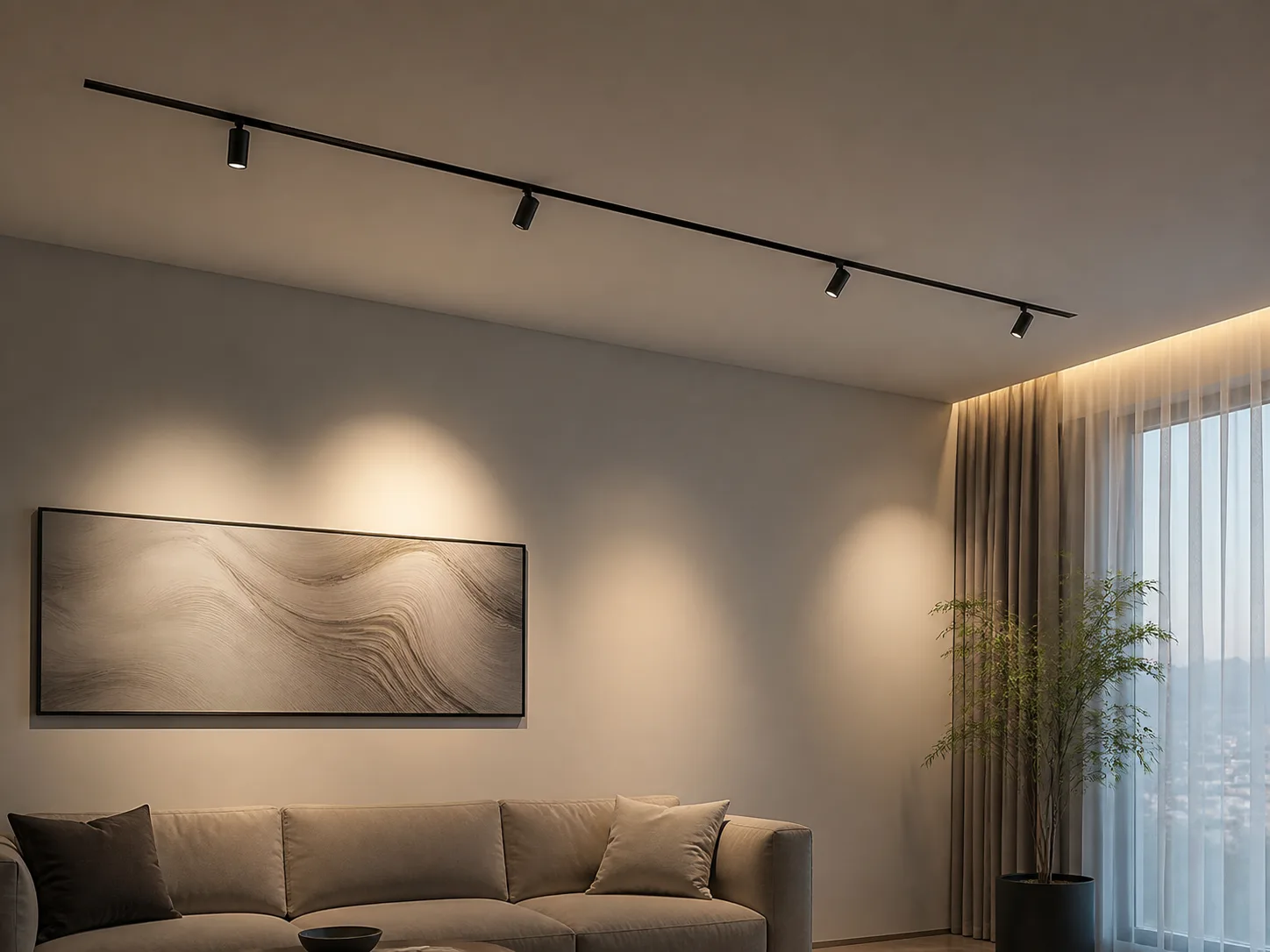
Key characteristics:
- Hot-plug safe: fixtures can be added, moved, or removed without switching off the track
- Fixture repositioning requires no tools
- Common voltages: DC24V and DC48V
- Compatible with smart control protocols: DALI2, 0-10V, Bluetooth Casambi, Tuya
Head-to-Head: Side-by-Side Comparison
| Factor | Traditional Track Lighting | Magnetic Track Lighting |
|---|---|---|
| Operating Voltage | AC 110V / 220V (mains) | DC 24V – 48V (low voltage) |
| Installation Complexity | Requires licensed electrician; wiring in each circuit | Simpler track wiring; driver handles voltage step-down |
| Fixture Replacement | Mechanical adapter; may require power-off | Magnetic hot-plug; tool-free, live-circuit safe |
| Flexibility / Reconfiguration | Low — repositioning requires manual adjustment | High — fixtures slide and reposition in seconds |
| Fixture Variety | Very wide — GU10, MR16, COB modules, pendants | Growing — spotlights, linear bars, pendants, decorative |
| Smart Control | Triac / DALI dimmer compatible (varies by fixture) | Native DALI2, 0-10V, Bluetooth, Tuya smart control |
| Safety | Mains voltage — shock risk if exposed during maintenance | Low voltage — significantly reduced shock hazard |
| Typical Applications | Retail, galleries, commercial (established standard) | Modern residential, hospitality, high-end retail, galleries |
| System Cost | Lower upfront hardware cost | Higher upfront cost; lower long-term reconfiguration cost |
| Energy Efficiency | Depends on fixture; LED retrofit widely compatible | Optimized at system level; efficient DC drivers |
When to Choose Magnetic Track Lighting
Magnetic track systems aren’t always the right answer. They earn their premium in specific scenarios:
Hotels & Hospitality
Lobby reconfigurations, corridor updates, and guest room mood lighting benefit enormously from tool-free fixture repositioning. Interior designers frequently adjust accent lighting as furniture and displays change. With magnetic track, a hotel renovation that would normally require an electrician becomes a one-person task.
Retail Spaces with Rotating Displays
Fashion boutiques, electronics showrooms, and luxury goods retailers that rotate featured products seasonally need lighting that can follow the display. Magnetic track allows store staff — not electricians — to redirect accent beams in under a minute per fixture.
Museums & Art Galleries
Curated exhibitions change regularly, and lighting needs to follow. Museums also have strict museum lighting standards: minimal UV/IR, precise beam control, and flicker-free operation. Magnetic systems with CRI 90+ luminaires satisfy these requirements while offering the flexibility that rotating exhibitions demand.
High-End Residential
Kitchen islands, gallery walls, and open-plan living spaces where the homeowner wants to evolve the lighting layout as their needs change are ideal for magnetic track. The aesthetic — clean, minimal, low-profile — also fits contemporary interior design trends better than many conventional track systems.
When Traditional Track Lighting Is the Better Choice
Honest comparison means acknowledging where conventional systems still win:
- Very high fixture density: Some commercial spaces need 15–30+ fixtures on a single run. Not all magnetic systems are rated for that fixture count per driver circuit.
- Legacy retrofits: If you’re working with an existing H-track or J-track infrastructure, it’s almost always cheaper to stay conventional than to replace the entire track system.
- Very long track runs (10m+): Voltage drop becomes a concern on low-voltage DC circuits over long distances. Traditional AC track doesn’t have this limitation.
- Budget-sensitive projects: The hardware cost gap is real. For basic retail fit-outs where lighting won’t change for 10 years, conventional track with quality LED fixtures is the pragmatic choice.
- Extreme operating temperatures: Some industrial or outdoor-covered environments push beyond the comfortable range of certain magnetic driver electronics.
The Decision Framework: 5 Questions to Ask Before You Specify
Use this checklist when evaluating which system to specify:
- Will the lighting layout need to change within 3 years? If yes → magnetic. If no → conventional wins on cost.
- Do you need smart control (DALI2 / Bluetooth / 0-10V dimming)? Magnetic systems offer native integration; conventional smart control is add-on and often limited.
- Who will be managing the space? If non-electricians need to adjust lighting → magnetic. If only maintenance staff touch it → either works.
- What is the track run length and fixture density? Calculate voltage drop for magnetic (DC) systems. Get manufacturer specs for max fixtures per driver circuit.
- What is the total project budget? Compare 5-year TCO, not just upfront hardware cost — reconfiguration labor for conventional systems compounds over time.
Installation Considerations
Magnetic track systems require a compatible DC driver/transformer sized to the total wattage of connected fixtures. Driver placement matters — keeping it accessible for maintenance is a design decision, not an afterthought. Track profiles are typically surface-mounted, recessed, or suspended; verify the profile depth against your ceiling cavity.
Traditional track systems connect directly to mains wiring. Single-circuit vs. dual-circuit vs. 3-circuit selection should be made at the specification stage — changing the circuit configuration after installation requires re-wiring. Minimum mounting height considerations vary by local electrical code.
Magnetic vs Traditional Track Lighting: FAQs
What is the main difference between magnetic and traditional track lighting?
The main difference is the power system and how fixtures attach. Magnetic track lighting uses a low-voltage DC48V rail with tool-free magnetic fixtures that you can reposition instantly, while traditional track lighting runs on mains AC voltage with mechanically locked (often screw-clamped) heads.
Is magnetic track lighting brighter than traditional track lighting?
Not inherently. Brightness depends on the LED module, wattage, and optics of each head rather than the track type. Magnetic systems tend to use higher-efficacy COB modules (often 90+ lm/W), but a high-output traditional head can be just as bright. Choose based on the lumen output you need, not the track type.
Can magnetic track light fixtures fit on a traditional track rail?
No. Magnetic fixtures use a proprietary DC48V magnetic interface and are not mechanically or electrically compatible with traditional AC track rails. You must match fixtures to the track system type. Some brands offer converters or hybrid rails, but these are brand-specific.
Is magnetic track lighting more expensive than traditional track lighting?
Magnetic track systems generally have a higher upfront cost because they include a DC driver and more advanced fixtures. However, the total cost of ownership can be lower over time if you frequently reconfigure the layout, since magnetic heads are repositioned tool-free without re-wiring.
Which is better for a home: magnetic or traditional track lighting?
For most homes, magnetic track lighting is the better choice because it offers easy reconfiguration, safe low-voltage DC48V operation, and modern smart-control options. Traditional track lighting is preferable on tight budgets or where the layout is fixed and you need maximum output per dollar.
Conclusion: The Right Answer Depends on the Project
There is no universal winner. Magnetic track lighting delivers the most value in projects where flexibility, smart control, low-voltage safety, and long-term reconfiguration are priorities. Traditional track lighting remains the practical choice for budget-sensitive projects, legacy retrofits, and installations where the lighting layout is permanent.
The most common mistake we see is specifiers choosing magnetic track because it sounds modern — without calculating whether the fixture density, run length, and reconfiguration frequency actually justify the premium. Run through the 5-question checklist above, and the right answer usually becomes clear.
Need help selecting the right fixtures for your magnetic track system? Browse the full ENCORE Magnetic Track Light collection or contact our lighting design team for a free specification review.