
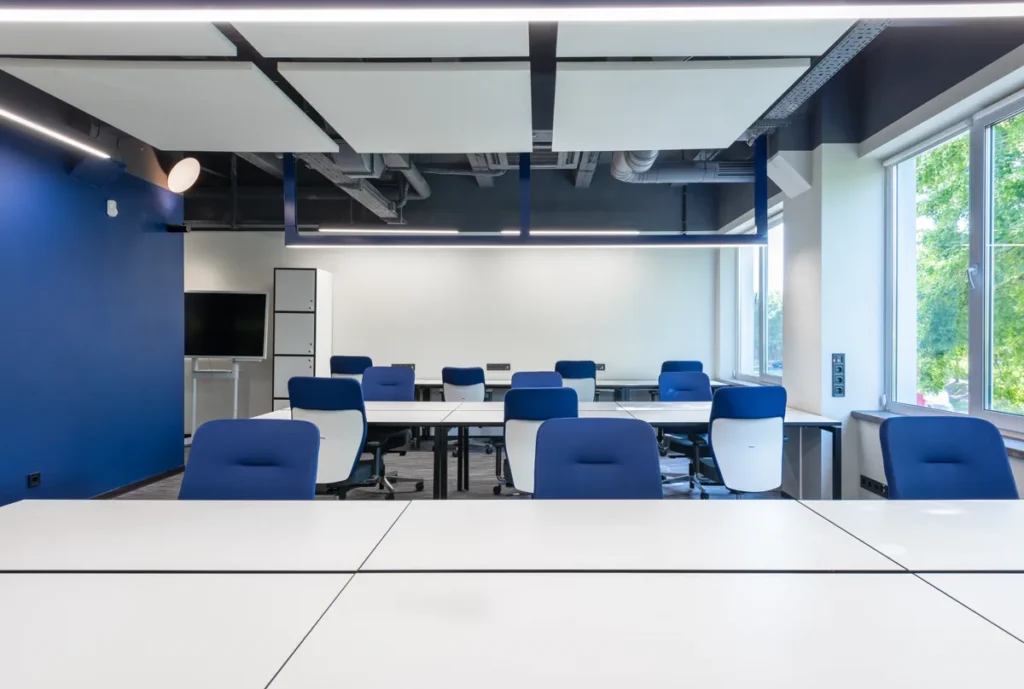
Office lighting is not about making a room bright—it is about helping people see clearly, stay comfortable, and stay focused for eight hours straight. Get the specs wrong and you end up with tired eyes, washed-out screens, and meeting rooms that feel like interrogation rooms. Get them right and the space feels calm, professional, and effortlessly productive. The three numbers that decide whether an office track lighting system works are CRI (how accurately it renders color), UGR (how much glare it throws at your eyes), and zonal control (how precisely you can light different work areas). This guide explains exactly what those specs mean, what values to specify for each workplace zone, and how to pick the right fixtures.
Whether you are fitting out a single open-plan floor, a headquarters campus, or a serviced office, the same physics applies: the eye follows contrast and avoids glare. Master color rendering, glare control, and layered zonal lighting with the right LED track lighting, and you turn a generic office into a space where people actually want to work. Below we break down the specification in plain, actionable language.

Why Office Track Lighting Specs Matter
Office lighting sits under an unusual set of pressures. On one hand it must be bright enough for reading, writing, and screen work—typically 500 lux on the task plane per the EN 12464-1 standard. On the other, it must not create glare on monitors or screen reflections, and it must not cast shadows that cause visual fatigue. Track lighting solves the “aim the light where it is needed” problem better than a fixed downlight, but only if you specify the right color rendering, glare rating, and control structure.
Unlike a retail or gallery install where you are chasing drama and contrast, an office rewards uniform, glare-free, color-accurate light. That is why the specification process is different: the goal is comfortable sustained vision, not a single hero moment. The next three sections cover the three numbers that separate a good office track lighting plan from a bad one.
CRI: Color Rendering for Accurate, Professional Work
CRI (Color Rendering Index) measures how faithfully a light source reveals the true color of objects compared to a reference light source, scored from 0 to 100. A light with CRI 100 renders every color as it would under natural daylight; a light with CRI 70 makes a blue shirt look grey and a skin tone look sallow. In an office that matters far more than people expect, because so much work depends on accurate color judgment.
What CRI to Specify for Office Workplaces
As a rule of thumb, general office areas should be lit with fixtures rated CRI 80 or higher. But that is a floor, not a finish. For spaces where color accuracy is part of the job—design studios, print and marketing departments, meeting rooms used for product review, or any space with brand colors on walls and furniture—specify CRI 90+. High-CRI track heads make skin tones look healthy, presentation materials look true, and the brand palette look exactly as designed.
Beyond the CRI number, look at the R9 value, the specific rendering of deep reds. Many cheap LED sources score high on average CRI but low on R9, which makes wood and warm tones look muddy. For premium office interiors, ask for fixtures with good R9 rendering alongside a CRI 90+ rating.
UGR: Unified Glare Rating for Visual Comfort
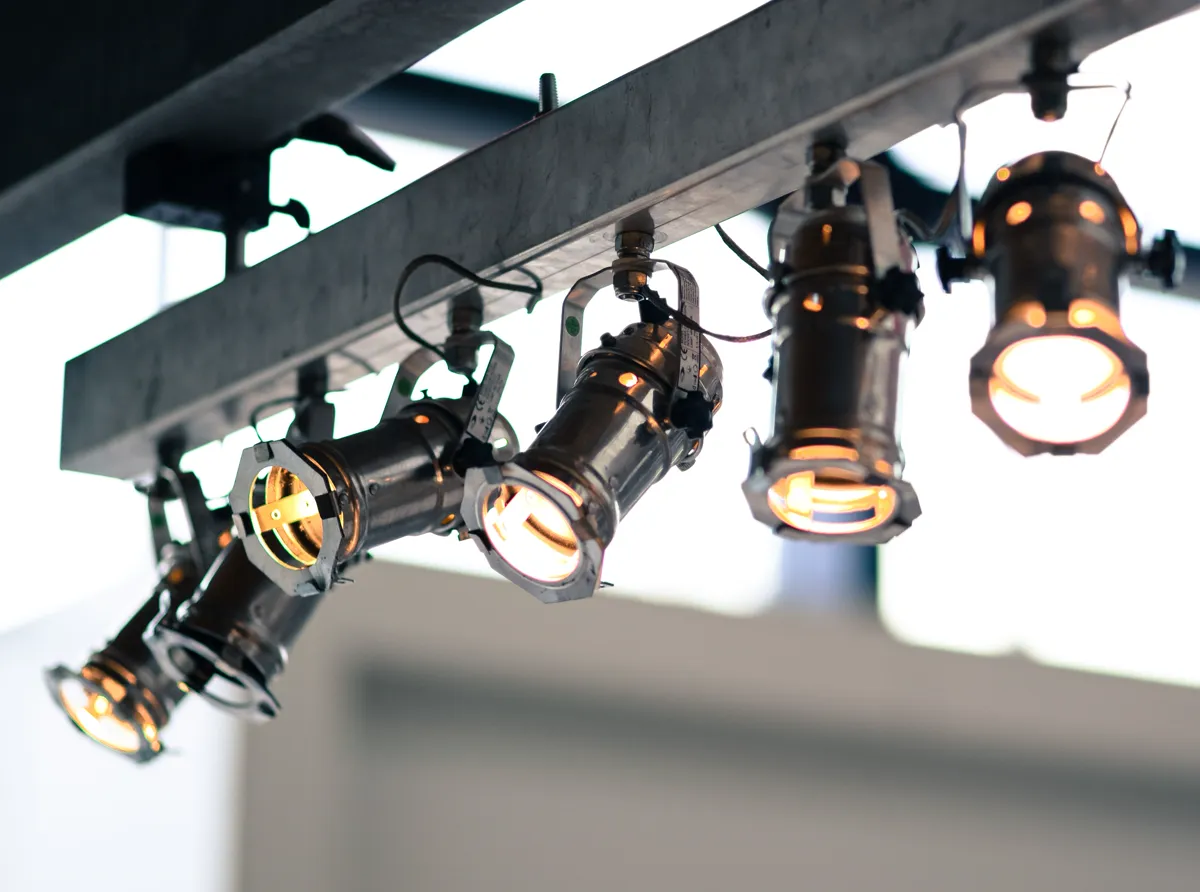
If CRI is about how light reveals color, UGR is about how light treats your eyes. The Unified Glare Rating is a single number that predicts how uncomfortable a lighting installation feels, taking into account the brightness of the luminaire, the background, and the viewing angle. Lower is better. A UGR of 19 or below is generally considered comfortable for office work; above 22 and you are inviting headaches and eye strain.
UGR Limits by Office Zone
The European EN 12464-1 standard gives clear UGR targets for different rooms, and they are worth putting in your spec:
- Office workstations / writing and reading: UGR ≤ 19
- Meeting rooms: UGR ≤ 19
- Conference / presentation rooms: UGR ≤ 19
- Computer-based work: UGR ≤ 19
- Corridors and circulation areas: UGR ≤ 25 (relaxed, since people are moving)
- Archives and storage: UGR ≤ 25
The way to hit these numbers is not just a low-wattage fixture but the optic design. A deep baffle, a parabolic louver, or a grill cover that limits the light emitted above a certain angle dramatically reduces glare at the eye. This is exactly why recessed or pendant linear luminaires with a low-UGR optic outperform a bare tube in an office: they light the desk without blinding the person sitting across the room.
Zonal Control: Layered Light for Different Work
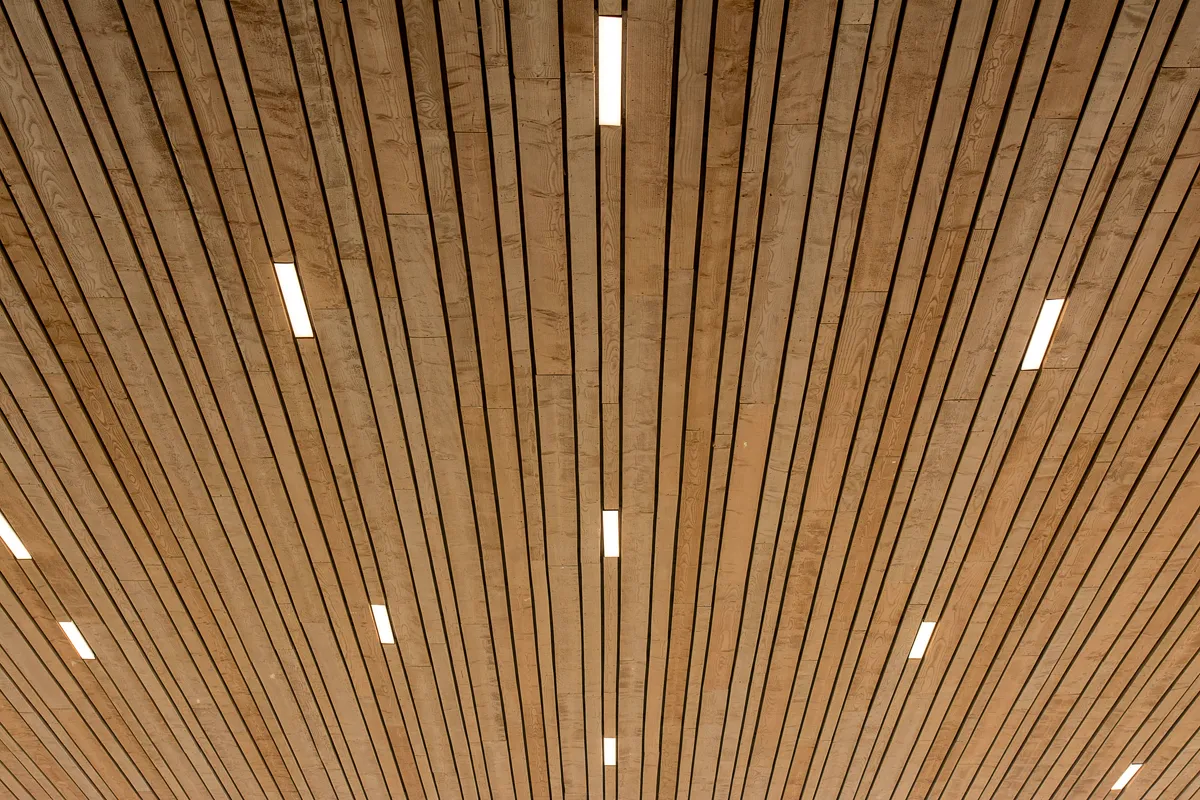
An open-plan office is not one space—it is a dozen different tasks happening side by side. Someone is deep-focus coding under a desk lamp; a team is whiteboarding in a meeting room; a visitor is waiting in the reception area. Zonal control is the practice of lighting each zone at the level and warmth it needs, rather than flooding the whole floor with a single uniform wash. This is where track lighting truly earns its keep.
Build a Three-Layer Office Lighting Plan
Lay your office lighting in three layers, then use zonal control to adjust each independently:
- Ambient layer. A general, even wash of light over the open floor at roughly 300–500 lux to provide wayfinding and a comfortable baseline. Recessed linear luminaires or ceiling-washed track heads work well here.
- Task layer. Focused, higher-level light over desks and workstations (500–750 lux) that can be dimmed for individual comfort. Adjustable track heads aim light exactly where the work happens.
- Accent / feature layer. Directional light for a reception wall, a brand graphic, a plant wall, or a breakout area. A narrow-beam track spot creates a pool of emphasis that breaks the visual monotony of the floor.
The most effective office track lighting systems use dimmable, zoned fixtures so you can drop the ambient level near large windows on a bright day and boost it on a cloudy one, or dim the meeting-room track to a low setting for a presentation while keeping the corridor at full brightness. Dimmable track lighting with separate circuits or a smart control system lets each zone respond to how it is actually being used.
Office Track Lighting Specs by Zone: Comparison Table
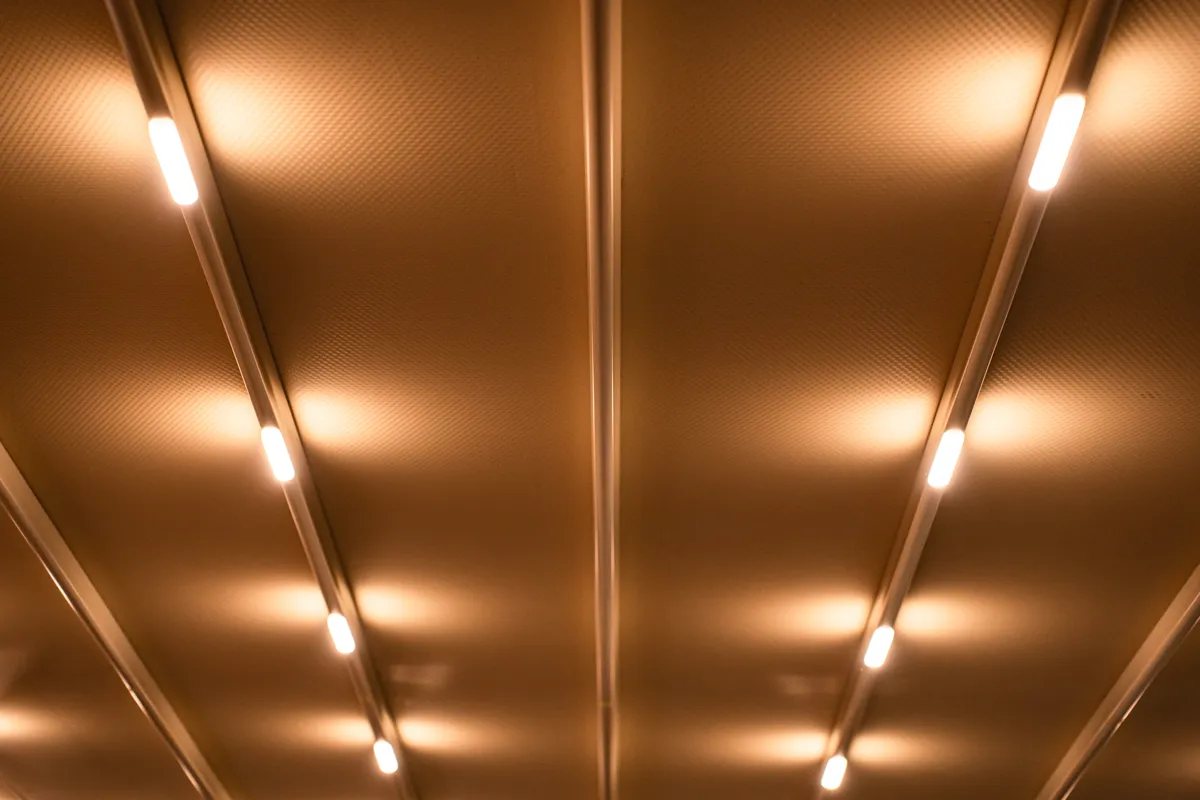
The practical spec changes depending on what you are lighting. Use this table as a starting point and adjust to your project’s lux targets and finish.
| Office Zone | Recommended Lux | UGR Limit | Best Fixture / Beam Approach |
|---|---|---|---|
| Open-plan workstations | 500 lux | ≤ 19 | Zoned dimmable track or recessed linear, CRI 80+, low-glare optic |
| Meeting / conference rooms | 500 lux | ≤ 19 | Dimmable track heads for presentations, CRI 90+ for accurate visuals |
| Reception / lobby | 300 lux | ≤ 19 | Accent wall-washer + narrow-beam spots on brand elements |
| Corridors & circulation | 100 lux | ≤ 25 | Linear or recessed continuous run, lower glare requirement |
| Design / colour-critical studios | 500–750 lux | ≤ 19 | Track spots with CRI 90+, good R9 for true colour work |
| Breakout & collaboration areas | 300–400 lux | ≤ 19 | Adjustable track or suspended linear, warm CCT for comfort |
Colour temperature ties the whole plan together. For most offices, 4000K reads as crisp and professional and pairs well with daylight; 3000K gives a warmer, more relaxed feel in reception and breakout zones. Keep the CCT consistent within each zone so your eye is not confused by shifting hues. You can compare fixture options and beam angles in our commercial track lighting selection guide.
Choosing an Office Track or Linear Lighting System
Once you know your CRI, UGR, and zonal targets, selecting the hardware becomes straightforward. For offices there are two complementary families: adjustable track lighting for aiming light where it is needed, and suspended linear lighting for a continuous, glare-free wash across a floor.
Linear luminaires are the workhorse of modern office lighting. A continuous run of suspended linear fixtures delivers an even, low-glare wash that is ideal for the ambient and task layers, and the ability to run the fixtures in a continuous line means no dark gaps between them. Our SLEM 2.4in linear light system delivers up to 120 lm/W with a choice of a wide PC diffuser (100°) or a grill cover (60°) optic, is available in 2FT/4FT/6FT lengths, and supports surface or pendant mounting with up/downlight options. Its modular L/X/T connectors let you build continuous straight runs or angled shapes, and a tool-free push-click mechanism makes installation and relamping fast.
Where glare control is the overriding concern—which is true of almost every office—the ATRO 26mm linear light system is engineered specifically for it. At just 26mm wide, it uses a new optic technology that achieves UGR < 10 with a grill cover, comfortably beating the EN 12464-1 limit of 19 for office work. Available in 960/1200/1800mm lengths, in 25W/30W/50W, and in CCTs from 2700K to 5000K, the ATRO is ideal for open-plan offices, meeting rooms, and any space where extended screen work demands exceptional visual comfort. A slidable pendant design lets you position it exactly over the desks.
For adjustable accent and feature lighting that pairs with these linear systems, browse our linear light collection and track lighting range to find the right beam for each zone. If you are still deciding between two approaches, our article on commercial track lighting walks through the full comparison.
Common Office Track Lighting Mistakes to Avoid
- Ignoring UGR. A bright fixture that throws glare straight into your eyes is worse than a dim one. Always check the rated UGR and choose low-glare optics for task zones.
- Specifying low CRI to save money. CRI 70 lighting makes people look tired and materials look cheap. In an office, CRI 80 is the minimum, CRI 90+ is better.
- Lighting everything the same. A single uniform level across the floor removes hierarchy and makes the space feel flat. Use zonal control to vary the level by task.
- Overlooking screen glare. Position track heads so light does not reflect off monitors. A low-UGR optic and a proper ceiling angle make a big difference.
- Forgetting about dimming. A non-dimmable office can feel harsh on a bright day and gloomy on a dark one. Zoned dimming lets each area respond to daylight and use.
- Choosing the wrong colour temperature. Mixing 3000K and 4000K in the same open space looks inconsistent. Keep each zone consistent and transition deliberately.
Office Track Lighting FAQs
What CRI do I need for office lighting?
General office areas should use fixtures rated CRI 80 or higher. For design studios, meeting rooms where materials or products are reviewed, or any space with brand colours, specify CRI 90+ with good R9 red rendering to keep skin tones and brand colours accurate.
What is a good UGR rating for office lighting?
For office workstations, meeting rooms, and computer-based work, aim for UGR 19 or lower. Corridors and circulation areas can be more relaxed at UGR 25. Premium low-glare linear fixtures can achieve UGR below 10, well inside the comfortable range.
What is zonal control in office lighting?
Zonal control means lighting each part of an office independently rather than with one uniform wash. It layers ambient, task, and accent light across workstations, meeting rooms, reception, and corridors so each zone is lit at the level and warmth it needs, and can be dimmed or switched separately.
How many lux does an office need?
EN 12464-1 recommends 500 lux on the task plane for writing, reading, and computer work. Meeting rooms use 500 lux on the table, reception areas around 300 lux, and corridors about 100 lux. Layering these levels with zonal control is what makes an office comfortable.
Track lighting or linear lighting for an office?
Most modern offices use both. Suspended linear luminaires deliver a continuous, glare-free ambient and task wash across the floor, while adjustable track heads add focus to reception walls, meeting rooms, and feature areas. Combining them gives you even light plus the flexibility to aim light exactly where it is needed.
Building an Office Lighting Specification That Works
To put all of this into a spec you can hand to an electrical contractor, work through these steps:
- Map the zones. List each area—workstations, meeting rooms, reception, corridors, breakout—and note the primary task in each.
- Set the lux and UGR targets. Use 500 lux / UGR 19 for task work, 300 lux for reception, 100 lux for corridors, and relax UGR to 25 in circulation areas.
- Pick CRI by sensitivity. CRI 80 as a base, CRI 90+ where colour matters. Check R9 for wood and branded interiors.
- Choose the hardware. Use suspended linear luminaires for the ambient and task wash, and adjustable track heads for accent and feature zones.
- Add zonal dimming. Specify dimmable fixtures on separate circuits or a smart control so each zone can respond to daylight and occupancy.
If you want to dig into the science behind the numbers, the standard to reference is EN 12464-1 for lighting of workplaces, while the Illuminating Engineering Society publishes complementary guidance on lux levels and glare.
Let Encore Light Your Office Right
Office lighting is a performance spec, not a decorative afterthought. Get CRI, UGR, and zonal control right and you create a space that is easy on the eyes, true to colour, and adapts to how people actually work. Get them wrong and even a well-designed office feels draining.
ENCORE builds architectural LED track lighting systems and linear lighting engineered for commercial workplaces, including the ATRO low-UGR linear light for glare-free offices and the SLEM modular linear system for continuous runs.
Ready to specify your workplace lighting? Our team provides free photometric layout support to help you hit the right lux, UGR, and CRI targets for every zone.
Dear Encore fixtures,
We’re waiting for your support to provide us LED indoor light fitting products for exhibiting at Istanbul Lighting Fair in November.
Our sister Company needs your products for hotel, shopping centre & for sport salloons as well.Also outdoor lights too for using in front of shopping centres, big Co buildings etch.
Looking forward to establish long term sales cooperation.
Have a nice weekend.
Kind regards
Mr Ozcan Gur
Turkiye
ozcan.gur@elektro.com.tr