

If you import lighting into the US or Canada, you already know the fear: the container lands, the electrical inspector opens a carton, no recognised certification mark — and the whole order is dead. cETLus certification is the single mark that gets a fixture legally installed on both sides of the border, and getting it wrong is one of the most expensive mistakes an importer can make. This guide explains what cETLus actually is, how it differs from the ETL and cETL marks you may already know, and what US and Canadian importers must confirm before placing a production order.
What Is cETLus Certification? (And What the Mark Says)
The cETLus mark is issued by Intertek and means a product has been tested and listed to both the US and Canadian electrical safety requirements. The letters themselves tell the story:
- c — certified to Canadian standards (CSA / Canadian Electrical Code, i.e. the CEC Part I)
- us — certified to United States standards (ANSI/UL)
- ETL — the Intertek testing mark, tested by an OSHA-recognised NRTL in the US and an SCC-accredited body in Canada
When the two flags are combined into one mark, one listing, one test report covers both markets. For lighting fixtures, a cETLus listing typically references standards such as UL 1574 (track lighting systems), UL 1598 (luminaires) and CSA C22.2 No. 250.570 (Canadian track lighting requirements).
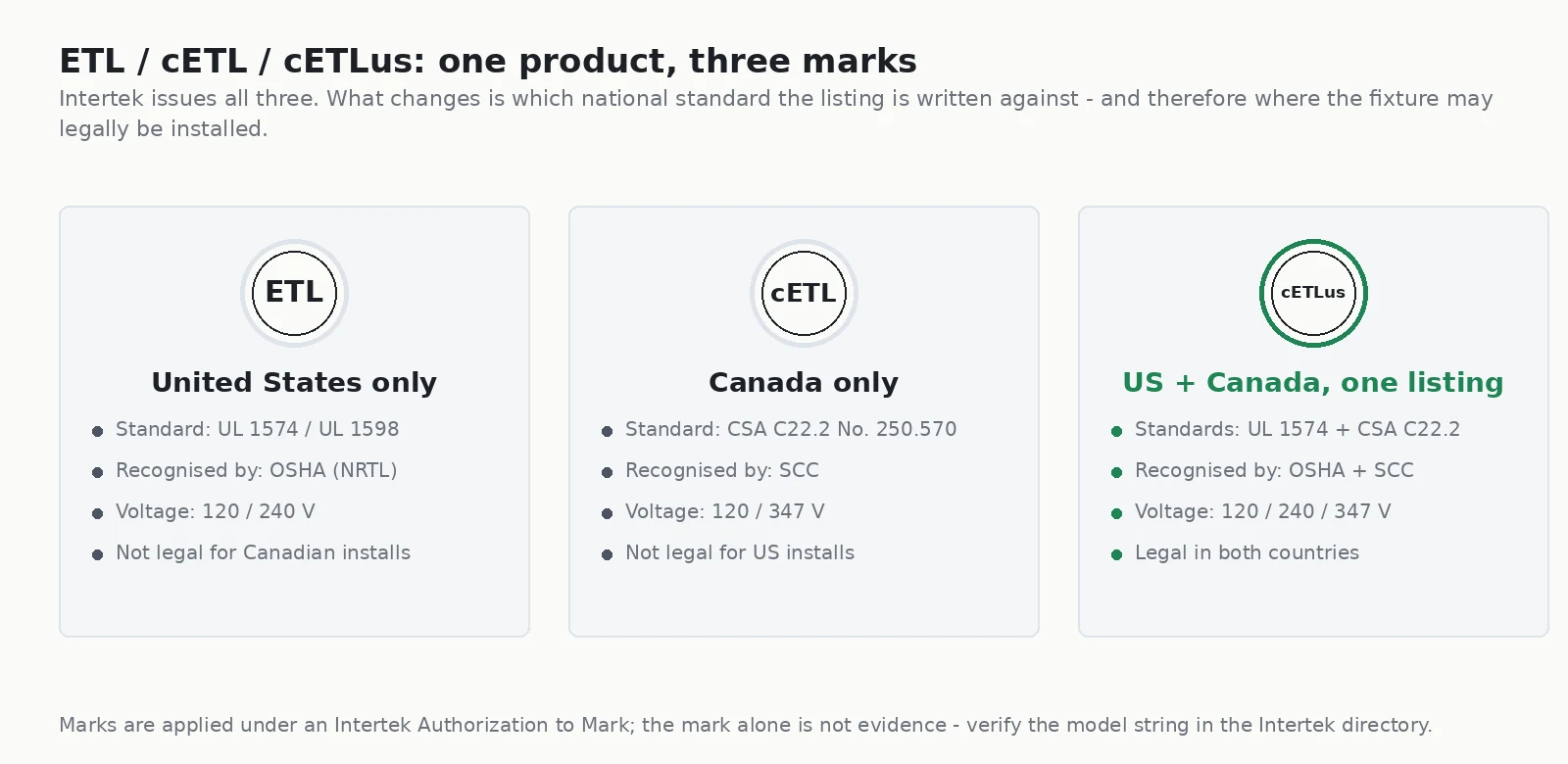
It helps to picture three related marks that are easy to confuse:
- ETL — US market only.
- cETL — Canada market only.
- cETLus — both markets under one listing. This is the mark a cross-border importer generally wants.
cETLus vs ETL vs cETL: The Mark That Matters for Cross-Border Orders
The most common importer mistake is treating the marks as cosmetic. They are not. Each mark is a legal statement about where the product may be installed and energised.
| Aspect | ETL | cETL | cETLus |
|---|---|---|---|
| Certifying body | Intertek (US NRTL) | Intertek (SCC-accredited) | Intertek — single listing for both |
| Legal market | United States only | Canada only | United States and Canada |
| Reference standards | UL 1574 / UL 1598 | CSA C22.2 No. 250.570 | Both, tested once |
| Recognition | OSHA / NRTL | Standards Council of Canada | OSHA + SCC |
| Typical voltages | 120 / 240 V | 120 / 347 V | 120 / 240 / 347 V |
| Installed in Canada | Not legal | Legal | Legal |
| Installed in the US | Legal | Not legal | Legal |
So the practical rule is simple: if a single SKU must ship to both a US warehouse and a Canadian one, specify cETLus. An ETL-only fixture will be rejected by a Canadian inspector, and a cETL-only fixture will be rejected by a US inspector — even though the hardware inside is often identical. If you want the deeper conceptual difference between the two national marks first, read our ETL vs cETL certification guide before you go further.

What cETLus Certification Actually Requires
cETLus is not a stamp you buy. It is a process, and understanding it tells you exactly what to demand from your supplier.
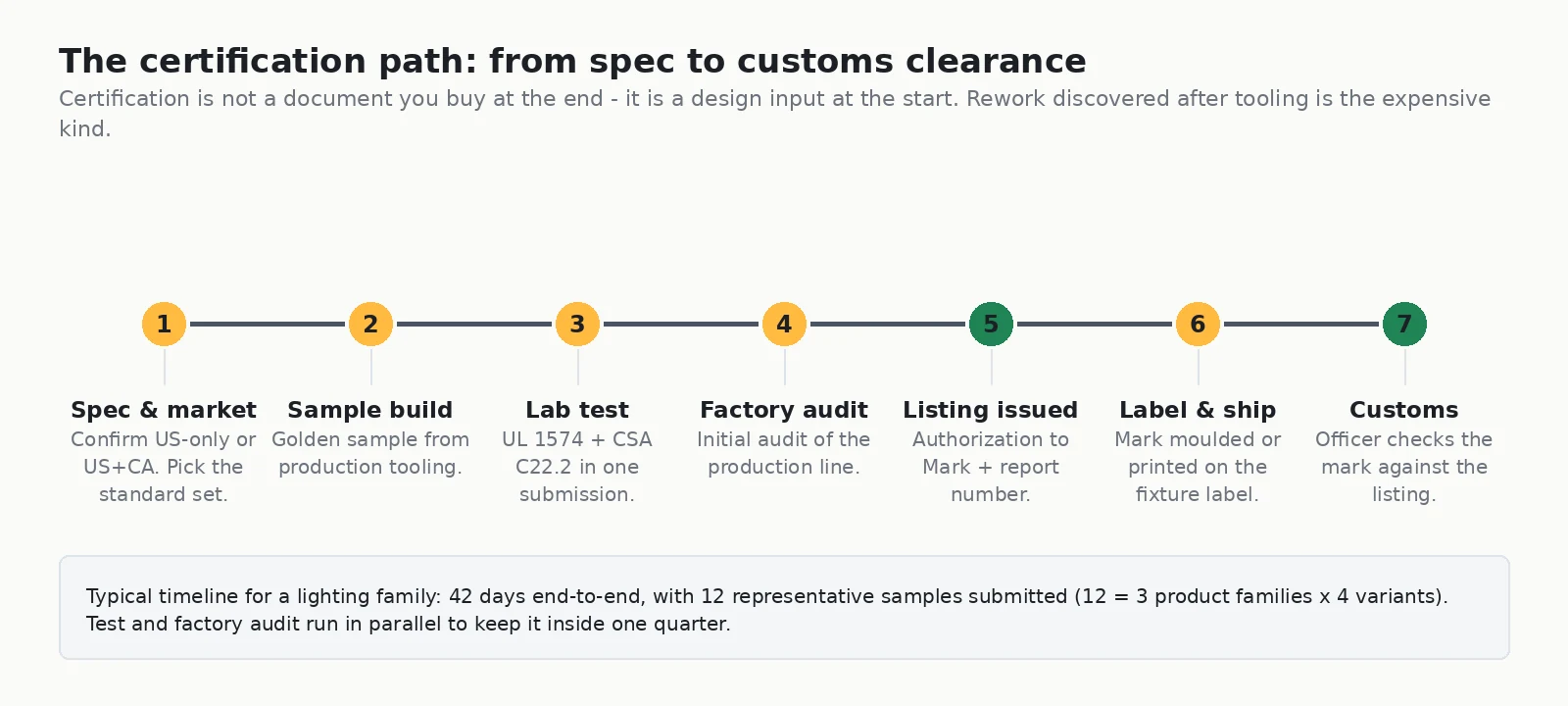
1. Product testing against both standard sets
Intertek tests the fixture to the UL standard and the corresponding CSA standard. This covers electrical insulation and spacing, temperature rise, mechanical strength, wiring and terminations, and enclosure requirements for the intended environment (dry, damp or wet location).
2. A written listing and Authorization to Mark
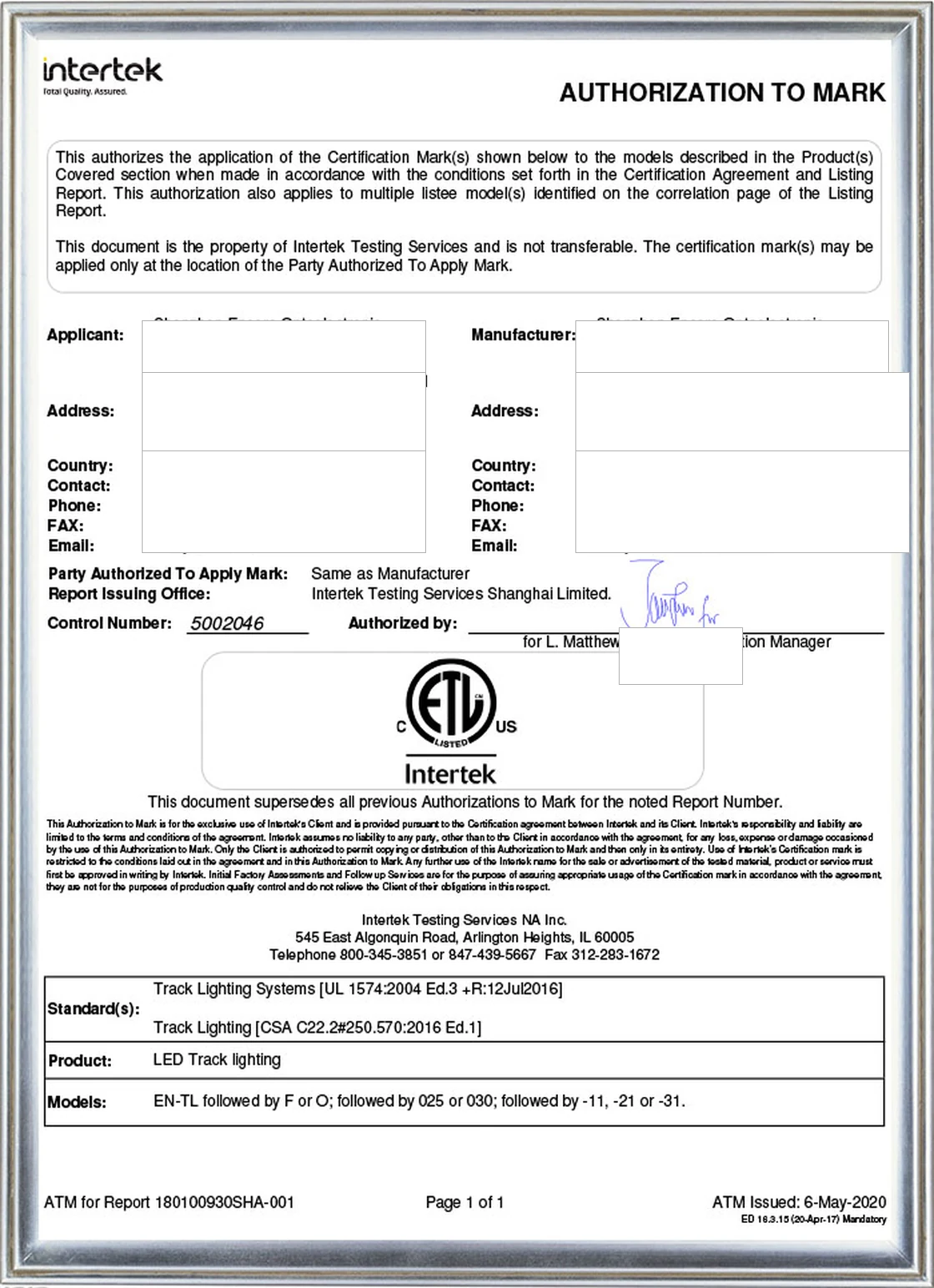
Once the product passes, Intertek issues a listing and a formal Authorization to Mark. That document is what legally permits the factory to print the cETLus logo. Without it, a logo on a carton is just artwork.
3. Follow-up factory inspections
Certification is not one-and-done. Intertek performs periodic follow-up services (factory inspections) to confirm the units being produced still match the tested sample. A listing can be suspended or revoked if production drifts from the tested construction.
4. Correct labelling on product and packaging
The mark must appear on the fixture label and typically on the packaging, alongside the model designation, electrical ratings, the manufacturer’s name and the file/authorization reference. This is what an inspector or customs broker reads to verify the goods in hand are the goods that were certified.
The Real Cost of Getting cETLus Wrong
Importers tend to underestimate this because the failure happens far from the factory. Here is what actually goes wrong:
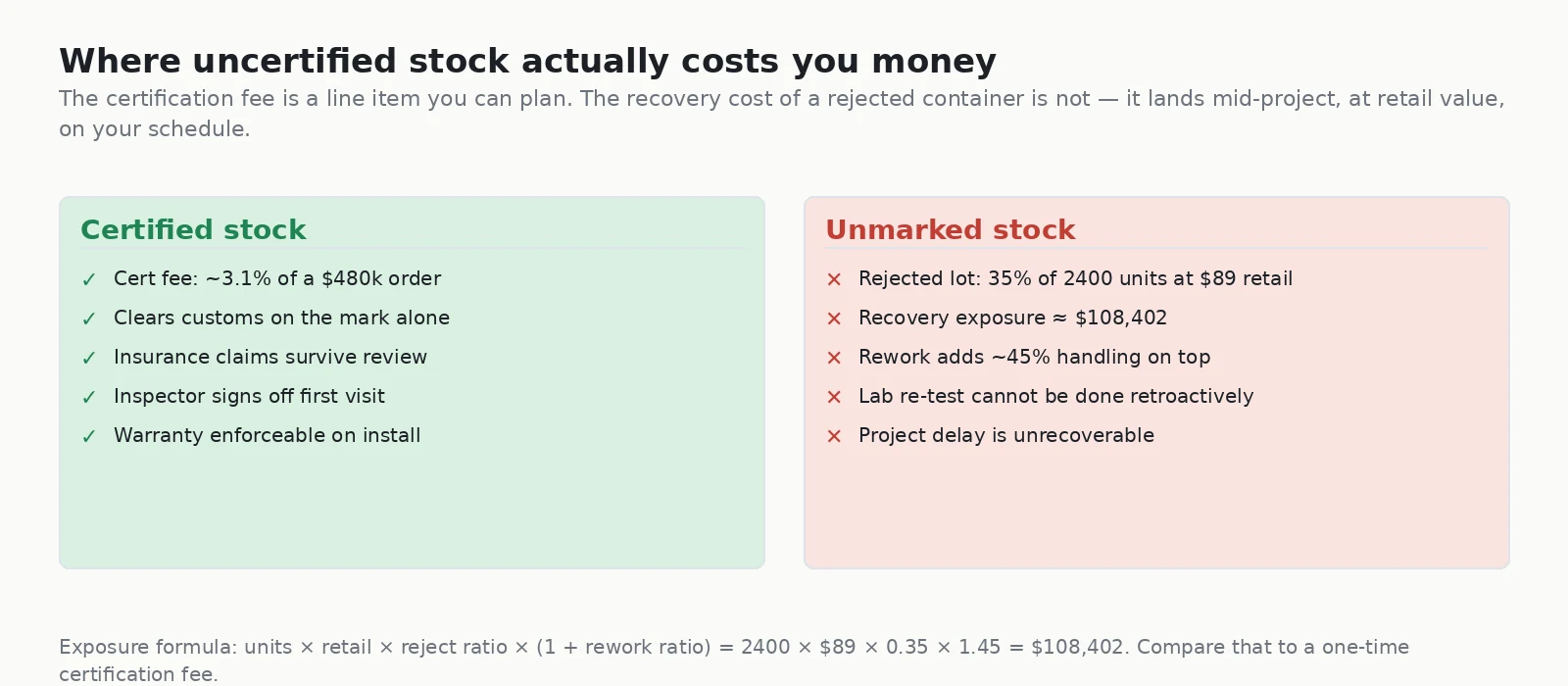
- Customs and inspection holds. US and Canadian electrical authorities can stop non-compliant product at the border, and provincial/state inspectors reject it on site.
- Unsellable inventory. Goods that fail certification cannot be legally sold or installed — they sit in a warehouse as dead stock, or get scrapped.
- Project delays and penalties. If your fixtures are on a commercial job’s critical path, a failed inspection can trigger liquidated damages and lost client relationships.
- Insurance and liability exposure. Uncertified electrical equipment can void insurance coverage and expose you to liability if there is a fire or shock incident.
- The re-test bill. Re-certifying after the fact means new samples, new freight, new lab fees and lost weeks — all of which were avoidable with one question asked up front.
How to Verify a cETLus Claim Before You Order
Never take a supplier’s word, and never trust a logo in a catalogue or on a website. Run this checklist:
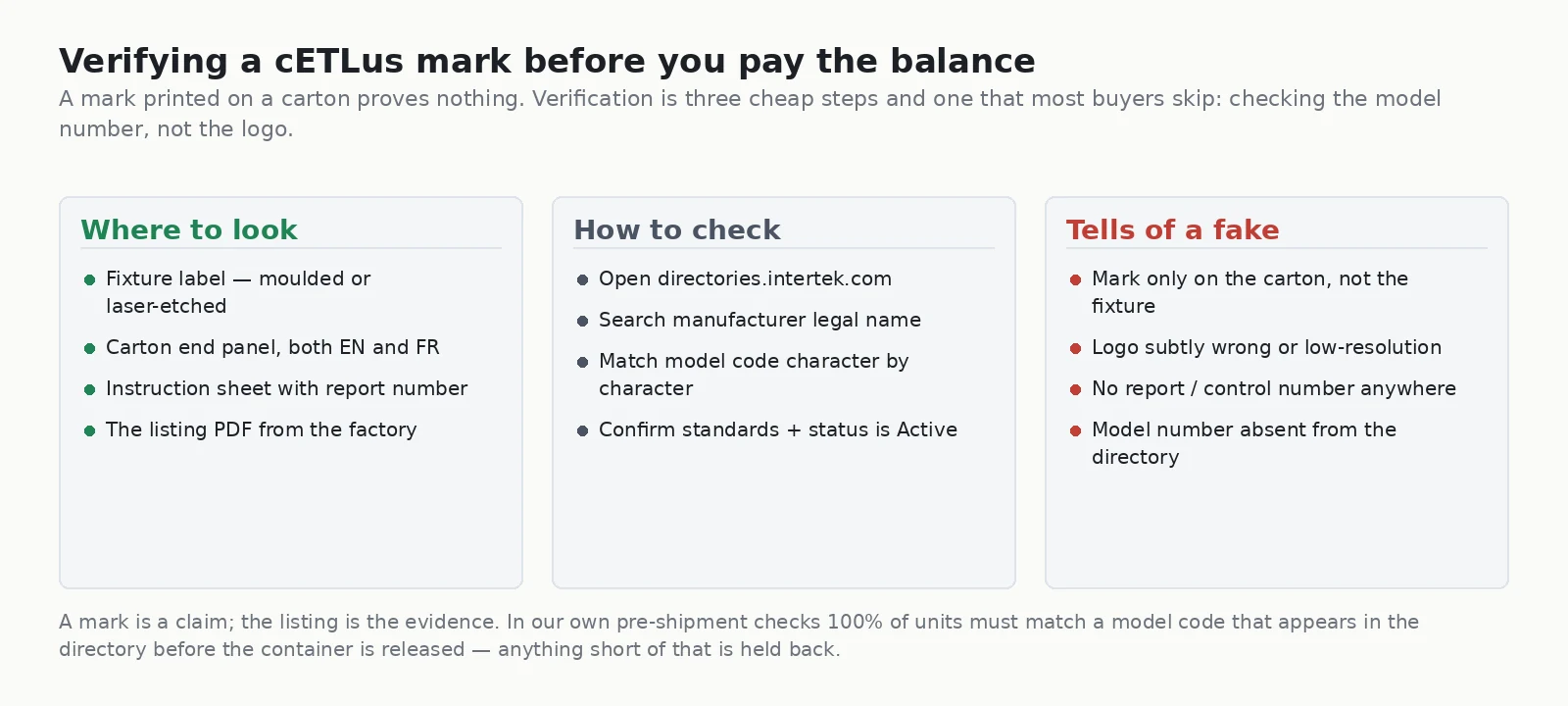
- Search the Intertek directory. Intertek maintains a free public certification directory at intertek.com/directories. Search the manufacturer and the exact model string.
- Match the model string exactly. The listed model must match what you are ordering. A “similar” model is not covered.
- Ask for the Authorization to Mark. Request the document (with commercially sensitive fields redacted if needed). Ask for the report number and confirm it is current.
- Confirm the scope. Check the listing covers your application — indoor vs outdoor, dry/damp/wet location, mounting type, voltage.
- Check the mark on the sample. Inspect the pre-production sample and carton artwork for the cETLus logo, ratings and file reference before mass production starts.
Here is what a genuine Intertek Authorization to Mark looks like for a track lighting system — note the two standards listed together on one document, which is exactly what the cETLus path produces:
cETLus Certification: FAQs
What does cETLus certification mean?
cETLus means a product has been tested and listed by Intertek to both US (UL) and Canadian (CSA) electrical safety standards, and may be legally installed in either country under a single listing.
Is cETLus the same as ETL certification?
No. ETL is the US-only Intertek mark, cETL is the Canada-only mark, and cETLus covers both markets. cETLus includes ETL and cETL scope in one listing.
Can I install an ETL-only fixture in Canada?
No. An ETL mark without the Canadian listing is not accepted by Canadian electrical inspectors. You need cETL or cETLus for Canadian installation.
How do I verify a cETLus mark is genuine?
Search the public Intertek certification directory at intertek.com/directories using the manufacturer and exact model string, then request the Authorization to Mark and confirm the listed scope matches your application.
Does cETLus certification expire?
Listings are maintained, not permanent. Intertek performs periodic follow-up factory inspections, and a listing can be suspended or revoked if production no longer matches the tested sample, so re-check before each order.
Ordering Certified Lighting: The Bottom Line
Before you place a production order for lighting destined for the US or Canada, confirm one thing: the exact model you are buying carries a current cETLus listing. It is the difference between a container that clears inspection and one that becomes dead stock. Verify the model string in the Intertek directory, get the Authorization to Mark, and check the sample label before mass production — it takes an hour and saves orders.
Encore manufactures LED track lighting and linear systems for commercial and residential projects across North America, and we work with importers and specifiers on certification scope for cross-border orders. Our SLEM 2.4in linear light system and ATRO 26mm linear light system are built for projects that need documented compliance, not just a logo on a box.
Not sure which mark your project needs? Or planning a lighting package that has to clear both US and Canadian inspection? Talk to our team and get a quote for cETLus-ready lighting today →