
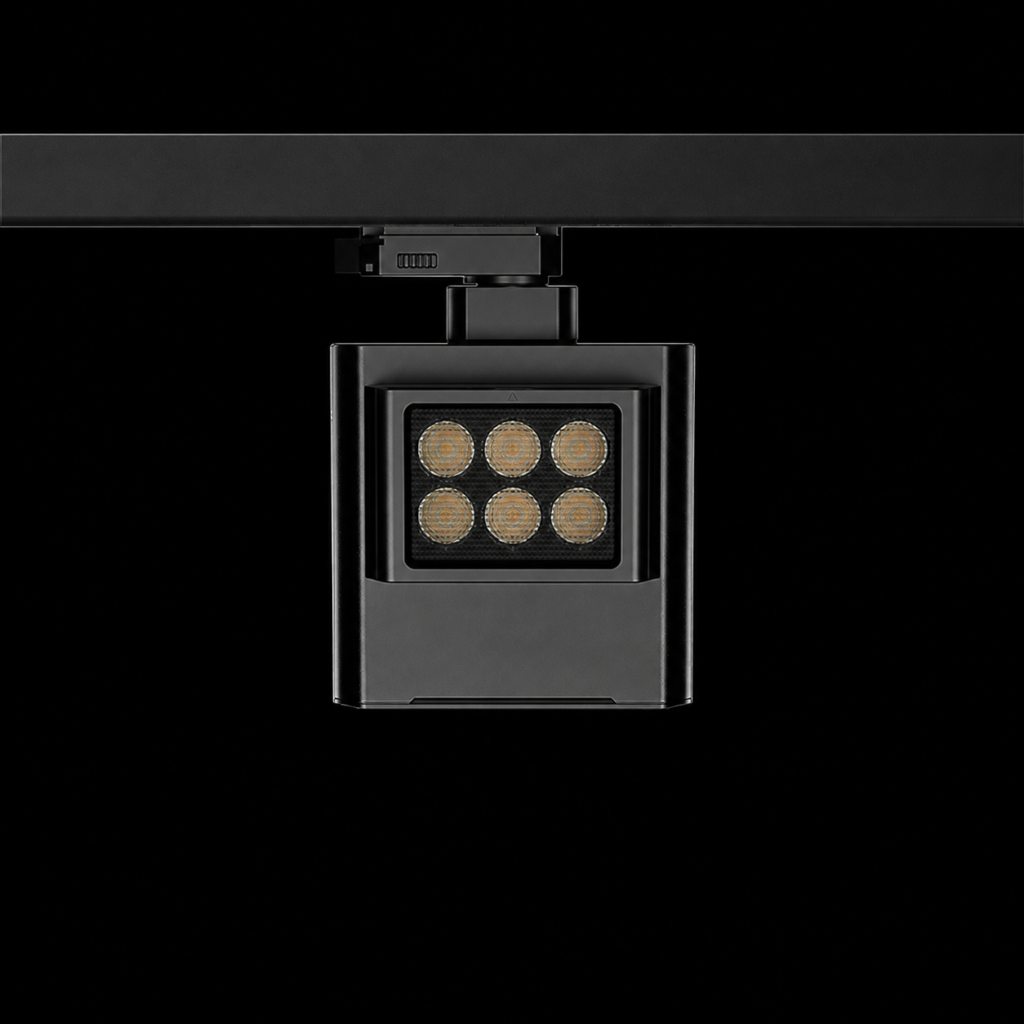
Lighting a room with a 12-foot or taller ceiling is where most lighting plans quietly fail. The same track heads that look great under a 9-foot ceiling become weak, uneven pools of light on the floor; the ceiling above disappears into shadow; and every lamp becomes a maintenance problem. The good news: high ceiling lighting is not about buying bigger fixtures and hoping for the best. It is a physics problem with a precise solution — beam angle, lumen output, mounting height and aiming, chosen together.
This guide explains how to light rooms with 12ft+ ceilings using high ceiling track lighting, covering the beam angle math, the lumen output you actually need, three mounting strategies, and a room-by-room guide — with the MEGA track light series as the reference fixture for tall spaces.
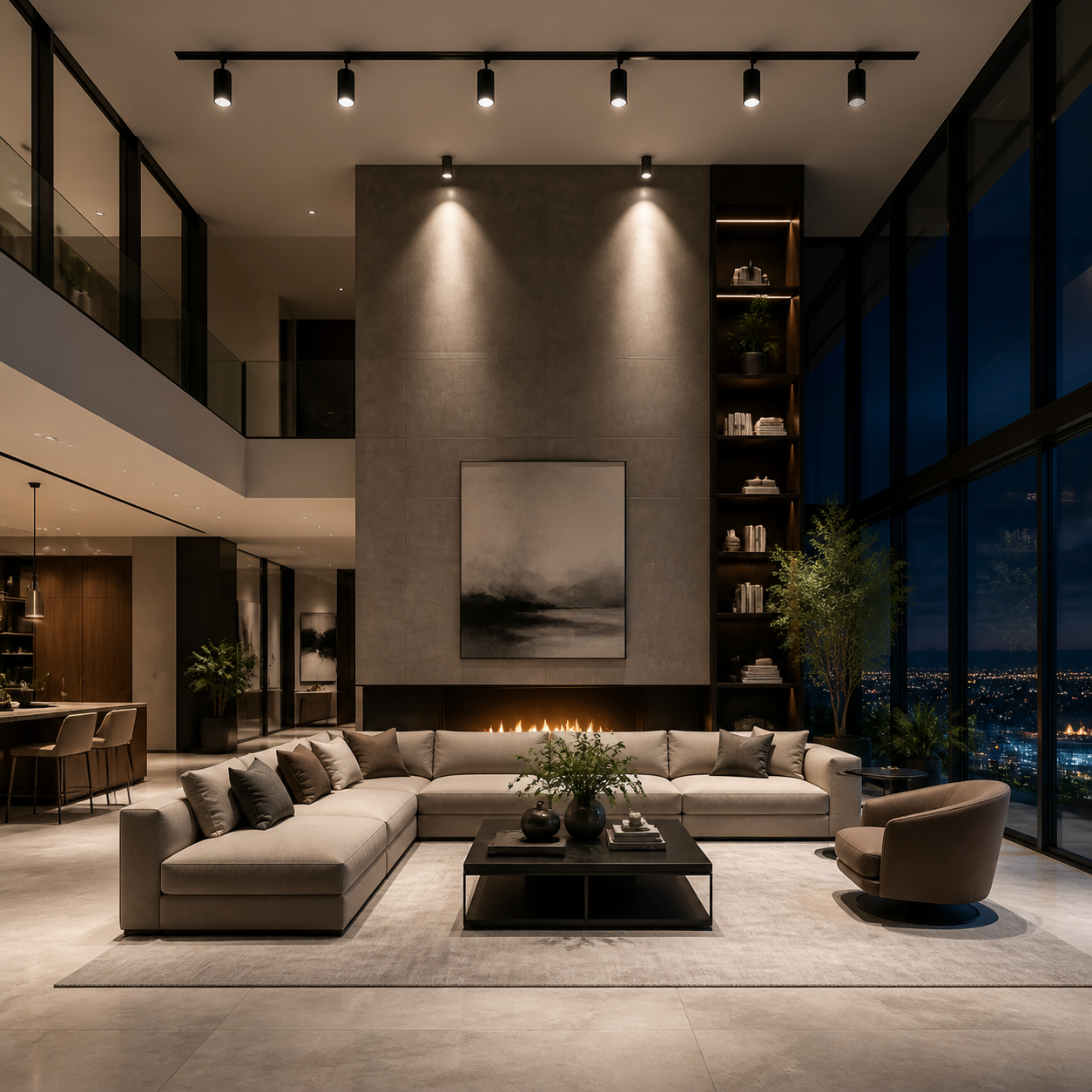

Why High Ceilings Break the Normal Lighting Rules
Every lighting failure in a tall room traces back to the same physical law, so it is worth understanding before choosing a single fixture.
The Inverse Square Law, Made Simple
Light intensity falls off with the square of the distance. Move a light from 8 feet above the floor to 12 feet, and the distance grows by 1.5x — but the illuminance on the floor drops to roughly 44% (1 ÷ 1.5²). At 16 feet it drops to 25%. This is why the same fixtures that looked bright in a standard room feel dim in a tall one: the light is not lost, it is simply spread over a much larger area before it reaches you.
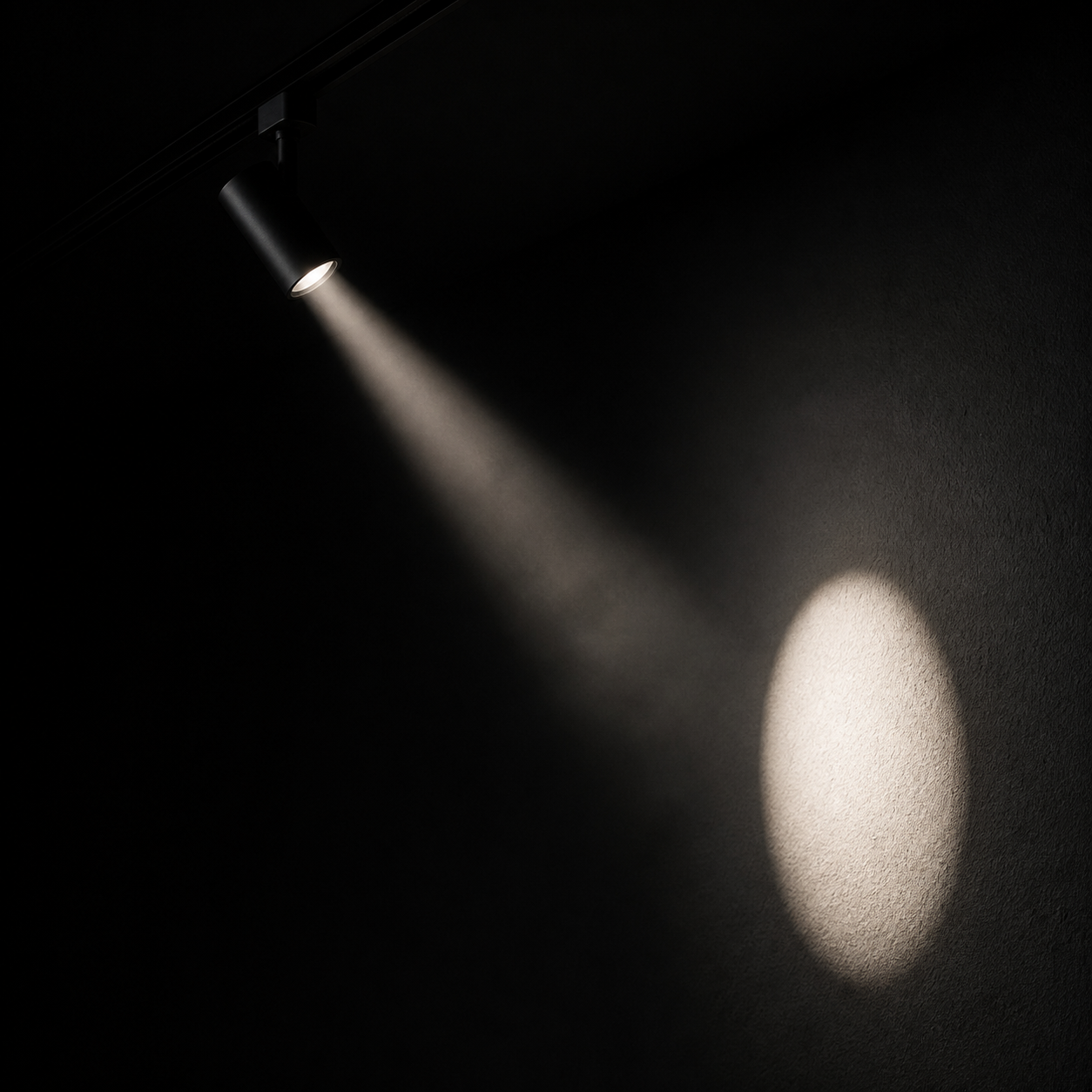
The practical consequence: for every extra foot of ceiling height, you need more lumen output, a narrower beam angle, or both. A 10° narrow beam concentrates those lumens into a tight pool that survives the long throw; a 60° flood beam spreads them so thin that the floor stays dark while the air above you glows.
The Three Symptoms of Bad High Ceiling Lighting
- Dark floors, glowing air: wide beams from high mounts light the dust and ceiling structure instead of the space you use.
- Ceiling black holes: an unlit tall ceiling feels cavernous and oppressive, no matter how bright the floor is.
- Glare at eye level: a bare lamp visible from below at a steep angle becomes a blinding point source, especially in stairwells and balconies where you look upward.
Three Ways to Mount Track Lighting on High Ceilings
Track lighting is uniquely suited to tall rooms because you control both the fixture choice and the mounting height. There are three strategies, and most good installations combine them.
1. Ceiling-Mounted Track
The track attaches directly to the ceiling. This works well up to roughly 15 feet when paired with narrow-beam, high-output heads, because the fixtures stay close to the structural surface and the beams do the work. It is the cleanest visual option for modern interiors — and the right choice when you cannot or should not hang anything.
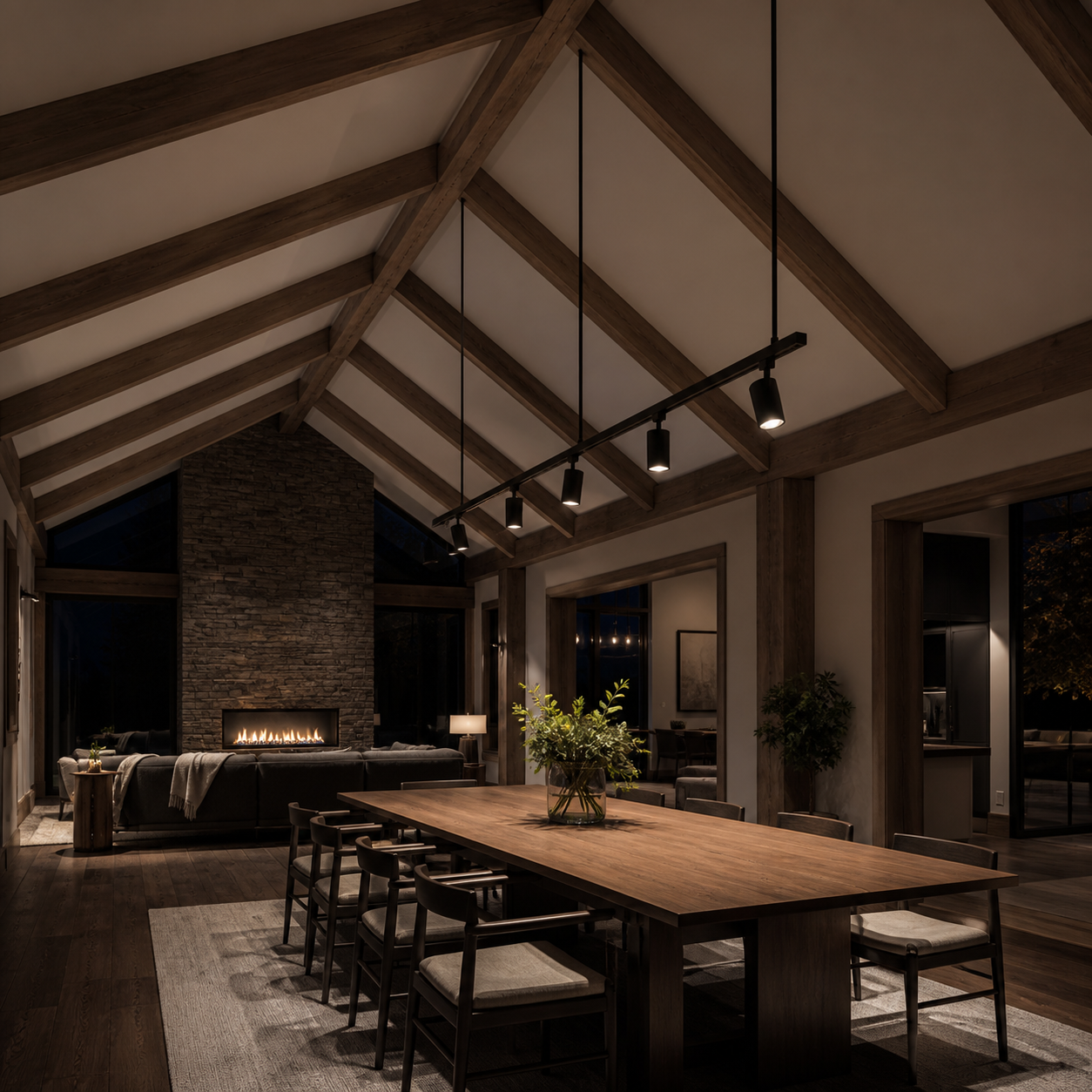
2. Suspended Track (The High Ceiling Specialist)
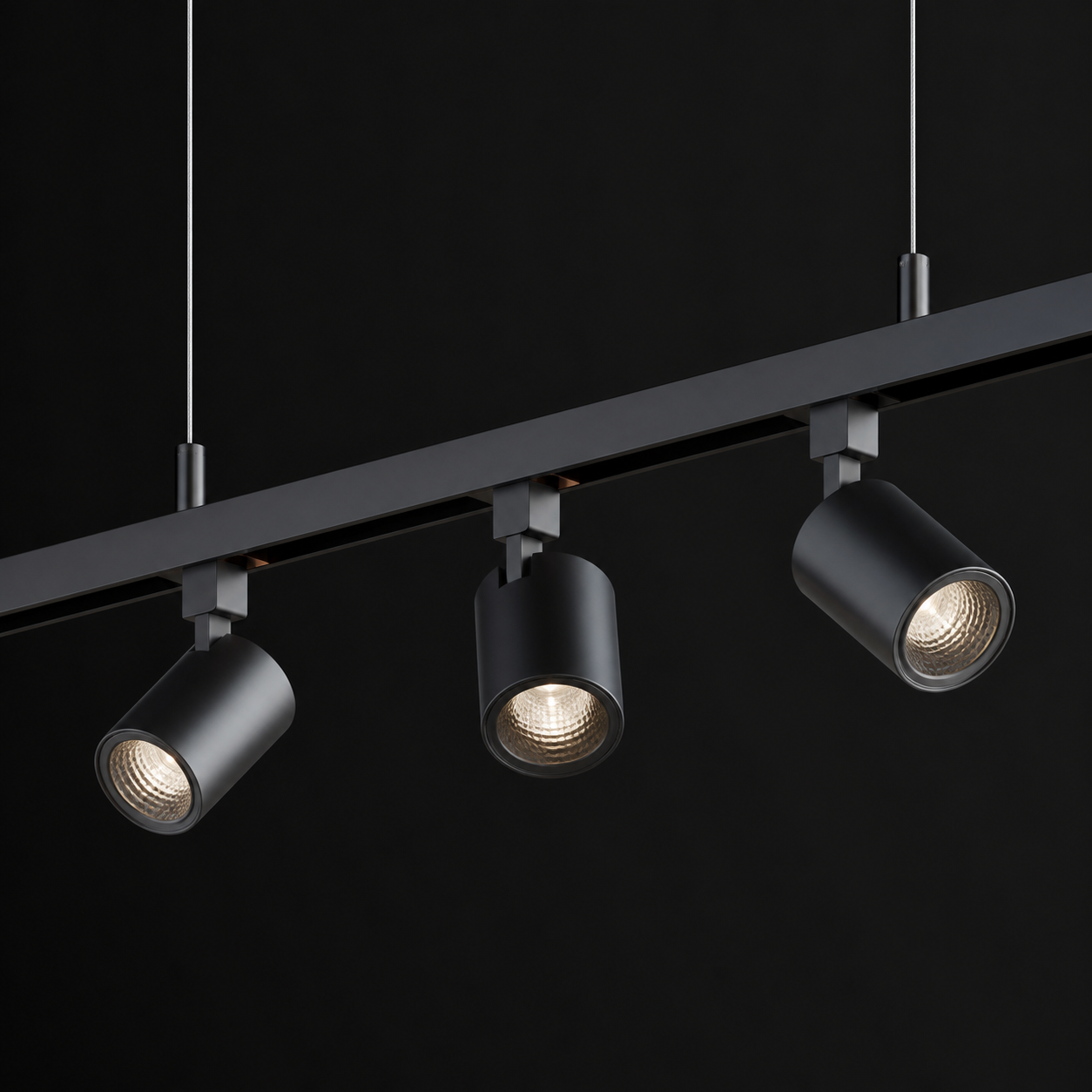
Suspended track lowers the rail itself, on rods or cables, from the high ceiling down to a working height of about 8-10 feet. This is the single most effective technique for 15ft+ ceilings: you recover the light intensity lost to the inverse square law without changing the fixture, and you make maintenance dramatically easier. Suspended track also gives a deliberate architectural line in double-height rooms, lofts and atriums.
3. Wall-Mounted and Vertical Track
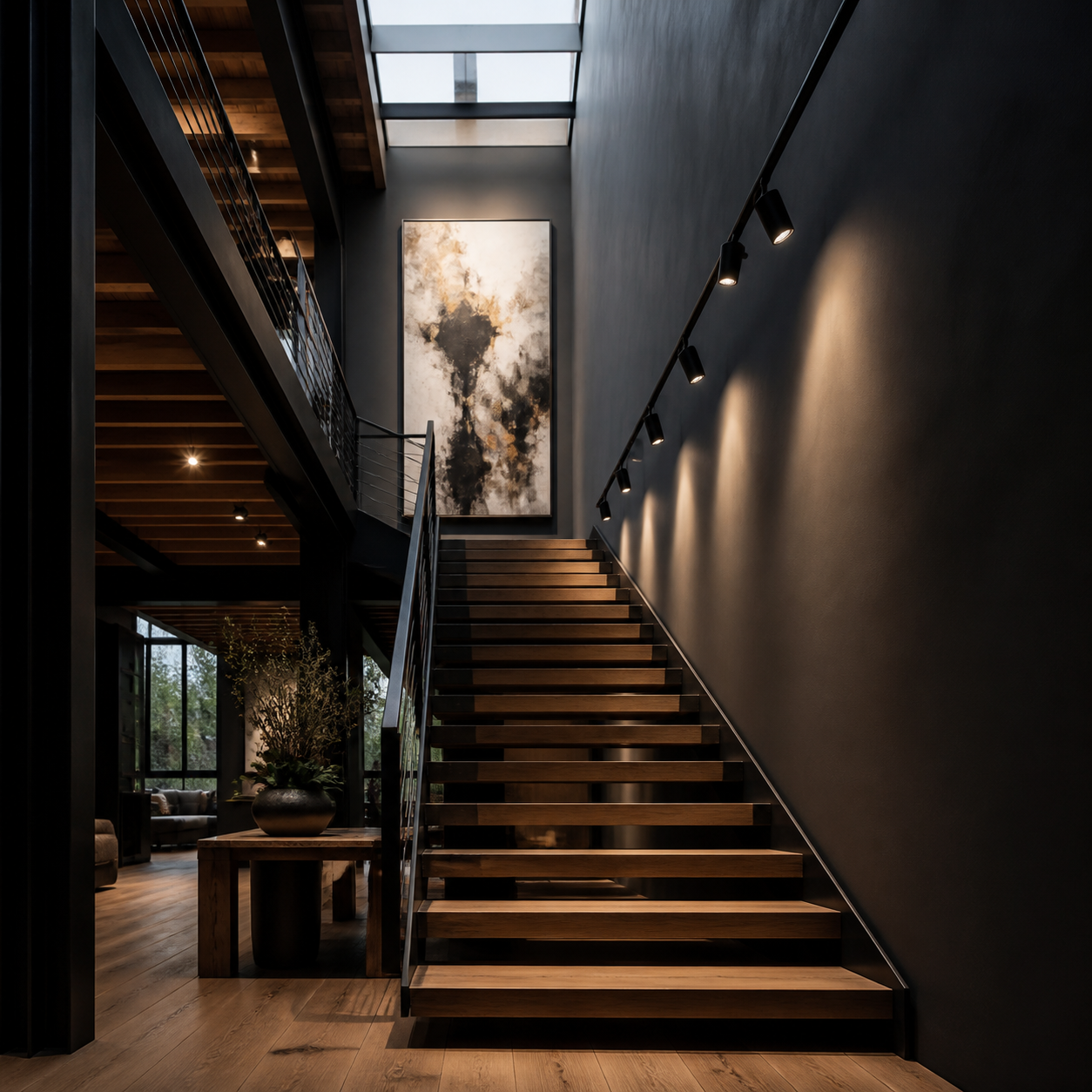
For stairwells, double-height entry halls and gallery walls, vertical track mounted on the wall can aim light sideways or upward — washing the tall wall surface and lighting the steps below. Wall washing is the standard technique for preventing the “black hole” effect on tall walls, and it pairs beautifully with ceiling track for layered light.
| Mounting method | Best ceiling range | Advantages | Watch out for |
|---|---|---|---|
| Ceiling-mounted track | 10-15 ft | Cleanest look, no hanging hardware | Needs narrow beams + high lumen output |
| Suspended track | 15-30 ft | Recovers light intensity, easy maintenance, strong design line | Extra hardware, clearance planning |
| Wall-mounted / vertical | Any height | Washes tall walls, lights stairs, prevents black holes | Only accent/ambient, not general light |
Choosing the Right Track Heads for 12ft+ Ceilings
Once the mounting is decided, the fixture choice comes down to four specifications. Get these right and the room will look expensive; get them wrong and no amount of wattage will save it.
1. Beam Angle Is Everything
Beam angle determines the pool size at floor level. The formula is simple: spot diameter ≈ 2 × mounting height × tan(beam angle ÷ 2). From a 12-foot ceiling:
- 10° beam → about 2.1 ft pool — tight accent pools that stay bright over long throws.
- 25° beam → about 5.3 ft pool — the versatile workhorse for furniture and work surfaces.
- 40° beam → about 8.7 ft pool — general light and wider coverage.
- 60° beam → about 13.9 ft pool — ambient wash; use sparingly on very high mounts.
For high ceilings, prefer 10°-25° heads for task and accent light, and reserve wider beams for wall washing and ambient layers. This is why the MEGA track light 15W-20W is specified with 10°, 25°, 40° and 60° optics: the same head covers every role in a tall space, and the snap-on optical filters swap spotlight, floodlight and wall-wash modes without changing the fixture.
2. Lumen Output: What You Actually Need
Use the inverse square math to size your lumens. A good starting point for a 12-15 foot residential ceiling is 800-1300 lumens per accent head (delivered at the fixture, before optics), and 1300-2000+ lumens per head for commercial spaces with 15-20 foot ceilings. Compare this with the MEGA range:
| Model | Power | Luminous flux | Beam angles | CRI | Control |
|---|---|---|---|---|---|
| MEGA Track Light 10W | 10W | 798 lm @ 10° | 10° / 25° / 40° / 60° | 90+ | On/off |
| MEGA Track Light 15W-20W | 15W / 20W | 1296 lm @ 40°, 1291 lm @ 10° | 10° / 25° / 40° / 60° | 95+ | Concealed 1-10V dimming |
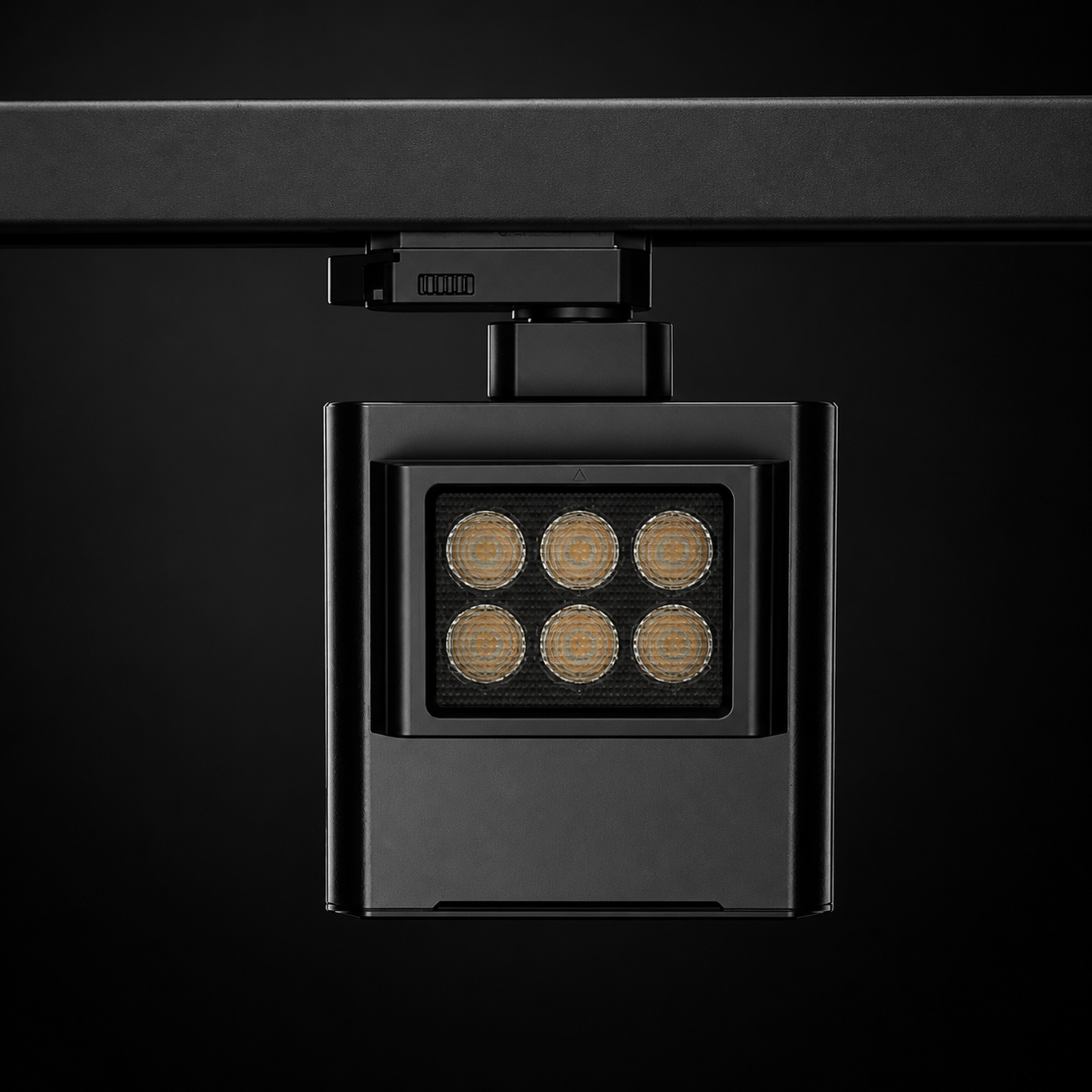
The 15-20W model’s 1291 lm delivered through a 10° optic is exactly the combination a 14-18 foot ceiling needs: enough raw light to survive the throw, and a narrow enough beam to land it where it belongs. The concealed 1-10V control gear means you can dim scenes from a wall panel without visible control boxes — useful when you need to drop a tall dining room from bright to intimate.
3. CRI, CCT and Glare Control
High ceilings are usually installed in rooms that want to feel premium — living rooms, galleries, retail, lobbies — so color quality matters as much as quantity. Specify CRI 90+ as the floor, CRI 95+ for anything with fabric, art, or merchandise, and check the R9 value for reds. For color temperature, 3000K reads warm and architectural, 4000K reads crisp and commercial; match it to the finish of the room. And on glare: from below, a head aimed past 60° from vertical becomes a visible source — choose heads with deep regressed optics or baffles, and aim across the space rather than down the line of sight.
Room-by-Room Guide to High Ceiling Lighting
Living Rooms and Lofts (12-15 ft)
Layer three sources: 10°-25° track heads for the sofa and dining surfaces, a wall-wash line on the tall feature wall (see our wall wash guide for the technique), and an uplight or dim indirect source to lift the ceiling visually. Avoid the common mistake of flooding the whole room with wide beams — it lights the air and leaves the furniture dark.
Retail and Showrooms (12-20 ft)
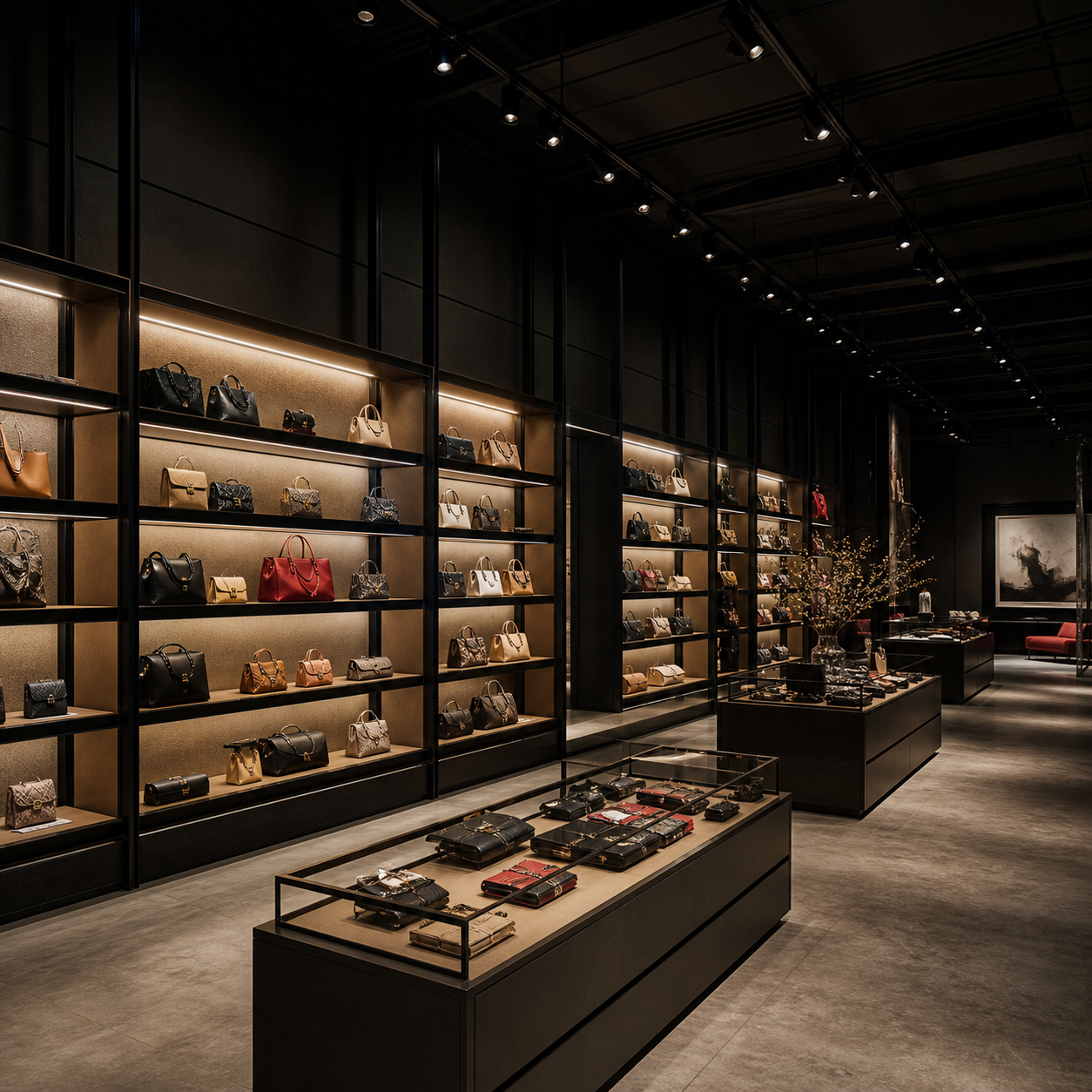
High shelving eats light, so the rule is narrow beams aimed at the merchandise, not the aisle. 10°-25° heads on ceiling or suspended track, spaced to overlap at shelf face, with 4000K and CRI 90+ minimum for accurate product color. For layout guidance, our retail track lighting guide covers spacing and aiming in detail.
Museums and Galleries
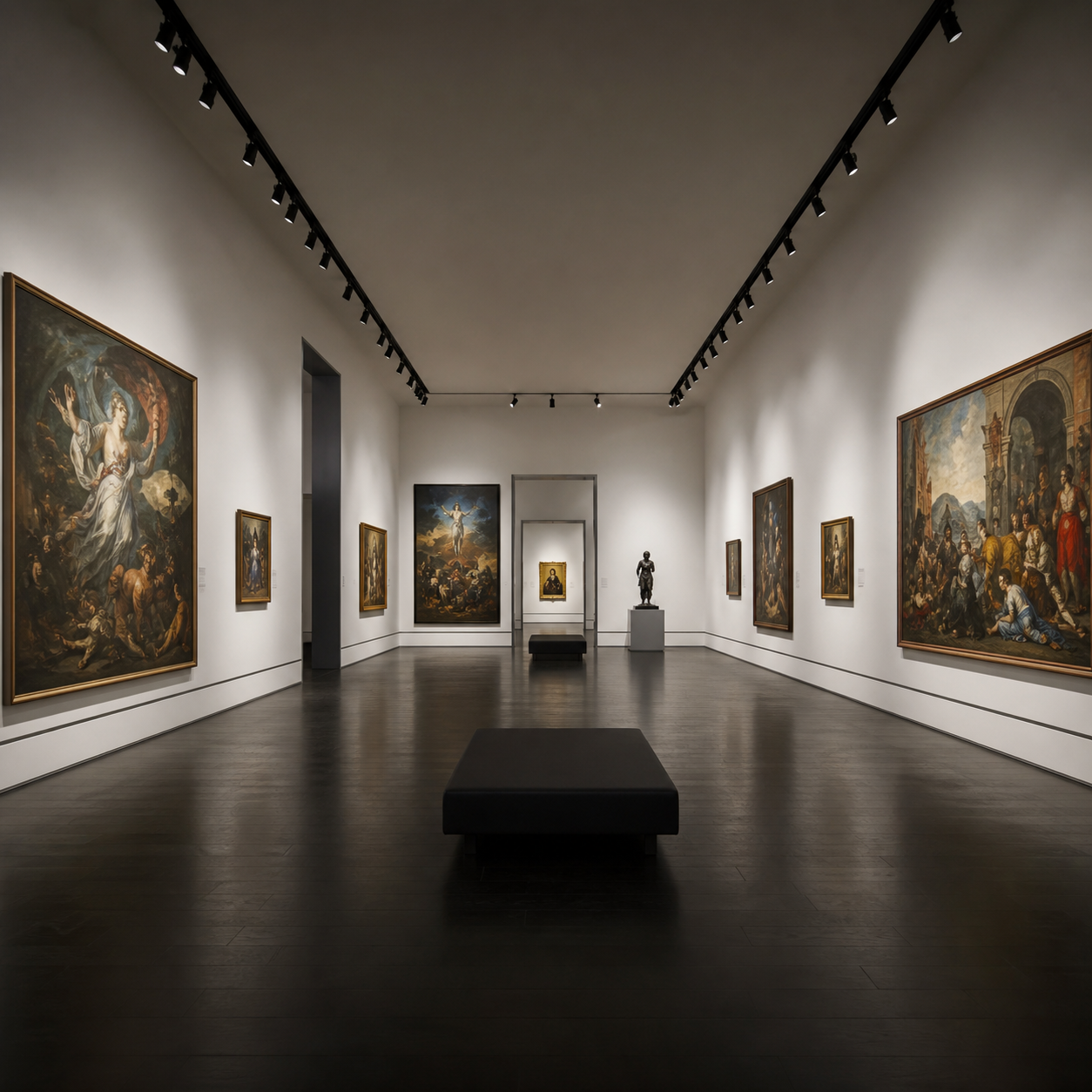
Galleries with 15-20 foot ceilings are the purest test of high ceiling lighting: conservation limits, precise aiming, and color accuracy all at once. Suspended track at 8-10 feet, 10°-25° heads with CRI 95+, and strict glare control are the standard — the same logic covered in our art gallery lighting guide. The MEGA series was designed for exactly this duty, which is why it carries museum-grade color rendering and 50,000-hour reliability.
Commercial Atriums and Lobbies (18-25 ft)
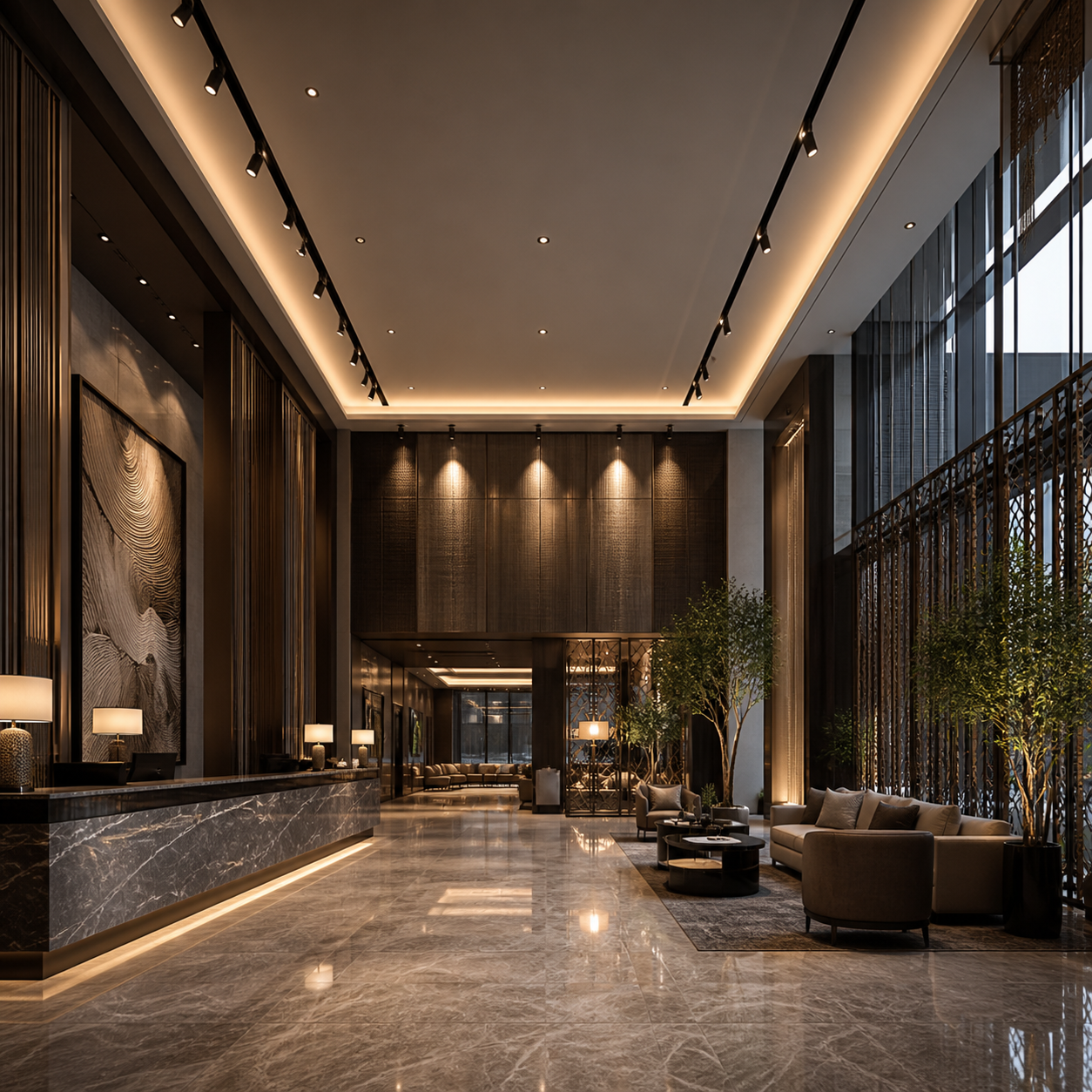
At these heights, suspend the track. A 20-foot ceiling loses 84% of the light that a 9-foot mount delivers, and no head can fully compensate — but lowering the rail to 12-14 feet restores most of it while keeping the architectural statement. Combine narrow-beam spot heads for the reception and seating, wide optics for uplight on the ceiling structure, and wall washers on the tall surfaces.
Warehouses and Workshops
For 20-50 foot industrial ceilings, dedicated high-bay fixtures are usually the right tool. Track lighting still earns its place in the 12-20 foot band — workshops, studios, garages, and showrooms with machinery — where its aimability and zoning beat fixed high-bay units. Use 25°-40° heads with 1300+ lumens, mount on suspended track for service access, and add a separate task layer over benches.
Spacing and Aiming: Rules of Thumb
- Spacing: for a 12-foot mount with 25° heads, space tracks roughly 4-6 feet apart and heads 3-5 feet apart along the rail; increase spacing only as beam angle narrows.
- Aiming: aim 10°-25° heads at the task plane (floor or work surface), not at the ceiling — at high mounts, a few degrees of tilt error moves the pool several feet.
- Wall washing: place the track 2-3 feet from the wall and aim heads at 30° from vertical for an even wash; overlap pools by half a beam width.
- Layering: never rely on one source. Ambient + accent + wall wash is the formula that makes tall rooms feel intentional rather than empty.
Frequently Asked Questions
What is the best lighting for 12-foot ceilings?
A layered plan: ceiling-mounted or suspended track with narrow 10-25 degree beams for task and accent light, plus wall washing on tall surfaces and an uplight layer for the ceiling. Choose heads with 800+ lumens for residential and 1300+ lumens for commercial 12ft+ spaces, with CRI 90+.
Should I use track lighting or high bay lights for a high ceiling?
For ceilings up to about 20 feet where you want flexibility, aiming and zoning, track lighting is often better. For 20-50 foot industrial ceilings, dedicated high-bay fixtures deliver more lumens per dollar. Between 12 and 20 feet, suspended track is usually the best compromise.
How far should track lights be from a high ceiling?
Ceiling-mounted track sits flush on the surface; suspended track should be lowered so the heads hang about 8-10 feet above the floor — that restores light intensity and makes aiming and maintenance practical. For wall washing, keep the track 2-3 feet from the wall.
What beam angle do I need for a 12-foot ceiling?
For accent and task light, 10-25 degrees. A 10-degree beam creates roughly a 2.1-foot pool from a 12-foot mount; 25 degrees creates about a 5.3-foot pool. Use 40-60 degrees only for ambient wash and wall washing.
How many lumens do I need for a high ceiling room?
Aim for 800-1300 lumens per accent head for 12-15 foot residential ceilings, and 1300-2000+ lumens per head for commercial spaces with 15-20 foot ceilings. Delivered lumens matter more than wattage — check the flux at the beam angle you will use.
Final Recommendation
Lighting a 12ft+ room well is not about buying more wattage — it is about keeping light intensity over distance with narrow beams, delivering enough lumens at the source, and lowering the light to a working height when the ceiling gets extreme. Start with the beam angle math, choose suspended track for anything over 15 feet, layer in wall washing to kill the black holes, and specify CRI 90+ (95+ for art and retail) with a CCT that matches the room.
The MEGA track light 15W-20W covers all of it in one head: 1291+ lumens, 10°-60° optics with snap-on filters, CRI 95+, concealed 1-10V dimming, and a double-spindle joint rated for 5kg+ that stays where you aim it for 50,000 hours. For lighter accents, the MEGA 10W delivers museum-grade color in the same square profile. Both mount on standard track — browse the track lighting range or contact our team for a free photometric calculation for your ceiling height.