
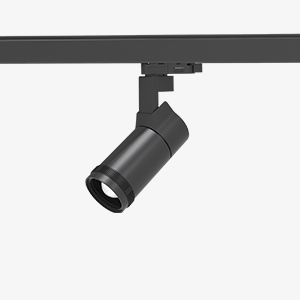
You walk into a gallery, and a 500-year-old painting glows under what looks like perfect light. It appears timeless — but the light itself may be the slow enemy. Think simply illuminating an exhibit is enough? Roughly 30% of museum exhibits fade every year because of the wrong light source. The issue is not brightness. It is what ordinary spotlights quietly carry: invisible ultraviolet, radiant infrared, and poor color rendering. The difference between a retail spotlight and a conservation-grade museum track light is the difference between lighting to sell and lighting to preserve — and for any gallery, archive, or heritage collection, that distinction is existential.

What Museum Track Lights Must Do That Ordinary Spotlights Don’t
Most off-the-shelf spotlights are built for retail — making merchandise pop, not protecting centuries-old materials. Museum-grade track lights are engineered around a different priority: reveal the artifact while preserving it. Three physical factors decide whether a source is actually safe: the presence of ultraviolet radiation, the amount of infrared heat it emits, and the accuracy of its color rendering. Add to those a fourth that curators depend on daily — precise, controllable beams that can be aimed and dimmed to exact lux levels without ever touching the object.
When a museum installs a track system, it is not buying a fixture. It is buying control over the two things that damage collections over time — exposure and heat — while keeping the artwork visible in a way that honors the artist’s intent.
1. Ultraviolet Light — The Invisible Bleach
Sunlight and many artificial lamps emit ultraviolet (UV) radiation below 400 nm. Human eyes cannot see it, but organic molecules can feel it.
The Photochemical Breakdown
UV photons carry enough energy to break chemical bonds inside dyes, pigments, and fibers. This is not weathering you notice day to day — it is a permanent, cumulative photochemical reaction. A red dye does not simply darken; it shifts hue, yellows, or turns gray. No cleaning and no restoration brings the original color back. Over a single decade, an unprotected watercolor under the wrong lamp can lose the very blues and greens the artist painstakingly mixed.
Why Paper, Textiles, and Pigments Are Most Vulnerable
Cellulose (paper, wood), proteins (silk, wool, leather), and natural pigments are especially UV-sensitive. A single overexposed watercolor can lose its intended color within years under the wrong spotlight. This is why conservation authorities such as the Getty Conservation Institute stress strict UV limits — typically capping UV at 75 µW/lm or lower for light-sensitive collections. A well-designed museum track light filters this radiation at the source, so the damaging wavelengths never reach the artifact’s surface in the first place.
2. Infrared Light — Heat That Accelerates Decay
Infrared (IR) sits just beyond red in the spectrum. You do not see it, but you feel it as heat.
Radiant Heat and Its Effects
Ordinary spotlights dump IR energy onto an exhibit’s surface. That radiant heat raises the artifact’s temperature and speeds up chemical reactions, drying, and embrittlement — particularly in layered objects like illuminated manuscripts or lacquerware. Proper museum track lights use LED engines or IR-coated reflectors that produce almost no infrared, keeping the surface of a silk robe or a varnished panel measurably cooler even when lit at full intensity.
3. Why CRI Must Be >=95 in Museums
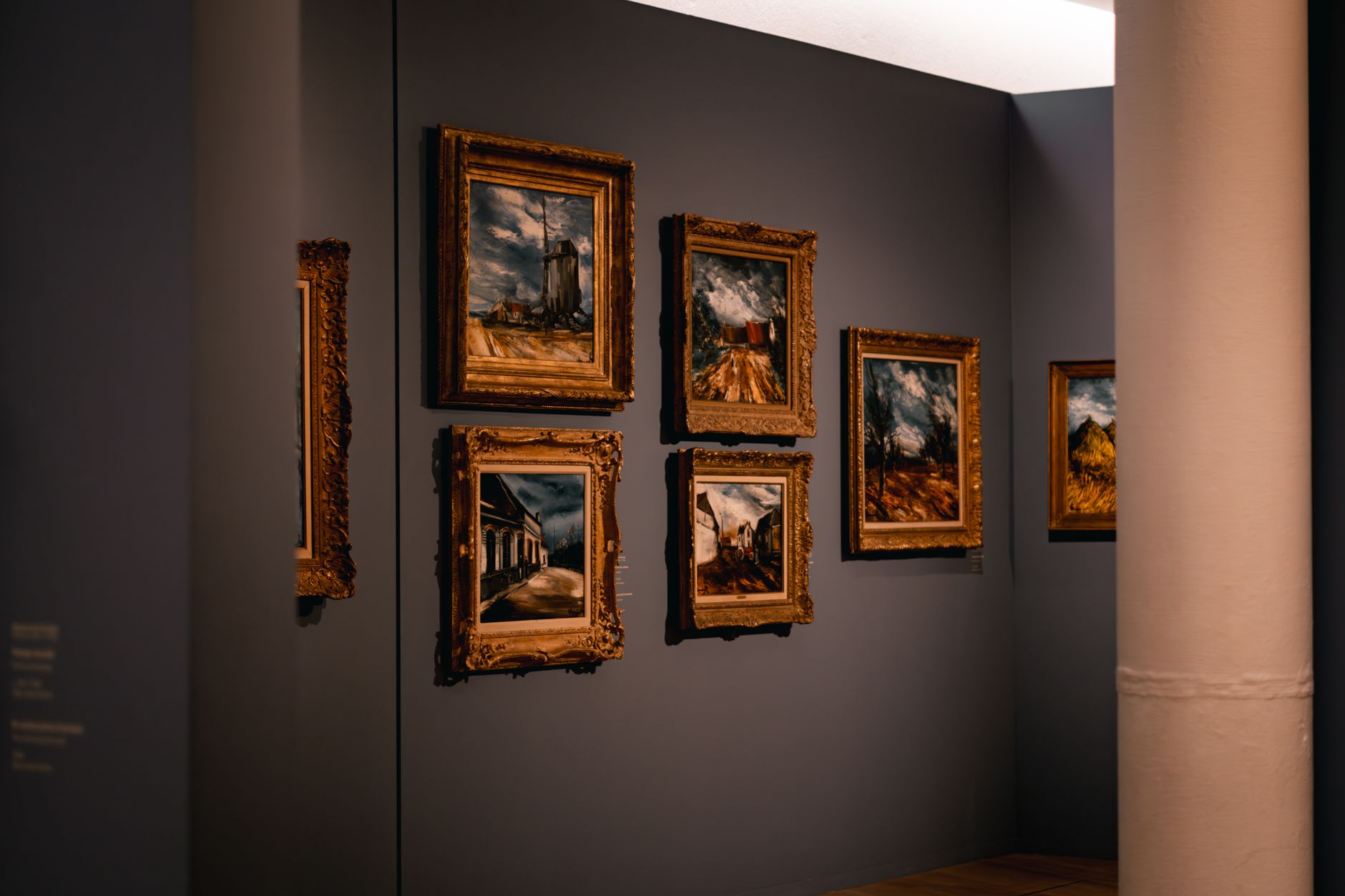
Color Rendering Index (CRI) measures how accurately a light reveals an object’s true colors versus natural daylight. A typical office or retail spotlight scores around CRI 80. Museums require CRI >=95.
Color Rendering and the True Appearance of Art
Below 95, subtle tones vanish: the gap between two close blues, the warmth of aged varnish, the faint underdrawing beneath a portrait. Visitors see a flattening of the artist’s intent. High CRI keeps the work honest to the eye. For a gallery displaying textiles, glazed ceramics, or flesh tones in portraiture, this fidelity is not a luxury — it is the entire point of the visit.
The Difference Between CRI 80 and CRI 95
The gap looks small on a spec sheet but large on a canvas. CRI 95+ track lights render skin tones, textiles, and pigments with minimal deviation — exactly what curators need for accurate viewing and faithful reproduction. When a museum commissions a catalog, a press image, or a restoration note, the light under which the work is seen defines what the institution records about it.
4. Beam Control: Aiming Light Without Touching the Art
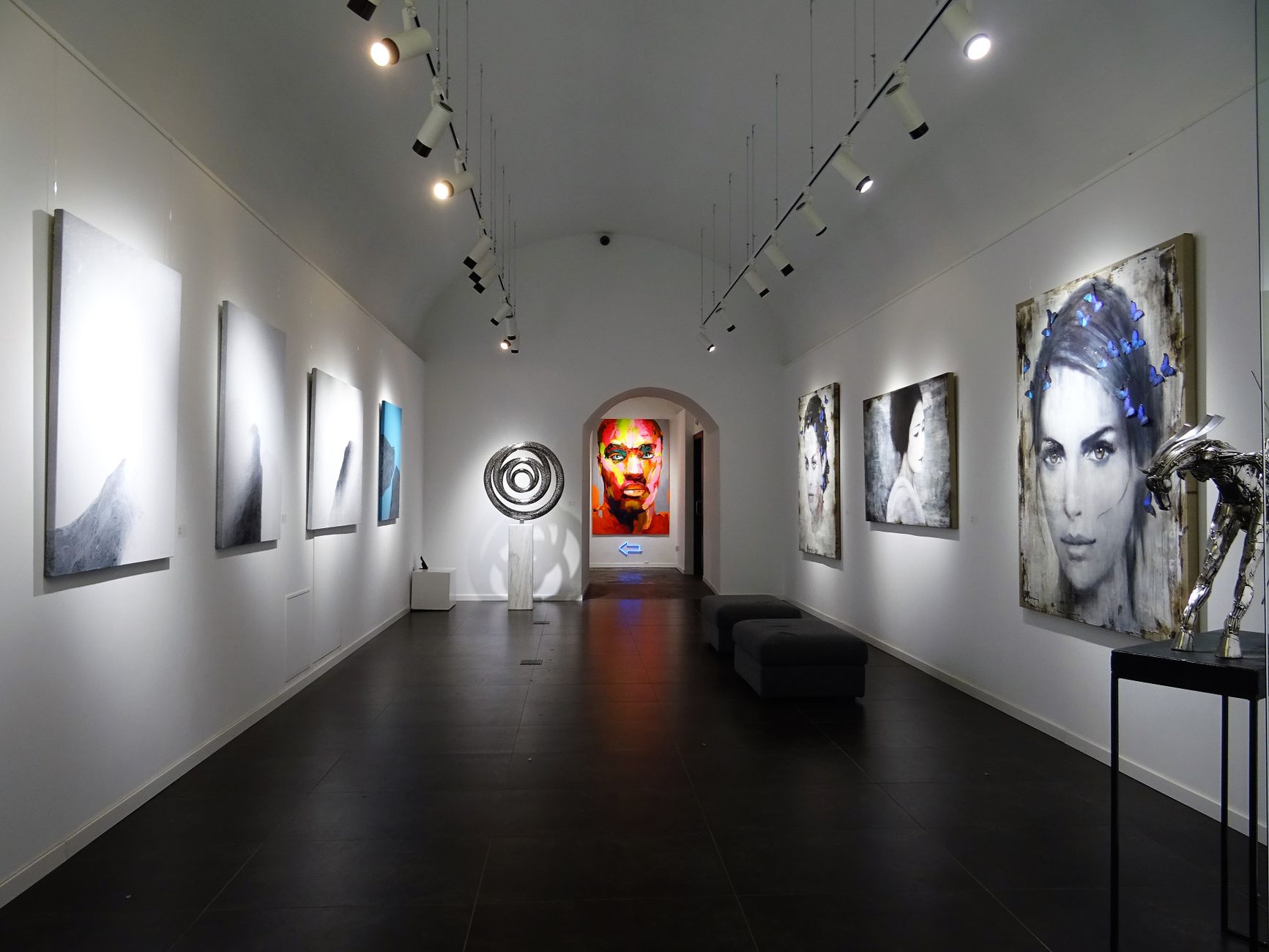
Beyond UV, IR, and CRI, the fourth advantage of museum track lighting is beam discipline. Ordinary spotlights throw wide, scattered pools of light that spill onto walls, floors, and neighboring objects. Museum-grade track fixtures deliver narrow, clean beams — often 6° to 25° — that can be aimed to within centimeters of a work. This does more than look professional: it concentrates all available lux exactly where it is needed, which lets a curator lower the total light level while keeping the artwork fully visible.
Anti-glare optics are another quiet essential. A visitor should see the painting, not the lamp. Deep-baffled or lensed track heads keep stray glare out of the viewer’s eye line, improving both comfort and the perceived quality of the display. For any exhibition, the light source itself should be invisible — only the artwork should speak.
5. Lux Levels and Conservation Light Budgets
Conservation lighting is not just about quality — it is about quantity over time. Museums track a “light budget”: the total lux-hours a sensitive object may receive before permanent damage. Typical recommendations cap highly sensitive materials (silks, watercolors, photographs) at 50 lux, and moderately sensitive items (oil paintings, wood, leather) at 150–200 lux.
This is where track lighting earns its place. With dimming and precise beam angles, a curator can deliver exactly 50 lux to a delicate textile and 150 lux to a robust oil canvas in the same room, using the same track, simply by swapping or re-aiming fixtures. Ordinary spotlights offer none of that calibration — they are either on, at full power, or off.
Ordinary Spotlight vs. Museum Track Light: A Comparison
| Criterion | Ordinary Spotlight | Museum Track Light |
|---|---|---|
| UV output | Often unfiltered | Filtered to ≤ 75 µW/lm |
| Infrared / heat | High radiant heat | Low-heat LED engine |
| Color rendering | CRI ~80 | CRI ≥ 95 |
| Beam control | Wide, hard to aim | 6°–25° narrow, aimable |
| Dimming | Limited | 0–100% smooth, flicker-free |
| Light budget control | On/off only | Exact lux per object |
The Museum Track Light Checklist
- UV filtered: output at or below 75 µW/lm
- IR-free / low heat: LED engine with minimal radiant heat
- High CRI: >=95 for accurate, honest color
- Controllable: dimming and beam control to limit lux on sensitive items
- Stable: low flicker and a consistent spectrum over time
Frequently Asked Questions
Can I use a normal LED spotlight in a museum?
Not safely. A standard retail LED lamp usually lacks UV/IR filtering, often sits below CRI 90, and throws uncontrolled beams. Over time it will fade sensitive materials. A museum-grade fixture is engineered specifically to limit photochemical damage.
What lux level is safe for paintings?
Oil paintings and wood typically tolerate 150–200 lux, while fragile works on paper, watercolors, and textiles should be kept near 50 lux. The safest approach is to work within a measured light budget and to keep the total annual lux-hours low.
Does high CRI really matter for viewing art?
Yes. CRI below 90 visibly flattens subtle color differences — the warmth of varnish, the depth of a blue, the texture of a fabric. Museums standardize on CRI ≥ 95 so works appear as the artist intended.
Conclusion
Ordinary spotlights fail museums not because they are dim, but because they are careless with energy museums cannot afford to lose. Specify track lights built for conservation — UV/IR-filtered and CRI >=95 — and the 30% problem starts to disappear. The goal was never just to light the artifact. It was to let the next generation see it exactly as it was meant to be seen.
good idea!